
So you're finally doing it. You're bringing that book, that incredible story that's been living inside your head, out into the world. That's a huge deal, and I'm genuinely excited for you. This isn't just a project; it's a legacy. It's creating something physical and real that will last forever.
To make that dream a reality, you need a partner, a ghostwriter. And to make that partnership sing, you need the ghostwriter contract template we're about to walk through. Think of it as the sacred promise between you and your writer, the document that keeps the focus on the magic, not the misunderstandings.
Why a Handshake Just Won't Cut It for Your Life’s Work

The dream of holding your own book is a beautiful one. It’s your story, your hard won wisdom, your big idea finally taking flight. It’s a chance to create something that will outlast you, a physical testament to a life lived or a business built. It’s a beautiful, honorable thing.
But let's be real. The road from a brilliant idea to a polished manuscript can get messy. A simple handshake or a friendly "we're on the same page" feels easy, but it leaves way too much unsaid. I've seen it go sideways more times than I can count.
A client I knew once launched a project with a writer based on a few enthusiastic emails. It felt great, like they'd found a creative soulmate. Three months in? They were trapped in revision hell, going back and forth endlessly because they'd never actually defined what "finished" meant. It was a mess, and it broke my heart to see their excitement drain away.
The Blueprint for a Joyful Partnership
Please, don't think of a ghostwriter contract as a sign of mistrust. It's the exact opposite. It’s the essential blueprint for a successful creative team, the best tool you have to make sure you and your writer are on the same page from day one. Hiring a pro ghostwriter is one of the best decisions you can make. It's easier, more fun, and you get to see your vision brought to life by an expert.
A solid contract takes all those fuzzy ideas and turns them into concrete promises. It answers the big questions before they can turn into problems:
- When will I actually see the chapters?
- How will payments work so it’s not weird and awkward?
- Who really owns this book at the end? (Spoiler alert: it's you. It always has to be you.)
This document is your shield against those "But I thought you meant…" conversations that can poison a collaboration and stall your dream. It protects your investment of time, money, and emotional energy.
A great contract doesn't create distance; it creates clarity. It allows both you and your ghostwriter to relax and focus on what truly matters: telling your story with the care and honor it deserves.
Building on a Foundation of Respect
Hiring a ghostwriter is a huge act of trust. You’re handing over your most personal stories or brilliant business insights. A well crafted contract honors that trust by building a solid, respectful foundation for your work together.
For your agreement to be legally sound, it helps to have a good grasp of the basics. Brushing up on understanding contract formation and business law is never a bad idea, but don't let it intimidate you.
This isn't about being rigid; it's about mutual respect. It lets the creative magic happen without the nagging worry of unspoken expectations. You're busy enough bringing your vision to life. You don't need the added stress of a poorly defined partnership. A good contract is your project’s best friend.
Not sure whether you need a ghostwriter or an editor?
If you already have 30,000+ words drafted, an editor at $3,000–$12,000 will serve you better than a ghostwriter at $40,000. The quiz sorts this out in five questions — honestly, even when the answer is the smaller job.
Your Free Ghostwriter Contract Template, Demystified
Alright, let's roll up our sleeves and get into it. I'm not just going to drop a file on you and say "good luck." What good would that do? Instead, we're going to walk through the heart and soul of a solid ghostwriter contract together, section by section.
Think of it this way: you wouldn't hand over the keys to your life story without a clear roadmap. This contract is that map. It’s the tool that turns a brilliant idea into a finished book without the drama.
This isn't about becoming a lawyer overnight. It’s about understanding the promises you and your writer are making to each other, turning stiff legal jargon into a simple, shared plan. A plan to make something beautiful.
The Foundation: Your Agreement’s Must Haves
Before we get into the nitty gritty, every good ghostwriting agreement starts with a few foundational pieces. These are the absolute basics that set the stage for everything else.
A solid contract always starts by clearly defining:
- The Parties Involved: Who are you (the "Author") and who is your ghostwriter (the "Writer")? This part needs legal names and addresses. It sounds boring, but it’s the bedrock of the whole agreement.
- The Project Scope: What, exactly, are we creating together? Be specific. Is it a 60,000 word memoir about your journey from a garage startup to a global brand? A 40,000 word business book on compassionate leadership? Pin down the book's subject, tone, and target word count right from the start.
Nailing these details down is more critical than ever. The global ghostwriting market is growing at a rate of 6.8% each year, largely because platforms like Amazon KDP have made it so much easier for people like you to share their stories.
But with that growth comes risk. Some estimates suggest that up to 25% of freelance writing projects hit major snags because of unclear terms. You can read more about how aspiring authors are navigating these industry shifts and see why a strong contract is their best insurance policy.
Your contract is your project's North Star. It's the document you both return to when questions pop up, ensuring the journey to a finished book stays on track and remains a creative, positive experience.
Key Contract Clauses at a Glance
To give you a bird's eye view, here's a quick summary of the most critical sections in your ghostwriter contract and why each one matters.
Think of this table as your cheat sheet. We'll dive much deeper into each of these points, but this shows you how all the pieces fit together to protect you, your writer, and your amazing story.
| Clause | What It Covers | Why It's Non-Negotiable |
|---|---|---|
| Deliverables & Schedule | The specific work (e.g., outline, chapters, full manuscript) and the deadlines for each stage. | Prevents endless delays and ensures everyone knows what's due and when. No more guessing games. |
| Payment Terms | The total fee, payment schedule (e.g., deposit, milestones), and how payments will be made. | Avoids awkward money chats and keeps the project moving forward with good vibes. |
| Intellectual Property | Explicitly states that you, the author, own 100% of the rights, title, and interest in the work. | This is the whole point! It ensures your book belongs entirely to you. Period. |
| Confidentiality | A promise from the writer to keep your stories, ideas, and all project materials private. | Protects your story and gives you a safe space to be vulnerable and share openly. |
Don't let the idea of a contract scare you. A good one is really just a conversation written down, a tool for clarity, not conflict.
Honestly, a professional ghostwriter who insists on a clear contract is a massive green flag. It tells you they’re a serious professional who respects you and your vision enough to get it all in writing. It's a sign they're the right partner for this journey.
Making the Contract Your Own: What to Include
Okay, this is where the real work begins. A template is a fantastic starting point. Think of it as a great suit right off the rack. But a customized contract? That’s the tailored, bespoke suit that fits your book project perfectly, protecting you in all the right places. It's your most important shield.
Let's break down the clauses that truly matter. I’ll explain what they mean for you and your future book, turning that dense legal language into plain, simple English. By the end of this, you'll be ready to build an agreement that feels less like a stuffy legal document and more like a shared promise.
This visual gives you a simple look at the contract creation flow, hitting the key stages from identifying who's involved to nailing down the final terms.
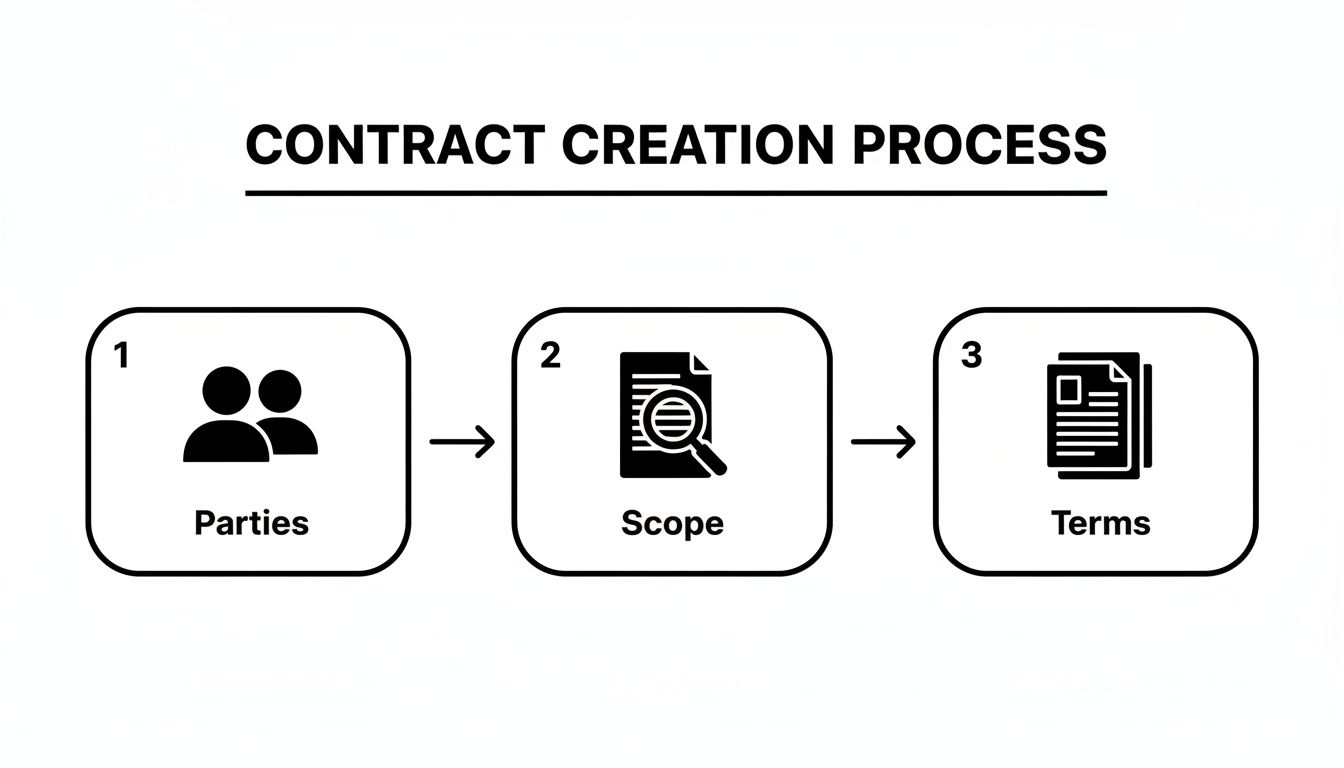
Running through this process ensures that before you even get to the fine print, the who, what, and how of your project are crystal clear.
Deliverables and Deadlines: The "What and When"
This clause is the heart of your project plan. It’s what prevents that dreaded feeling of, "So… when will I actually see something?" It needs to be painfully clear about what the ghostwriter will deliver and the exact dates they'll deliver it.
Ambiguity here is your enemy. A vague goal like "finish the book this year" is a recipe for missed expectations. Instead, you need to break the project down into smaller, manageable chunks. Think of it as building your book brick by brick.
Here’s a practical example for a CEO's memoir:
- Project Outline: Due within 2 weeks of signing. This is your big picture roadmap.
- First Three Chapters (approx. 15,000 words): Due 6 weeks after you approve the outline. This gives you an early look at the voice and style.
- Full First Draft (approx. 60,000 words): Due 12 weeks after the first chapters get your green light.
- Final Manuscript (post revisions): Due 4 weeks after the writer receives your final round of feedback.
This kind of structure builds momentum and gives you regular checkpoints. It turns a massive mountain into a series of small, climbable hills. This is how books get written without anyone losing their mind.
Payments: The "Let's Not Make This Weird" Clause
Talking about money can feel awkward, but I promise you, not having a clear payment clause is way, way worse. This part of your ghostwriter contract template is all about preventing financial misunderstandings and keeping the creative energy positive.
Most professional ghostwriters work on a milestone basis, which is great for both of you. It means you pay for work as it’s completed, and the writer gets compensated fairly for their time. It keeps everyone happy and motivated.
A professional payment structure isn't just about the money. It's a sign of mutual respect and a shared commitment to seeing this beautiful thing through to the finish line.
A common payment schedule might look something like this:
- Upfront Deposit: This is often 25% to 50% of the total project fee, paid right after signing. It secures the writer's time and officially kicks things off. It's the "we're doing this!" moment.
- Milestone Payments: These payments are tied directly to the deliverables we just talked about. For example, a payment is made when you approve the outline, another when the first draft is delivered. It's simple and fair.
- Final Payment: The remaining balance is due once you receive the final, approved manuscript. The grand finale!
A setup like this keeps the financial side of things smooth and predictable. No surprises, no stress.
Intellectual Property: The "It's All Yours" Guarantee
Let’s be incredibly clear on this one, because it’s the most important part of the whole deal. When you hire a ghostwriter, you are paying for a service. You are not co-authoring a book.
The Intellectual Property (IP) clause has to state, in no uncertain terms, that 100% of all rights, title, interest, and copyright to the work belong to you, the author. The ghostwriter is performing a "work for hire," which is a legal term meaning they have zero claim to ownership, royalties, or credit once they've been paid.
This is the absolute cornerstone of the ghostwriting relationship. It guarantees that your story, your ideas, and your legacy remain unequivocally yours. No ifs, ands, or buts about it.
Confidentiality: Your Story Stays Yours
Writing a book, especially a memoir, is an act of deep vulnerability. You might be sharing family secrets, personal struggles, or the confidential inner workings of your business. The confidentiality clause, often called a Non Disclosure Agreement (NDA), is your legal fortress.
This clause legally binds the writer to keep everything you share completely private. That includes:
- Interview transcripts and audio recordings
- Personal anecdotes and stories
- Business strategies and private information
- All drafts and project materials
This creates a safe and sacred space where you can share openly, which is essential for creating an authentic and powerful book. Any good ghostwriter understands the honor of being trusted with your story and will insist on this clause to protect you.
Revisions: The "Tweak and Polish" Plan
No first draft is ever perfect. The revision process is where a good manuscript becomes a great one. But without clear boundaries, revisions can easily turn into a never ending loop of changes that stalls the whole project.
A standard and fair approach is to include two or three rounds of reasonable revisions for each deliverable.
For instance, after you receive the first draft, you’ll provide your feedback. The writer then incorporates those notes. You review it a second time for any final tweaks. This structured process keeps things moving forward efficiently. When customizing your ghostwriter contract, it's essential to define clear and comprehensive legal terms and conditions around what constitutes a "round of revision" to avoid scope creep.
Termination: The Friendly Breakup Clause
Sometimes, despite everyone's best intentions, things just don't work out. Maybe the creative chemistry isn't quite right, or life throws a curveball. The termination clause is your pre planned, amicable exit strategy. It's a "no hard feelings" button.
This clause should outline how either party can end the agreement gracefully. Make sure it covers:
- How much notice is required to terminate the contract.
- How the writer will be compensated for the work completed to date (this is often called a "kill fee").
- A confirmation that all work created up to that point becomes your property upon that final payment.
Having this clause isn't pessimistic; it’s just professional and practical. It provides a clear path forward if the partnership needs to end, protecting both of you from a messy situation.
Navigating Payments, Royalties, and Kill Fees

Alright, let's talk money. Getting this part right from the start is what makes the whole process feel professional and secure for everyone. This isn't just about paying a writer; it's about building a financial framework that supports your project from start to finish.
A clear, detailed payment clause in your ghostwriter contract prevents those awkward conversations that can drain the creative energy from a project. It ensures your writer feels valued and motivated, and it gives you a predictable budget so there are no nasty surprises.
Think of it as the financial scaffolding holding up the masterpiece you're building together.
The Standard Payment Structure
So, how do payments usually work? A professional ghostwriter isn't going to send you a single invoice after months of work. Honestly, that would be nerve wracking for both of you. It would be like paying a home builder only after the entire house is finished. Yikes.
Instead, the industry standard is to break the total fee down into milestone payments. This system is fantastic because it links payments directly to tangible progress, keeping your project moving forward at a steady, predictable pace.
Here’s what a typical structure looks like:
- Upfront Deposit: Most writers require a deposit to kick things off, usually between 25% and 50% of the total fee. This isn’t greed; it’s a commitment. It secures your spot on their calendar and serves as a mutual sign that you're both serious.
- Milestone Payments: These payments are tied to specific deliverables you've both agreed on. For example, you might release a payment upon approving the detailed outline, another after receiving the first draft, and another after reviewing the revised manuscript.
- Final Balance: The last chunk of the payment is typically due once you've given your final approval on the polished manuscript, right before it’s handed over to you for good.
This approach is fair, transparent, and keeps the financial side of your relationship completely stress free. It frees you both up to focus on what really matters: the story.
The Thorny Question of Royalties
"Does the ghostwriter get royalties?" I get this question all the time. The short and simple answer is: almost never. The standard ghostwriting arrangement is a work for hire agreement.
You are paying a professional fee for a specific service. In return, you retain 100% of the rights, the credit, and, yes, all the royalties. The ghostwriter's name doesn't go on the cover, and they don’t get a percentage of your book sales. This needs to be spelled out explicitly in your intellectual property clause. While a tiny fraction of elite ghostwriters working with A list celebrities might negotiate a royalty share, it's definitely not the norm.
The US Bureau of Labor Statistics reports a median pay of $67,120 for writers, but ghostwriters often exist in their own financial ecosystem. The average flat fee for a book project hovers around $38,680, while top tier talent can command six figure fees. You can discover more insights about writing salaries to get a better feel for current market rates.
The Kill Fee: Its Bark Is Worse Than Its Bite
Okay, let's tackle the "kill fee." It sounds incredibly dramatic, like something out of a spy movie, doesn't it? I promise, it's a completely normal and vital safety net for both you and your writer. It's much less scary than it sounds.
The kill fee isn't about failure; it's a professional parachute. It provides a clear and fair way to part ways if the project needs to stop for any reason, protecting everyone’s investment of time and energy.
Imagine life throws you a curveball. A family emergency pops up, your business pivots, and you suddenly have to shelve the book project indefinitely. The kill fee is a pre agreed upon amount, often 50% of the remaining project fee, that you would pay the writer to end the contract early.
In exchange, you get to keep all the work completed up to that point. This fairly compensates the writer for the time they've already poured into your project. It's the professional, graceful way to say, "This isn't working out right now," without any drama. Any solid ghostwriter contract template will always include it.
Common Contract Pitfalls and How to Avoid Them
Even with a rock solid contract, bringing a book to life is a creative journey, and sometimes journeys have bumps. That’s just human nature. But with a little foresight, you can navigate around the major potholes that turn a great collaboration sour. You've got this.
Let’s start with the sneakiest project killer I've seen: scope creep. It never announces itself. It tiptoes in with innocent sounding requests like, "You know, what if we added just one more chapter on…?" or "I had a great idea for a workbook section to go with the book!" I call it the "just one more thing" syndrome.
While these ideas often stem from genuine inspiration, each "small" addition snowballs into more research and writing time. Without a clear agreement, you can find your writer burning out and your budget stretched thin. This is where your contract becomes your best friend. That "Scope of Work" clause isn't a cage; it’s the guardrail keeping the project focused on the finish line.
A well defined scope doesn't stifle creativity; it protects it. It ensures all that brilliant energy goes into perfecting the original vision, not chasing endless new ideas.
The Problem with Vague Expectations
Another classic stumble is failing to define how you'll actually work together. The creative process is a dialogue, a back and forth between your vision and your writer's craft. But if you don't agree on the rhythm of that conversation, you’re practically guaranteed to step on each other's toes.
Think about the practical stuff. Does your writer prefer feedback in a single email, or in a Google Doc with comments? What's a reasonable turnaround time for you to review a chapter? A few days? A week? How quickly can you expect them to respond? These aren't just minor details. They’re the nuts and bolts that keep the whole machine running smoothly.
A seasoned ghostwriter will usually bring this up, but it's vital you both agree. A simple line in the contract like, "Author will provide consolidated feedback within 7 business days of receipt," can save you from weeks of frustrating limbo.
Clarifying the Final Say and Your Last Minute Gut Check
This one might seem like a no brainer, but you’d be surprised. Your contract needs to state, in no uncertain terms, who has final approval. It’s your story and your name on the cover. The agreement must be crystal clear that the final say on every single word belongs to you.
Okay, before you sign, take a deep breath and run through one last personal checklist. This is your final gut check to make sure everything feels right.
- Have I actually read this whole contract, word for word?
- Do I genuinely understand what each clause means for my book?
- Does this written agreement match up with everything we've talked about?
- Most importantly: Do I feel good about this partnership? Is there a good vibe?
Hiring a ghostwriter is about finding a partner, not just a service provider. It makes the whole process easier and, honestly, a lot more fun. The right partner will champion your vision. A solid contract is simply the foundation for that great partnership, ensuring it finishes with clarity, mutual respect, and the shared excitement of creating something truly special.
Your Ghostwriter Contract Questions Answered
Alright, let's talk about the questions that are probably buzzing around in your head. It's totally normal. Getting these sorted out is the key to moving forward with confidence and excitement, not anxiety.
What Happens If I Don’t Like the Writing?
This is the big one, isn't it? It’s a completely valid fear. You’re handing your story over to someone, and the thought of it coming back wrong is terrifying. But a solid contract is built for exactly this scenario, ensuring a professional process, not a dramatic meltdown.
First, your agreement needs a crystal clear revisions clause. This is your safety net. Typically, it allows for two or three rounds of feedback on each major delivery. This isn't about just fixing typos; it's a structured opportunity to collaborate, to guide your writer, to tweak the tone until it feels just right. It’s a partnership.
But what if, even after a few rounds of revisions, it’s just not clicking? That’s where the termination clause we talked about earlier becomes your graceful exit. It spells out exactly how to part ways amicably. The writer is paid for the work they've completed (this is often called a “kill fee”), and you walk away with full ownership of every single word they've written. No bad blood, just a creative mismatch.
Does the Ghostwriter Get Credit or Royalties?
In a word: no. The industry standard is that ghostwriting is a work for hire service.
I like to compare it to hiring a master carpenter to build custom cabinets for your kitchen. You pay them for their time, skill, and materials. When they're done, you own the beautiful cabinets. Their name isn't carved into the doors.
Your contract has to state this explicitly in the Intellectual Property and Authorship clauses. It should leave no room for doubt: you, the author, retain 100% of the rights, royalties, and all the credit. The ghostwriter’s name won’t appear on the cover or anywhere else. Their sole compensation is the fee you've agreed to.
Now, you might have heard of rare cases where a huge celebrity works with an A list writer who negotiates for credit or royalties. Trust me, that's the exception, not the rule. For almost every project out there, the answer is a firm, simple "no."
Is a Template Contract Legally Binding?
Yes, it absolutely can be. A contract doesn’t need to be filled with complicated legalese from a pricey law firm to hold up. As long as it contains the essential components of an agreement, an offer, acceptance, payment (what lawyers call "consideration"), and the signatures of both people, it's a legally binding document.
Our ghostwriter contract template is built to cover all the crucial bases, protecting both you and the writer. That said, for a project that means the world to you, it's always a smart move to have an attorney give it a quick look. Think of it as a small investment for some serious peace of mind.
What Should I Do Before Sending the Contract?
This is my favorite question because getting this right prevents so many future headaches. Your contract should never, ever contain a surprise. It’s simply the formal, written version of the fantastic, clear conversation you’ve already had with your writer.
So, before you even think about drafting that email, make sure you've truly vetted your chosen partner.
- Dive into their portfolio: Does their writing style genuinely resonate with you?
- Check their references: Don't just ask if they were good. Ask what the process was like for past clients.
- Have a real conversation: Do your personalities click? Do you feel like they're actually listening?
Once you’ve found "the one," talk through every key term out loud: the full scope, the delivery schedule, the total fee, and the payment plan. Get a verbal "yes" to everything first. Sending a contract with unexpected terms is like proposing on a first date. It’s just awkward. A great contract confirms a great partnership; it doesn't create one out of thin air.
At My Book Written, we're here to make this journey as clear and supportive as possible. Our resources are designed to give you the confidence you need to finally bring your book to life. Explore our guides and start organizing your vision today.
Ready to talk to an actual writer?
Five questions and we come back with two or three ghostwriters who fit your book, your budget and your timeline. Free, and no writer gets your details until you say so.
Read next
What will your book cost?
Set the type, length and timeline. Get a real 2026 range in 30 seconds.
Open the calculator