
So, what exactly is a business book ghostwriter? Think of them as your personal book-building partner. They have this incredible knack for pulling all that industry genius out of your head and shaping it into a polished, compelling book. They're the ones who wrestle with the messy, wonderful, and sometimes maddening writing process, all while making sure your ideas and your voice are the stars of the show.
This partnership is how you get to build a lasting legacy without having to hit pause on your career to become a full time author. It's your vision, your story, just with a professional co pilot to make the flight a whole lot smoother.
Why Your Big Idea Deserves a Ghostwriter

Hello, visionary. I see you. You've got a book rattling around inside you, a game changing idea that could really shake things up in your industry. I can almost feel the passion radiating from it.
But let's be real for a minute. The journey from that brilliant concept buzzing in your mind to a finished book on someone's desk can feel like trying to climb a mountain in flip flops. It's a daunting, and often super lonely, path.
From Expert to Author
Here's a truth I've seen over and over: most brilliant leaders, founders, and experts get stuck. It’s not because the idea isn't good enough. It almost never is. The real hurdle is the sheer, practical reality of what it takes to write a great book.
You’re a master of your craft, but that doesn't magically make you an expert in outlining, narrative arcs, chapter transitions, or the subtle art of storytelling. And that’s completely okay. In fact, it's totally normal.
This is exactly where a business book ghostwriter becomes your secret weapon, your sherpa for the climb.
Forget the image of some mysterious figure typing away in a dark room. A great ghostwriter is more like a creative partner. They handle the heavy lifting of structure and the delicate work of word wrangling, freeing you up to do what you do best: provide the world changing vision.
The goal isn’t to just hand off your idea to a stranger. It's to find a collaborator who can expertly translate your wisdom and unique voice onto the page, creating a book that is 100% authentically yours.
This guide is your roadmap for that entire journey. We're going to transform a scary task into an exciting, creative collaboration that cements your legacy. It’s time to get that book out of your head and into the hands of the people who need to hear what you have to say.
Why Do So Many Great Books Go Unwritten?
Every unwritten book is a missed opportunity. It’s a story that goes untold, an idea that never gets its chance to make an impact. The reasons are almost always the same, and they have very little to do with a lack of passion.
It usually comes down to three classic roadblocks:
- The Time Mirage: You keep telling yourself you'll find the time "later." But "later" is a mythical land where your calendar is magically empty. Spoiler alert: it never arrives.
- The Blank Page Panic: Staring at that blinking cursor is universally intimidating. For a non writer, it can feel like shouting into an empty canyon and only hearing an echo of your own self doubt.
- The Jigsaw Puzzle Problem: You have all the pieces, the anecdotes, the data, the hard won insights, but you have no earthly idea how they fit together to create a cohesive story.
A professional ghostwriter is the solution to all three. They create the schedule, they bravely face the blank page for you, and they’re masters at assembling your brilliant ideas into a powerful story. It's still your vision and your legacy. You just get to build it with way more joy and a lot less frustration. Let's dig into how.
Not sure whether you need a ghostwriter or an editor?
If you already have 30,000+ words drafted, an editor at $3,000–$12,000 will serve you better than a ghostwriter at $40,000. The quiz sorts this out in five questions — honestly, even when the answer is the smaller job.
Preparing Your Project for a Ghostwriter
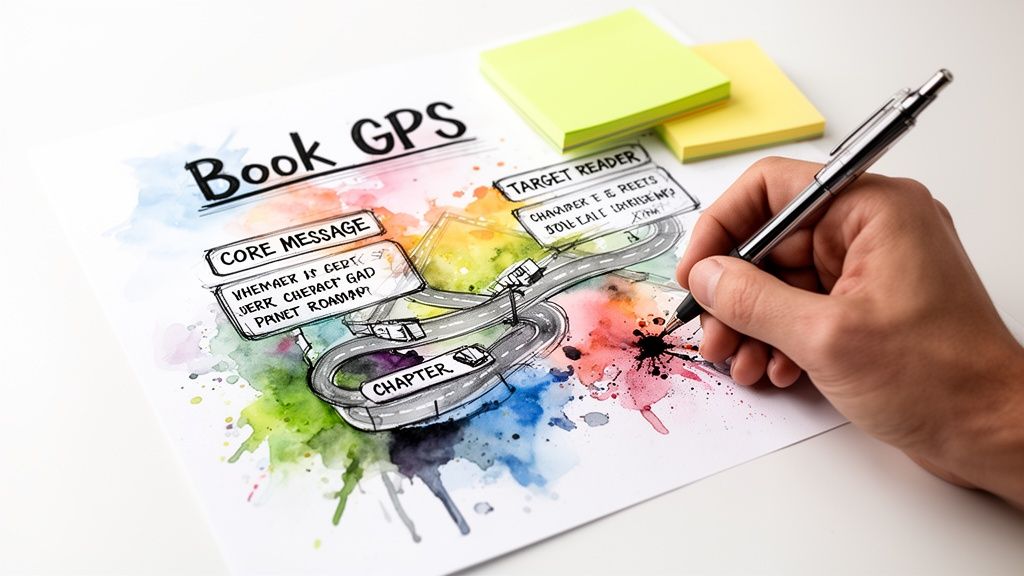
Before you even think about finding that perfect literary partner, you’ve got to do a little prep work. It’s so tempting to jump straight into interviewing candidates, but trust me on this: going in without a clear plan is like asking a master chef to cook you a gourmet meal without telling them you're allergic to gluten. You'll get something, but it probably won't be what you were dreaming of.
This is where you build what I call your "Book GPS." It's your map for the ghostwriter, ensuring every chapter and every story perfectly reflects your vision. This work doesn't just make the writing process smoother; it cements your role as the author, the true architect of the project.
When you have this clarity upfront, the final book sounds exactly like you because it’s built on the foundation you created. Let's get you ready to have productive, impressive conversations with any business book ghostwriter, making you look like the prepared expert you are.
Sharpen Your Big Idea
Every truly great business book hinges on one sharp, central idea. I always tell my clients to put their idea through the "so what?" test. Your book needs a core premise so compelling and clear that you can explain it in a single, powerful sentence.
This isn't just a fun exercise for a book proposal; it's the North Star for the entire project. It's the filter that every story, piece of data, and chapter idea has to pass through. If it doesn’t directly support that core premise, it gets cut. Simple as that.
For instance, a client of mine, a logistics expert, originally wanted to write a book about "improving supply chains." It was broad and, frankly, a bit of a snoozer. After we dug in, we sharpened it to this: "This book shows small e commerce businesses how to use reverse logistics to turn costly customer returns into a profitable new asset." Now that's an idea. It’s specific, it promises a real solution, and it makes you lean in.
Who Are You Actually Talking To?
With your big idea sharpened, let’s get ridiculously specific about who this book is for. "Business leaders" isn't an audience; it's a ZIP code. We need to paint a vivid picture of a single person.
Imagine you're writing this entire book for just one ideal reader. Give them a name, a job title, and a list of problems that are keeping them up at night.
- What are their biggest professional headaches right now?
- What industry jargon do they actually use (and which buzzwords do they roll their eyes at)?
- What kinds of solutions are they desperately Googling at 2 a.m.?
- Where do they hang out online? What podcasts do they listen to on their commute?
Knowing this person inside and out changes everything. It informs your tone, the examples you choose, and the very language you use. You're no longer broadcasting to a faceless crowd; you're having an intimate, genuinely helpful conversation with someone who needs exactly what you have to say.
Getting crystal clear on your ideal reader is the secret to making your book feel personal and indispensable. When someone feels like you're speaking directly to them, they don't just read your words, they absorb your ideas.
Sketching Your Chapter-by-Chapter Roadmap
Okay, this part might sound intimidating, but I promise it's easier than it seems. You do not need to produce a perfectly polished, detailed outline right now. Think of it more like a back of the napkin sketch, a simple map of your book's journey.
Your goal is to create a logical flow that walks your reader from their current, painful problem to your brilliant solution. Each chapter is just one deliberate step on that path.
Here’s a simple structure I’ve seen work wonders time and time again:
- The Problem: Kick things off by diving into your ideal reader's world. What specific challenge are they facing? Really twist that knife a little.
- The Old Way: Explain why the current "solutions" or ways of thinking are broken and failing them.
- The "Aha!" Moment: Introduce your core idea, the new perspective or breakthrough that changes everything.
- The Framework (Chapters 4-8): This is the heart of the book. Break your solution down into digestible parts. Each chapter can tackle a single principle, strategy, or step.
- Putting It Into Practice: Show, don't just tell. Use case studies, real world examples, or a clear action plan.
- The Future: End on a high note with an inspiring vision of what’s possible for the reader once they adopt your ideas.
Having even a rough roadmap like this is pure gold. It immediately makes you an incredibly attractive client to a top tier ghostwriter and ensures your project kicks off with momentum and a shared vision from day one.
Finding and Vetting Your Ghostwriting Partner

Alright, you’ve got your Book GPS in hand. Now for the exciting part, the talent search. Think of this as casting the lead role in the movie of your book. You need the right skills, sure, but you also need that chemistry, that spark that makes a creative partnership work.
Finding a business book ghostwriter is a lot like dating. You’re looking for someone who just gets you and your vision. You also have to genuinely enjoy talking to them, because you'll be spending a lot of quality time together.
So, where do these literary wizards actually hang out?
Your Ghostwriter Hunting Grounds
You're not going to find the best ghostwriters on generic freelance sites where everyone is racing to the bottom on price. The real pros, the ones who specialize in impactful business books, are a bit more selective. And you should be, too.
They tend to show up in a few key places:
- Elite Ghostwriting Agencies: These are the established players. They have a roster of vetted, experienced writers and typically offer a full service package that includes project management. It’s a solid choice if you want a proven system, but it often comes with a premium price tag.
- Curated Freelance Marketplaces: Platforms like Upwork’s expert vetted tier or Reedsy are a huge step up from the content mills. They screen their talent, so you’re fishing in a well stocked pond of professionals. This route gives you more direct interaction with the writers themselves.
- Referrals, Referrals, Referrals: This is the gold standard, hands down. Ask other leaders you admire who helped them with their book. A warm introduction from a trusted colleague is almost always the fastest way to find a fantastic partner.
Reading Between the Lines of a Portfolio
Once you have a shortlist of candidates, it's time to put on your detective hat. Don't just skim their portfolios; really dig in. You aren't just looking for good writing, you're looking for the right writing for your book.
The main thing to look for is a writer who can capture the unique voice of their client. Do all their book samples sound suspiciously similar? Or can you hear a distinct personality in each one? A great business book ghostwriter is a chameleon. They don't have a voice; they have an uncanny ability to find and amplify yours.
Pay close attention to structure, too. Does the writing flow logically from one idea to the next? Do the anecdotes serve a clear purpose, or do they just meander? This is how you spot a true book architect versus someone who just strings pretty sentences together.
The Interview Questions That Reveal Everything
The interview is your moment to see if that chemistry is real. It's your chance to get past the resume and understand their process, their personality, and what truly makes them tick. You should walk away from the conversation feeling energized and completely understood.
Here are a few questions I always recommend asking. The answers will tell you almost everything you need to know.
- "Can you walk me through your process for capturing a client's voice?" (This reveals if they have a structured method for getting inside your head. You want to hear about interviews, listening, and collaboration, not just writing.)
- "How do you handle feedback or disagreements on a chapter?" (This is critical. You want a partner, not a diva. Their answer should be about collaboration and finding the best path for the book, not protecting their ego.)
- "What's your favorite part of the ghostwriting process?" (This is a sneaky one. If their face lights up talking about the early interviews and brainstorming, you know they love the collaborative energy. If they only mention the solo writing, they might not be the partner you're looking for.)
- "Which of your past projects are you most proud of, and why?" (This tells you what kind of work truly excites them. Look for a strong alignment with your own project's goals.)
Finding the right ghostwriter is an act of trust. You are handing over your story, your legacy, to someone else. Make sure you're giving it to a person who sees it as the honor it truly is.
Red Flags to Watch Out For
Just as important as knowing what to look for is knowing what to avoid. A mismatched partnership can turn a dream project into a nightmare of endless revisions and frustration. It’s crucial to keep your eyes open for these warning signs during the vetting process.
Here are some of the most common red flags I've seen over the years.
| Red Flag | Why It's a Problem |
|---|---|
| They Don't Ask Questions | A great ghostwriter is endlessly curious. If they aren't peppering you with questions about your vision and audience, they're not engaged enough. |
| Guaranteed Bestseller Status | This is a massive red flag. No one can guarantee this. It shows a lack of integrity and a fundamental misunderstanding of the publishing world. Run. |
| Poor Communication | If they're slow to respond or their emails are unclear now, just imagine what it will be like once a contract is signed and the pressure is on. |
| No Contract or a Vague One | A true professional will always insist on a clear, detailed contract that protects both of you. Anything less is a sign of an amateur. |
Choosing your ghostwriting partner is one of the most critical decisions you'll make on this journey. Take your time, trust your gut, and hold out for the person who makes you feel both excited and confident. This partnership is the foundation of the incredible book you’re about to create together.
7. Navigating Ghostwriting Rates and Contracts
Alright, let's talk about money. I know, it can feel a little awkward, like trying to split a complicated dinner bill. But when you're hiring a ghostwriter for your business book, getting crystal clear on the financials isn't just a good idea, it’s the foundation of a smooth, successful partnership.
You've probably seen that ghostwriting fees are all over the map, and there's a good reason for that. You’re not just buying a word count; you’re investing in experience, skill, and a true collaborative partner. Understanding this landscape is the key to budgeting wisely and spotting real value.
Demystifying Ghostwriting Fees
I like to think of hiring a writer like buying a car. You could get a reliable used sedan, a brand new SUV with all the bells and whistles, or a high performance luxury car. They all get you from A to B, but the experience, performance, and price tag are worlds apart. Ghostwriting is a lot like that.
Over the years, the pricing for business books has become more transparent. Entry level services might run between $5,000 and $15,000, while established professional firms often land in the $25,000 to $75,000 range. For the full, white glove agency experience, you could be looking at $75,000 to $250,000 or even more.
From what I’ve seen, most truly experienced ghostwriters tend to cluster around the $50,000 mark, with their rates swinging from $30,000 to $95,000 depending on their track record and client testimonials.
So, what do those numbers actually buy you? Here’s how the fees usually break down:
- Project Based Fees: This is the gold standard for a full book. You agree on one flat fee for the entire project, start to finish. It’s clean, simple, and you know exactly what your total investment will be. No surprises.
- Hourly Rates: You might see this for smaller jobs like editing, but be cautious if it's proposed for a full manuscript. Those hours can add up faster than you think, and costs can easily get out of hand.
- Per Word Rates: This is common for articles and blog posts, not books. If a writer quotes you a per word rate for a 50,000 word manuscript, it’s a potential red flag that they might not have much experience with long form projects.
The Contract: Your Project’s North Star
Once you've found your writer and settled on a price, it's time for the contract. Please, don't just skim this and sign. A solid contract isn't about mistrust; it's about creating clarity. Think of it as the blueprint for your entire working relationship, protecting both you and the writer.
It might be the least exciting part of the process, but trust me, it's the most important. A good contract is your roadmap, preventing you from getting lost halfway through the journey. While some parts of the creative workflow can be streamlined with modern tech, like using AI tools for writing, the contract needs that human to human clarity.
A great contract doesn't just outline deliverables; it outlines the relationship. It sets expectations, defines the workflow, and creates a safe, professional space for a creative partnership to flourish.
Your agreement should be airtight. If any of these essentials are missing, you need to hit pause and ask for them to be added before you sign anything.
- Copyright Ownership: This is non negotiable. The contract must state, without any ambiguity, that 100% of the copyright and all related rights belong to you, the author. The writer is performing a work for hire service. End of story.
- Confidentiality Clause (NDA): Your ideas, stories, and business strategies are your intellectual property. A standard non disclosure agreement ensures everything you share remains strictly between you and your writer.
- Detailed Scope of Work: What, exactly, is the writer delivering? This section should specify the target word count, the number of interview hours included, and the file format for the final manuscript.
- A Clear Revision Process: How many rounds of edits are you getting? What’s the expected turnaround time for feedback on both sides? Defining this upfront prevents the dreaded "endless edits" loop that can kill momentum.
- Payment Schedule: Payments are almost always tied to milestones (for example, a deposit upon signing, another payment after the first draft, and a final payment on completion). This keeps the project moving forward.
- Termination Clause: What happens if things just don't work out? This clause outlines how either of you can end the agreement professionally and what happens to the work and payments completed up to that point.
Tackling rates and contracts can feel like a heavy lift, but it’s precisely how you set your book project up for a win. Once you understand the costs and have a solid agreement in place, you can move forward with confidence and focus on the real fun: bringing your story and ideas to life.
So, How Does This Ghostwriting Thing Actually Work?
You did it. You found your writer, signed on the dotted line, and maybe even cracked open a celebratory beverage for the incredible book you're about to create. High five!
But now… what happens next? This is where the real work, and the real magic, begins. It’s a lot less mysterious than you might think.
Let’s pull back the curtain on the typical workflow. This isn’t some rigid, one size fits all formula. Think of it more like a dance between your vision and their craft, a partnership where your ideas lead and their expertise builds the road. The goal is to make the journey as rewarding as finally holding that finished book in your hands.
The “Brain Dump” Interviews
The very first step is easily the most important. Your ghostwriter’s initial job is to become a temporary expert on two things: your subject matter and, more importantly, you. This all happens through a series of in depth interviews.
Think of these less as formal Q&As and more as fascinating, structured conversations. Your writer will come prepared with questions designed to pull out more than just facts and figures. They’re digging for the stories, the passion, and the unique phrases you use that make you sound like you. This is how they capture your voice.
My best advice here? Be an open book (pun absolutely intended). Don't hold back or censor yourself. The small, quirky anecdotes you think are irrelevant are often the gold that makes a chapter come alive. This is the writer’s chance to hear the rhythm of your speech, the analogies you lean on, and the core beliefs that drive everything you do.
From Conversation to Creation
After those initial conversations, the writer retreats to their creative space to start building. They’ll take all those hours of recordings and pages of notes and begin structuring the first chapter. This is the alchemy of the process, transforming your spoken words into a compelling, readable narrative.
Sooner or later, you’ll get that first chapter in your inbox. It’s an exciting and, honestly, sometimes nerve wracking moment. Is it going to sound like me? Is it any good? Take a deep breath. This first draft is a starting point, not the final word.
This is exactly why having a pro in your corner is such a game changer. The demand for this kind of partnership is exploding for a reason. The ghostwriting services market was valued at USD 3.3 billion in 2024 and is projected to rocket to USD 6.2 billion by 2032. That’s a boom fueled by leaders who get the immense value of expert help. You can dig into the industry's growth and what it means for authors on Verified Market Research.
The Rhythm of Review and Revision
Once you have that first chapter, the feedback cycle kicks in. This is where your role as the author truly comes to life. Your job is to read it, sit with it, and see how it feels. Does it capture the core of your message? Is the tone right?
Giving great feedback is an art in itself. Here are a few tips to make it count:
- Get Specific: Instead of saying, "I don't like this," try, "This example feels a bit too technical for our ideal reader. Could we find a more relatable story here?"
- Focus on the Big Picture First: In early drafts, don't get bogged down in comma placement. Focus on the flow, the core ideas, and the voice. We can polish the grammar later.
- Trust Your Gut: If a sentence or paragraph just feels "off" to you, even if you can't explain exactly why, point it out. A good ghostwriter will know how to diagnose the issue and fix it.
Your feedback is the steering wheel for the entire project. It's how you ensure the manuscript stays perfectly aligned with your vision without you having to agonize over every single word.
This back and forth is precisely where so many brilliant leaders stall out when they try to write a book on their own. The mental energy it takes is enormous, which is why you hired a professional in the first place. For those looking for an even more streamlined experience, a service like Opus Eternal has developed a remarkably efficient process at a fraction of traditional costs, all without compromising on quality. It’s all about finding a system that respects your time while honoring your vision.
So, What Happens After the Manuscript Is Written?
Congratulations! Seriously, take a moment to let that sink in. You have a finished manuscript. Holding your complete story, even if it's just a digital file for now, is an incredible accomplishment.
But the journey from manuscript to published masterpiece isn't quite over yet. Think of it like this: you've just built a high performance engine. Now, you need to build the stunning car around it. This final leg of the race involves a few crucial steps to get your book ready for its audience.
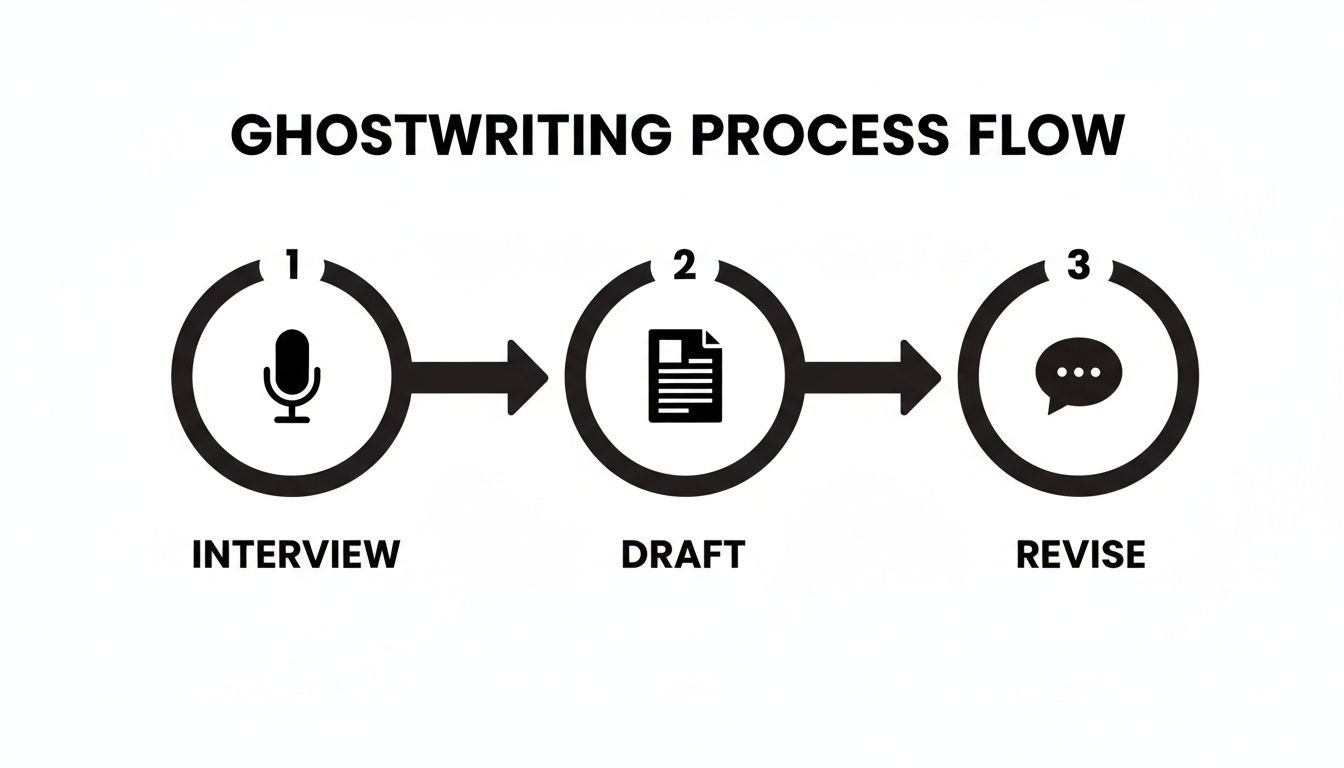
The collaborative rhythm you built with your ghostwriter, interviewing, drafting, and revising, got you this far. That same spirit of partnership is what you'll need for what comes next, ensuring the final book is as brilliant as the ideas inside it.
Your Publishing Path Forward
Your focus now shifts from creation to polishing and packaging. Even the most perfectly ghostwritten book benefits from a final, fresh set of professional eyes.
Here’s what you should be thinking about next:
- Professional Editing: This is non negotiable. A skilled copyeditor and proofreader will catch the subtle errors and typos that you and your writer are simply too close to the project to see anymore.
- Compelling Cover Design: People absolutely judge a book by its cover, especially in the business world. A professional, eye catching design isn’t a luxury; it’s an essential investment.
- Choosing Your Publishing Route: Will you pursue a traditional publishing deal, or will you take the reins with self publishing? Each path has its own pros and cons, and the right choice depends entirely on your goals.
While your ghostwriter's main job is complete, don't be afraid to ask for their advice. Many are deeply connected in the publishing world and can point you toward trusted editors, designers, or publishing consultants.
After all, the writing industry is buzzing. Experts project that employment for writers will grow 9% by 2030, a clear sign that powerful, human driven storytelling isn't going anywhere. You can dive deeper into the trends shaping the writing industry to see what's on the horizon.
This book is your legacy. Let’s get it ready for its debut.
Your Ghostwriting Questions, Answered
Your head is probably swimming with ideas and maybe a few nagging questions. It’s a huge decision, one that involves your time, money, and legacy, so let's get those last few uncertainties ironed out.
I get asked these questions all the time by leaders just like you. Think of this as the final checklist to make sure you feel completely confident and genuinely excited to get started.
Let's quickly run through some of the most common questions I hear.
Quick Answers to Your Questions
| Question | Brief Answer |
|---|---|
| How much time do I need to commit? | Plan for 2-4 hours a week during the initial interview phase. After that, it drops to just reviewing chapters. Much better than writing it yourself! |
| What if I don't like a chapter? | Don't panic. A professional writer expects feedback. Open communication is key; it's a normal part of the process. |
| Who really owns the book? | You do. 100%. All rights, royalties, and credit belong to you, the author. This should be explicitly stated in your contract. |
| How do I ensure the book sounds like me? | The writer's job is to capture your unique voice. This happens through interviews, reviewing your past content, and a collaborative feedback process. |
Getting these basics clear from the start builds a strong foundation for a great partnership.
How Much Time Do I Really Need to Commit?
This is the big one, isn't it? The great news is, it's far less time than you’d spend trying to write it yourself. I mean, we're talking a tiny fraction.
A good rule of thumb is to budget for 2-4 hours a week during the initial discovery and interview phase. This is where your writer downloads your brain, and it's the most hands on part for you.
After that? Your time commitment drops way down. You'll mainly be reviewing chapters and providing feedback, which might take an hour or two here and there. Your ghostwriter is the one putting in the hundreds (or thousands) of hours of writing, structuring, and polishing. That's the whole point, to get your book done without you having to quit your day job.
What If We Don't See Eye to Eye on a Chapter?
First, don't panic! This is a completely normal part of any creative partnership. Disagreements aren't a red flag; they're an opportunity to make the book even better.
A professional ghostwriter isn't a sensitive artist who will crumble at the first sign of critique. They're your collaborator. Your contract should already have a clear revision process spelled out, but the real key is open, honest communication. If something doesn't feel right, just say so. A great writer will listen, ask smart questions to pinpoint the issue, and find a solution that gets the chapter perfectly aligned with your vision.
It is, and always will be, your book. Your ghostwriter's job is to serve your vision, not their own ego. A true pro understands and honors this completely.
Finally, once the manuscript is polished and perfect, the work isn't quite over. You'll need to think about getting it into the hands of readers. Learning how to implement a modern content distribution strategy is crucial for making sure your message reaches the audience it’s meant to help.
At My Book Written, we believe your story deserves to be told. If you're ready to take the next step and finally turn your idea into a beautifully crafted book, explore our resources to guide your journey. https://mybookwritten.com
Ready to talk to an actual writer?
Five questions and we come back with two or three ghostwriters who fit your book, your budget and your timeline. Free, and no writer gets your details until you say so.
Read next
What will your book cost?
Set the type, length and timeline. Get a real 2026 range in 30 seconds.
Open the calculator