
So, you want to know how much a ghostwriter costs for your book? Let's get right to it. A full book project typically costs between $30,000 and $95,000, with most seasoned professionals charging around the $50,000 mark.
Of course, the final price tag really depends on who you hire and the specifics of your project. But don't let those numbers scare you. Let's break down what they really mean.
Your Story's Worth in Dollars and Sense
I get it. You have a powerful story inside you, an idea that keeps you up at night, but the price of getting it on paper can feel like a huge, mysterious hurdle. Seeing quotes all over the map can make it feel like you're guessing the number of jellybeans in a jar. It's frustrating.
But think of hiring a ghostwriter like commissioning a piece of art. A quick charcoal sketch and a massive, detailed oil painting are both art, but the time, skill, and soul poured into them are worlds apart. The same goes for your book. You aren't just buying words; you're investing in a partner who will live and breathe your story, capture your unique voice, and build something beautiful that will last forever. It’s an act of honor.
Common Ghostwriter Pricing Models at a Glance
Ghostwriters use a few different ways to structure their fees. Understanding these models is the first step to figuring out what works for your project and your budget. No smoke and mirrors here, just the facts.
| Pricing Model | How It Works | Common Price Range | Best For… |
|---|---|---|---|
| Per-Project (Flat Fee) | A single, all-inclusive price for the entire book. This is the most common model. | $30,000 – $95,000+ | Authors who want a clear, predictable budget from start to finish for a standard-length book. |
| Per-Word | The writer charges a set rate for each word written. | $0.75 – $2.00+ per word | Shorter projects like articles, blog posts, or when the final word count is uncertain. |
| Per-Hour | The writer bills for the actual time spent on interviews, research, writing, and revisions. | $100 – $250+ per hour | Projects with an undefined scope, extensive research, or heavy editing and revision needs. |
| Hybrid Model | A combination of models, often an initial project fee plus an hourly rate for extra revisions or research. | Varies widely | Complex projects where the scope might expand, offering flexibility for both parties. |
A flat, per-project fee is usually the best way to go for a full book. It keeps things simple and avoids any surprise costs down the line. It's one less thing to worry about so you can focus on the fun part: telling your story.
Finding the Right Fit for Your Budget
The good news is there's likely a ghostwriter out there for almost every budget, but it’s crucial to understand what you're paying for. Let me be clear: you are not just hiring a typist. You're bringing on a guide, a collaborator, and a skilled wordsmith to turn your vision into a real, physical book you can hold in your hands.
This hierarchy gives you a quick visual of the common pricing tiers you'll encounter.
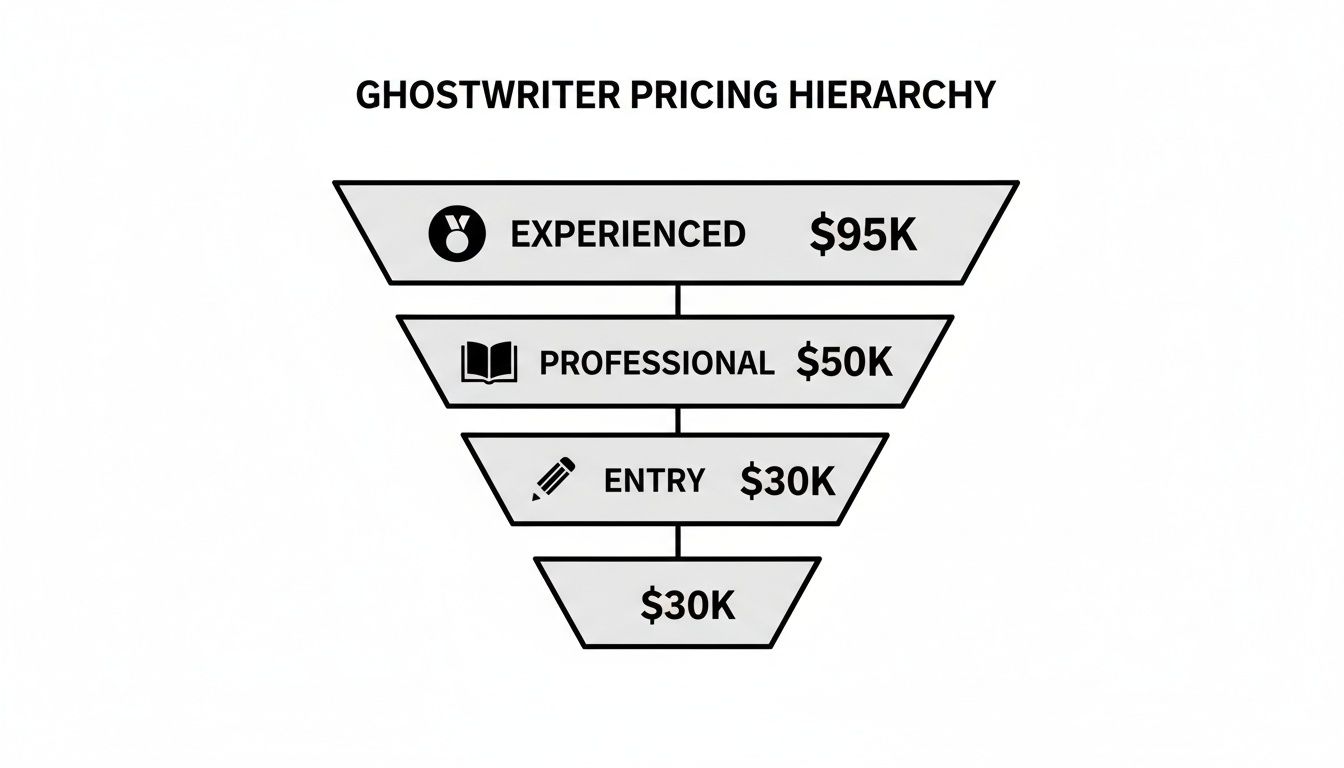
As you can see, a writer's experience and track record are the biggest factors driving the cost. The more proven they are, the more you can expect to invest.
What the Numbers Really Mean
The ghostwriting world has a few distinct tiers. That $30,000 to $95,000 range covers everyone from talented up-and-comers to elite writers with bestseller credits to their names. Most highly experienced, professional ghostwriters, the ones with a solid portfolio and a streamlined process, tend to fall right around that $50,000 sweet spot for a standard book project.
Beyond the ghostwriter's fee, it's also smart to think about other potential expenses, like those associated with different publishing platforms. For instance, if you're building an audience, understanding things like Substack subscription costs can be part of your bigger picture.
Ultimately, working with the right professional isn't just about getting the book done. It makes the entire process more enjoyable and ensures your vision is brought to life with the skill and care it deserves. It’s still your story, your voice, and your legacy. Why not have fun creating it?
The Secret Ingredients That Determine Your Price
Ever wonder why one author gets quoted $20,000 while another hears $80,000 for a book of a similar length? It’s not magic, and it’s definitely not random. The price you receive is a blend of several key ingredients, much like commissioning a custom piece of art. Or a really fancy cake.
A simple sketch and a detailed oil painting might both start with a blank canvas, but the final cost reflects the artist's skill, the complexity of the subject, and the hours poured into the work. Your book is no different. Understanding what goes into the price ensures your investment is treated with the respect it deserves.

The Writer's Experience and Expertise
This is the big one. You're not just paying for someone to type out your words. You're investing in their ability to structure a compelling narrative, conduct insightful interviews, and write prose that truly connects with readers.
Think of it this way: are you hiring a talented apprentice or a master craftsperson with decades of experience?
- Emerging Writers: Newer ghostwriters often charge less as they build their portfolios. They can be incredibly talented, but you might need to provide more hands-on guidance throughout the process.
- Seasoned Professionals: These writers have a proven track record, a fine-tuned process, and the experience to navigate complex stories with ease. Their higher fees reflect years of honed skill and reliability.
- Bestselling Authors: A ghostwriter with a New York Times bestseller on their resume is in a league of their own. You're paying a premium for their name, industry connections, and proven ability to craft a hit.
The Complexity of Your Project
Let's be clear: not all books are created equal. A straightforward memoir built from a series of personal interviews is a vastly different undertaking than a deeply researched business book that needs to cite dozens of studies and include interviews with industry experts.
The more intricate the subject matter, the more it will shape the final price. A writer tasked with explaining quantum physics needs a different skillset (and commands a different fee) than one hired to tell a beautiful, linear life story. You wouldn't hire a pastry chef to fix your plumbing, right?
Your story is a unique blueprint. A good ghostwriter prices their work based on the specific architecture of your project, not a one-size-fits-all template. This ensures you only pay for the work your book actually requires.
For instance, a family history project might be emotionally rich but require minimal outside research. On the other hand, a book designed to establish you as a thought leader in your field will involve extensive research to ensure every claim is backed by rock-solid data.
Research and Interview Time
This factor is all about time and legwork. How much raw material does the ghostwriter need to gather before they can even begin to write?
It’s a bit like building a house. Are you showing up with all the lumber, bricks, and windows neatly stacked and ready to go? Or does the builder need to source everything from scratch?
- You've Done the Heavy Lifting: If you come to the table with detailed outlines, organized notes, and clear anecdotes, you can help reduce the ghostwriter’s prep time and, potentially, the cost.
- Extensive Research Is Needed: If your book requires the writer to become a temporary expert in a niche field, conduct dozens of interviews with other people, or sift through historical archives, that time will be built into the quote.
Ultimately, the price reflects the partnership. The more organized you are, the more efficient the process can be. But don't let that intimidate you. A great ghostwriter is an expert at pulling the story out of you, making the interviews feel less like work and more like a series of wonderful, illuminating conversations. Their job is to make it easy for you. Seriously, let them do the hard part!
How Much for a Memoir vs. a Business Book?
Alright, let's talk real numbers. It’s one thing to understand the pricing models, but it’s another to see how they apply to different kinds of books. Planning your budget becomes much easier when you can see concrete examples.
Think about it this way: a deeply personal memoir, a strategic business book, and a detailed company history are three completely different beasts. Each requires a unique approach, a different kind of research, and a specific skill set from the writer. Naturally, the costs will reflect that. They're all books, but they aren't all booked the same way. See what I did there?

Sample Ghostwriting Project Cost Breakdowns
To give you a clearer picture of your potential investment, here’s a look at some typical project costs. Keep in mind these are estimates, but they show how the scope and complexity of a book directly influence the final price.
| Book Project Type | Typical Word Count | Estimated Price Range | Key Cost Factors |
|---|---|---|---|
| Memoir | 70,000 | $35,000–$80,000 | Emotional interviews, family archives |
| Thought-Leadership Book | 60,000 | $40,000–$90,000 | Market research, expert interviews |
| Company History | 80,000 | $30,000–$85,000 | Archival research, stakeholder talks |
As you can see, it's not just about the word count. The real cost drivers are the depth of research and the number of interviews required. For instance, a memoir that relies mostly on your memories might land on the lower end of the scale, while a data-heavy business book will naturally command a higher fee.
A few things to remember:
- Word count is the foundation. It sets the baseline for the writing hours involved.
- Deep research and extensive interviews add significant time and, therefore, cost.
- The more prep work you do upfront, the more you can potentially reduce the ghostwriter's time and your overall investment.
Family Memoir Example
A family memoir is all about capturing personal stories, many of which live only in your memory and heart. It's a deeply intimate project, an absolute honor to create.
You might already have boxes of photo albums, old letters, and a lifetime of anecdotes ready to go. This can make the process much smoother and often more affordable. The writer’s job is less about digging for external facts and more about pulling the narrative thread from your life.
A memoir is more than a book. It’s a time machine you gift to your descendants.
I’ve seen some of the best material come from a few afternoons spent chatting over coffee, sifting through memories. Those informal conversations are where the real gold is found. A great memoir ghostwriter knows how to handle these moments with care, ensuring your voice comes through with genuine authenticity.
Business Book Example
A business book, on the other hand, is like a bespoke suit: it needs to be perfectly tailored to your brand, project authority, and look sharp.
This is an investment in your reputation, positioning you as an expert in your field. That's why you'll spend more on validating your ideas with market research and expert interviews. The process usually looks something like this:
- Outline your core ideas and chapters based on your unique expertise.
- Gather data and conduct interviews with other industry leaders to add weight.
- Draft, revise, and polish every section until it's crystal clear and credible.
A well-crafted business book can be a lead-generating engine wearing a bow tie.
I once worked with a CEO who turned a series of client interviews into a powerhouse chapter. That single chapter helped double their speaking engagements for the year. That’s the kind of tangible result you get when you invest in that extra layer of polish.
Company History Example
Writing a company history is like being a detective and a storyteller all at once. It’s about piecing together decades of milestones, cultural shifts, and pivotal moments.
This requires meticulous archival work and in-depth interviews with everyone from the founders and long-time executives to the first employees who remember how it all started.
- Timeline Reconstruction: Mapping out key events and how they connect.
- Archival Deep Dives: Sifting through documents and records for accurate details.
- Narrative Weaving: Braiding together stories of growth, challenges, and company culture.
A company history is like reliving your organization’s favorite highlight reel.
Aligning Your Investment with Your Goals
Ultimately, choosing the right project and budget comes down to your "why." What is this book meant to achieve? Who is it for?
Be realistic about whether you need a research-heavy tome or a more streamlined narrative. It’s also wise to leave a little wiggle room in your budget for unexpected discoveries or research rabbit holes.
A full book project typically takes anywhere from four to eight months. If you're in a hurry, expect to pay an express fee for a faster turnaround.
- Memoir: Invest in capturing emotional truth for a lasting legacy.
- Thought Leadership: Prioritize data, accuracy, and fresh insights.
- Company History: Balance narrative depth with your budget.
- Timelines: Rush jobs can add a 10–20% fee.
Here are a few tips for managing your budget effectively:
- Negotiate milestone-based payments so you know exactly what you're paying for at each stage.
- Clarify the revision process upfront to avoid surprise fees down the road.
- Ask about package deals that might bundle writing with editing or other services.
Think of the ghostwriter price as an investment that buys you elbow room and peace of mind.
If you're looking for a high-quality manuscript without the top-tier price tag, you might want to check out Opus Eternal. It's an accessible alternative that can often deliver professional results for less than half the cost of a traditional ghostwriter.
Finding Your Fit
Not every book needs a celebrity ghostwriter or a six-figure budget.
Be honest with yourself about how much material you can provide. If you come to the table with detailed outlines, interview transcripts, and organized notes, you could see savings of up to 20%. A clear vision from the start means fewer revisions and a more predictable cost.
A solid contract is your best friend here. It protects your story, your investment, and your writer. You might even consider a hybrid model, like a flat project fee with an hourly rate for any extra work that pops up. This kind of flexibility can save you from overspending if your project evolves.
Ready to get your story rolling?
Getting an Accurate Quote and Steering Clear of Red Flags
Okay, you’re ready to start talking to writers. This is the exciting part! You've been dreaming up the blueprints for your book, and now you’re finally meeting the architects who can help you build it. So, how do you make sure the quotes you get are fair, accurate, and from someone who genuinely cares about your story?
This is where you shift from dreamer to savvy project manager. Getting a clear quote isn't about haggling over every penny; it's about providing a crystal-clear vision so writers can give you a realistic price. A little prep work here saves a world of headaches later.
Think of it like getting a quote for a custom kitchen renovation. If you just tell a contractor, “I want a new kitchen,” you’ll get wildly different prices that are impossible to compare. But if you say, “I want white shaker cabinets, quartz countertops, and a subway tile backsplash,” you’ll get quotes you can actually stack up against each other. Your book is exactly the same.
Preparing Your Project for Quotes
Before you even think about sending that first email, take an hour to pull together a simple project brief. This doesn’t need to be some formal, stuffy document. It’s just a snapshot of your vision that helps a writer immediately grasp the scope of the work.
Here’s a simple checklist of what to include:
- A One-Paragraph Summary: What is the book about? What's the core message you want to leave with the reader?
- Your Target Audience: Who are you trying to reach? Is this a legacy piece for your family, a lead magnet for potential clients, or a story for the general public?
- Estimated Word Count: A ballpark figure is perfectly fine. Are you thinking a shorter 40,000-word book or a more in-depth 70,000-word manuscript?
- Available Materials: What do you have ready to go? Do you have a detailed outline, a folder of scattered notes, interview transcripts, or just the idea in your head?
- Your Desired Timeline: When, in a perfect world, would you like to have a finished manuscript in your hands?
Having this information ready shows writers you’re serious and helps them give you a quote that actually reflects the work involved.
Spotting the Red Flags
The ghostwriting world is booming. Seriously. The global market for these services is on track to hit over $4.2 billion by 2025, with North America making up a huge piece of that pie. You can see the data for yourself in this ghostwriting services market report. With so many writers out there, it’s crucial to know how to spot the ones who might not have your best interests at heart.
Here are a few red flags to watch out for. Trust your gut on these.
A great ghostwriter partnership is built on trust, transparency, and a shared respect for the story. Anything less is a compromise you don't have to make.
-
The "Bestseller Guarantee": If a writer promises you a spot on the New York Times bestseller list, run for the hills. No one can guarantee that. A book's success depends on marketing, distribution, and a healthy dose of luck. A professional focuses on what they can control: writing an exceptional book.
-
Vague or Non-Existent Contracts: A legitimate writer will always, always use a clear, detailed contract. If they seem hesitant to put things in writing or their contract is fuzzy on critical details like ownership, payment schedules, or revisions, it’s a massive warning sign.
-
Unwillingness to Share Samples: A writer’s portfolio is their resume. If they refuse to share relevant writing samples (with confidential client information removed, of course), it might mean they don’t have the experience they claim. You have to see that they can capture a voice that resonates with you.
-
Prices That Seem Too Good to Be True: You know the old saying. An unusually low price often means you’re getting someone with little experience, or worse, someone who cuts corners by reusing content or rushing the process. Your story is far too important for that. Investing in a professional is an investment in quality and your own peace of mind.
Your Book Is a Partnership, Not Just a Purchase
You’ve gone through the quotes. You've stacked up the ghostwriter prices against your budget. But now you’re at the most critical step, and it has absolutely nothing to do with the numbers. It’s about choosing the person you’re going to trust with your story.
This isn't like buying a new appliance. Writing a book, especially one that’s close to your heart, is an incredibly personal journey. Your ghostwriter is about to become your confidant, your strategist, and the keeper of some of your most important ideas and memories. It's a true partnership.
Beyond the Portfolio: The Vibe Check
Look, you aren’t just hiring a skilled typist. You're choosing a collaborator who will spend months living inside your head, helping you pull out thoughts and feelings you may have never even said out loud before. Because of that, the personal fit is just as crucial as their writing skills.
As you interview potential writers, push past the standard questions about their process. You need to get a feel for their personality and see if it genuinely clicks with yours.
- Are they listening more than they’re talking?
- Do they ask thoughtful, curious questions about your "why"?
- Does the conversation just… flow? Like you’re talking to a friend?
You need to find someone who gets the vulnerability it takes to share your life's work. Trust your gut on this one. If a writer makes you feel seen and understood from that very first call, that’s a huge sign you’ve found the right partner.
Getting It in Writing: The Contract
Once you’ve found your perfect match, the final step is to make it official with a clear, fair contract. This isn’t just a legal formality; it’s the bedrock of your working relationship. It's the document that makes sure everyone is on the same page, protecting both you and the writer.
A good contract should feel less like a stuffy legal document and more like a firm handshake in writing. A strong partnership depends on a clear agreement, so learning about navigating contract terms is a skill worth having.
A solid contract is the roadmap for your creative journey together. It anticipates the bumps in the road so you can both enjoy the scenery without worrying about getting lost.
Make sure your agreement clearly spells out these key points:
- Ownership and Copyright: It needs to state, without any ambiguity, that you own 100% of the rights to the finished manuscript.
- Payment Schedule: Payments should be tied to specific, tangible milestones (like the outline, first draft, and final manuscript).
- Revision Process: How many rounds of revisions are included? What does the feedback process look like?
- Confidentiality: A solid clause ensuring your ideas and materials are kept completely private.
Choosing your ghostwriter is the single most important investment you’ll make in your book, and it's a decision that goes so much deeper than the price tag. Find someone who not only respects your story but also honors the courage it takes to tell it. After all, this is your legacy we’re talking about. Finding the right person to help build it is everything.
Your Ghostwriting Questions, Answered

It's completely normal to have a few questions bouncing around your head at this stage. In fact, it's a great sign. It means you're taking this seriously. Let's tackle some of the most common questions people have about ghostwriter costs.
Is a More Expensive Ghostwriter Always Better?
Not always, but there's a strong grain of truth in the old saying, "you get what you pay for." A higher price tag usually points to a writer with deep experience, a portfolio of successful projects, and a refined process that makes everything feel effortless on your end.
It’s like hiring a seasoned trail guide versus a novice. Both might get you to the destination, but the experienced guide knows the shortcuts, anticipates the challenges, and makes the entire journey smoother and more enjoyable. It’s less about finding the "best" writer and more about finding the right level of expertise for your book's ambitions.
Can I Pay a Ghostwriter with Royalties Instead of a Fee?
I get this question all the time, but the answer from any professional ghostwriter will almost certainly be no. Ghostwriters are skilled professionals providing a service, much like a lawyer or a web developer. Their fee is for the work of crafting the manuscript itself.
Think of it this way: You wouldn't ask the contractor building your house to take a cut of the profit when you eventually sell it. They get paid for the construction. A ghostwriter builds your book, and their fee covers that expert labor, separate from its future performance in the market.
This is actually a huge benefit for you. It means you keep 100% of your rights, royalties, and profits. It’s your name on the cover, your story inside, and your success to own entirely.
How Can I Save Money on Ghostwriting?
The absolute best way to keep ghostwriting costs down is to do your homework. The more organized and prepared you are before the project even begins, the more efficiently a writer can work.
Here are a few things you can do to streamline the process and potentially get a better quote:
- Bring a Solid Outline: Having a chapter-by-chapter roadmap of your book is a massive head start.
- Compile Your Resources: Gather all your notes, interview transcripts, research, and related documents into one organized place.
- Be Present and Decisive: Sticking to your interview schedule and providing clear, timely feedback keeps the project from stalling.
When a writer sees that you’re a prepared and committed partner, it gives them the confidence that the project will run smoothly, which can definitely be reflected in the price.
At My Book Written, we know that understanding the process is the first step toward telling your story with confidence. We're here to give you the clarity and guidance you need to bring your book to life. https://mybookwritten.com