
That little voice in your head, the one whispering that your story is worth telling? It’s right. You’re here because you know a book is the perfect way to capture your journey, but the thought of turning a lifetime of memories into a physical book can feel like a mountain. It's like trying to put together a million piece puzzle without the picture on the box to guide you. And let's be honest, half the pieces are probably under the sofa.
Your Story Is Worth Telling, So Let's Start the Adventure

Let’s be real for a moment. This is a huge, wonderful, and sometimes terrifying project. The second you commit to writing your life story, a whole cast of uninvited characters pops into your head. You've got the self doubt gremlin asking if anyone will actually care, the paralysis monster screaming, "Where do I even begin?!", and the chaos coordinator just throwing random memories at you with no rhyme or reason.
I’ve been there, and I get it. But try to reframe this not as a chore, but as an honor. It's a gift to yourself, a chance to finally make sense of your own story. It's a gift to your family, who will get to hold a piece of your legacy in their hands. And it’s a gift to future generations who will know who you were, what you cared about, and the hard won lessons you learned along the way.
You Are Not Alone on This Journey
You're not just writing a book; you're joining a massive movement. The global self publishing market hit an incredible $1.85 billion in 2024 and is on track to reach $6.16 billion by 2033. This isn't some fleeting trend. It’s a powerful testament to how much personal stories matter, with memoirs and biographies consistently topping the nonfiction charts. You can discover more about this publishing boom and see just how many others are on this same path.
My goal here is to be your guide on this adventure, your friendly GPS for the road ahead. We’ll tackle those hurdles together and turn this big, scary task into an exciting exploration.
Here is a quick overview of the core elements we'll cover to transform your life experiences into a compelling book.
The Four Pillars of a Powerful Autobiography
| Pillar | Why It Matters | What You'll Learn |
|---|---|---|
| Pillar 1: Discovery | This is the foundation. It's about finding the "why" behind your story and unearthing the key moments that define you. | How to brainstorm your core message, identify your audience, and dig up memories you thought you'd forgotten. |
| Pillar 2: Organization | A jumble of memories isn't a book. We need a structure to create a compelling narrative that keeps readers hooked. | Techniques for outlining your book, choosing powerful themes, and structuring your chapters for maximum impact. |
| Pillar 3: Drafting | Getting the words on the page is often the biggest hurdle. This is where your story starts to take physical form. | Practical writing prompts, tips for overcoming writer's block, and methods for creating a consistent writing habit. |
| Pillar 4: Vetting | Whether you write it all yourself or bring in help, ensuring your story is told with professional quality is crucial. | How to edit your manuscript effectively and, if you choose, how to find, vet, and collaborate with a ghostwriter. |
These pillars will guide our entire process, making sure we build something sturdy, meaningful, and lasting.
Writing your autobiography can be one of the most rewarding experiences of your life, but it can also be a lonely one. That’s why so many people choose to work with a professional ghostwriter. It’s not about giving up your story; it’s about gaining a co pilot. A great ghostwriter helps you navigate the tough parts, organize the chaos, and ensures your unique voice shines through on every single page. It just makes the journey easier and, frankly, a lot more fun.
"A life is not important except in the impact it has on other lives." – Jackie Robinson
Your story has that power. Whether you decide to write every word yourself or collaborate with a pro, the destination is the same: a beautiful book that honors your legacy. You don't have to face the blank page alone. We’re in this together, and we’re going to create something truly special. Let’s get started.
Finding the Heartbeat of Your Narrative
Before you even think about writing chapter one, we need to do something that sounds a bit abstract but is probably the most practical step in this entire journey. We need to find the heartbeat of your story. An autobiography isn't just a chronological list of events. That's a resume. A great story has a soul, a central theme that ties everything together.
Think of it this way. When someone finishes your book and their friend asks what it was about, what's the one thing you want them to say? Maybe it’s, "Wow, it was a story about incredible resilience," or "It was a beautiful testament to the power of forgiveness." That core idea? That's your narrative heartbeat. It's the why behind all the whats that happened in your life.
Panning for Gold in Your Own History
So, where do you find this theme? You become a prospector in your own past. Your life is full of rich experiences, and right now, our job is just to pan for the golden nuggets that will form the foundation of your book.
Let’s do some gentle digging. Grab a notebook or open a fresh document. Don't censor yourself or overthink it; just let your memories surface.
- Game Changing Moments: What are the five moments that truly changed the direction of your life? This could be a career switch, a cross country move, the birth of a child, a profound loss, or even a single conversation that set you on a totally new path.
- Recurring Hurdles: What's a challenge that seems to have popped up again and again, maybe in different disguises? It might be a struggle with self doubt, a pattern in your relationships, or a professional obstacle you kept facing.
- Defining Relationships: Who are the three people who have had the most profound impact on you? Jot down not just their names, but why their influence was so powerful.
Now, take a step back and look at your answers. Do you see a thread connecting them? Maybe every pivotal moment was driven by a deep seated desire for independence. Or perhaps every challenge was ultimately overcome by leaning on your community. That pattern is the clue. It’s the beginning of your central theme.
This isn't just a fluffy exercise. It's crucial for writing a book that people will actually want to read. The memoir boom is very real; global book sales hit 2.2 billion every year, driven by readers hungry for authentic, inspiring stories. But here’s the tough truth: a staggering 80% of single book authors barely make a dent financially because their stories, while sincere, lack the solid structure a central theme provides. You can dig into why this is so important for authors in these complete statistics on personal stories for 2025.
Creating Your North Star Summary
Once you have a sense of your theme, it's time to nail it down. We're going to write a simple, one page story summary. Think of it as the blurb you’d find on the back of your future book. This summary becomes your North Star, the guiding light you can always look back to when you feel lost in the weeds of your own memories.
Your story summary isn't a rigid contract you have to stick to. It's a compass. It just keeps your narrative pointed in the right direction, making sure every chapter serves the heart of your story.
Here's a simple framework to get you started:
"[Your Name]'s story is a journey of [Your Core Theme], from [Your Starting Point] to [Your Transformation]. It’s a testament to how [A Key Lesson Learned] can change everything. This is a story for anyone who has ever [Relatable Struggle or Goal]."
For example, a retired entrepreneur could write: "John Smith's story is a journey of relentless innovation, from a dusty garage startup to a global enterprise. It’s a testament to how embracing failure can lead to the greatest successes. This is a story for anyone who has ever been told their idea was impossible."
See how powerful that is? It immediately gives the story focus and a clear purpose. It also makes the writing process feel infinitely less daunting. When you sit down to write, you're not staring into a blank void. You're simply telling another piece of this very specific, meaningful story.
Honestly, this discovery phase can be emotional. It’s often where people realize that having an expert to bounce ideas off of would be a game changer. A professional ghostwriter is a master at exactly this. They are trained to listen to your experiences and help you find that golden thread, turning a collection of memories into a powerful, cohesive narrative. It's a partnership that can make the whole process feel less like therapy and more like the exciting creative project it’s meant to be.
Building the Blueprint for Your Book
So, you’ve found the heartbeat of your story. That’s fantastic! Seriously, take a moment to celebrate, because that’s often the hardest part. Now that you know the soul of your book, it's time to build its skeleton.
I know, I know. The word "outline" can trigger flashbacks to high school English class with its rigid Roman numerals and endless sub bullets. But please, don't run for the hills just yet. Think of this less like a chore and more like assembling a fascinating puzzle of your own life. You’re not being graded; you’re creating a map that will save you from getting lost in the wilderness of your own memories later on.
The goal here is simple. We want to create a detailed plan so that when you finally sit down to write, you are not staring into the terrifying abyss of a blinking cursor. Instead, you'll be adding color and life to a structure you’ve already designed.
Choosing Your Architectural Style
Not all life stories are told the same way, and your outline should reflect the unique structure of your narrative. There's no single "right" way to do this, but most autobiographies fall into one of two main camps.
- The Chronological Classic: This is the most straightforward approach. You start at the beginning and move forward in time. It’s clean, easy for readers to follow, and great for stories where cause and effect are a big part of the narrative. Think "this happened, which led to that, which then led to this."
- The Thematic Tapestry: This structure is a bit more creative. Instead of following a strict timeline, you group your memories into chapters based on a theme. For example, a CEO might have chapters on "Early Failures," "Building the Team," and "Lessons in Leadership." Someone else might focus on personal growth with chapters like "Finding My Voice" or "Learning to Trust Again."
Which one is right for you? Go back to that North Star summary we created. If your story is about a journey of progression over time, chronological is probably your best bet. If it’s about the lessons learned from a collection of experiences, a thematic approach might serve your story better.
This diagram shows the simple flow from self reflection to finding your theme and creating your guiding summary.
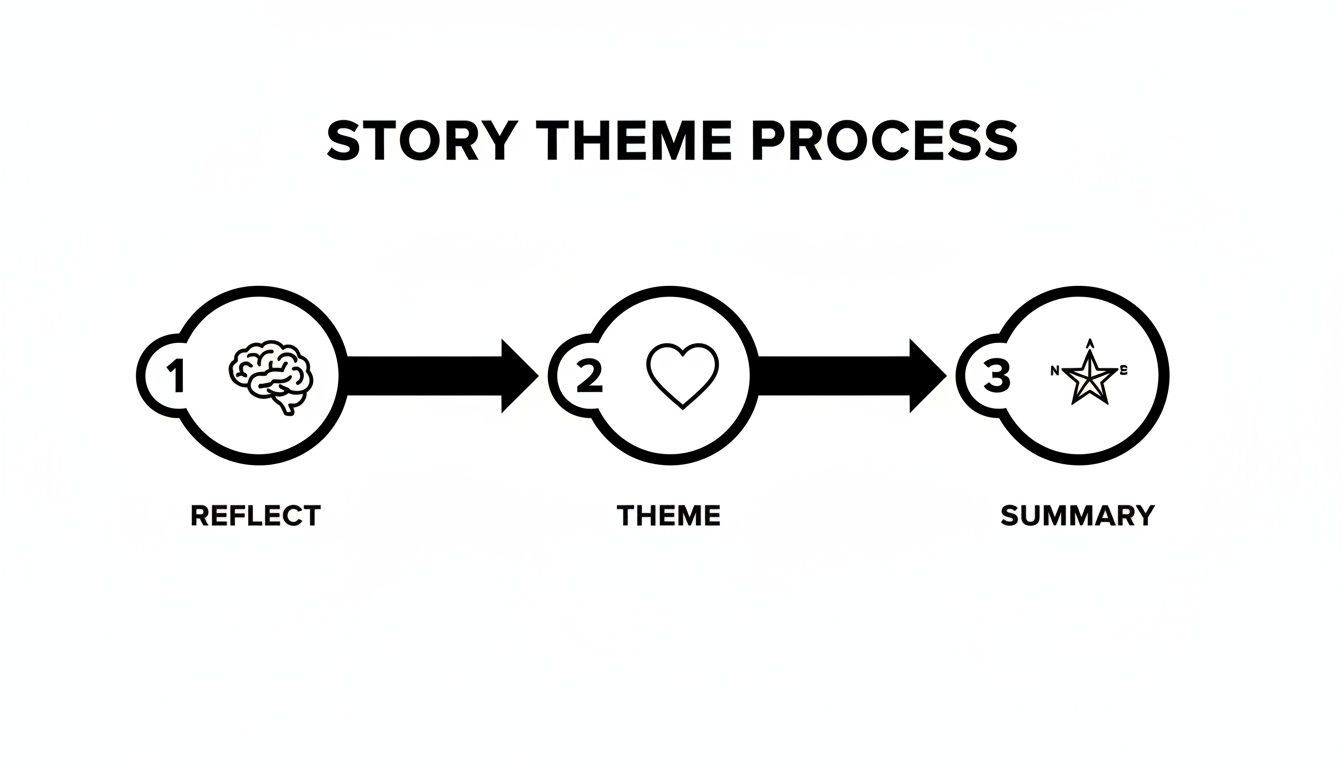
It visualizes how connecting with your core memories (reflect) naturally leads to identifying the central heartbeat (theme) and then solidifying it into a guiding principle (summary).
From Memories to Milestones
Once you’ve picked your style, it’s time to start sketching the rooms of your house, your chapters. Grab a big piece of paper or open a spreadsheet. Create a master timeline of all the key events, relationships, and turning points you can remember. Don't worry about order just yet; this is a pure brain dump.
Now, start grouping related memories. If you’re going chronological, this is easy. Just lump events by decade or life stage. If you’re going thematic, start dragging those memories into buckets that align with your chosen themes. Give each bucket a working chapter title.
The point of an outline is to do the heavy lifting before you start writing. It turns the massive job of "writing a book" into the much smaller, more manageable task of "writing this one specific scene."
For those who appreciate structured planning, a practical guide on how to write a curriculum can offer surprising insights into mapping out your book's narrative. The principles of organizing educational content can be cleverly applied to organizing the chapters of your life.
This entire blueprinting phase can feel like a huge project in itself. And honestly? It is. This is another moment where having an expert partner can make all the difference. A ghostwriter doesn't just write; they are brilliant architects of story. They can look at your lifetime of memories and instantly see the most compelling structure, helping you build a blueprint that is both beautiful and structurally sound. They help you get organized so the actual writing becomes a joy, not a slog.
Bringing Your Memories to the Page
Alright, take a deep breath. You’ve done the heavy lifting. You’ve found your theme and sketched out a blueprint. Now for the fun part. This is where you actually bring those memories to life, one sentence at a time.
It’s also where that infamous blinking cursor can become your arch nemesis, taunting you from a blank screen.

This is a beautiful, messy, and deeply human process. Some days, the words will flow like a river. On others, getting a single paragraph down will feel like solving a Rubik's Cube in the dark. That’s not just normal; it’s part of the journey.
Overcoming the Blinking Cursor Blues
Let’s be clear: writer's block doesn't mean your story isn't good enough. It just means you're human. The pressure to get it "perfect" on the first try can be paralyzing, so let's arm you with some practical ways to break through when your brain feels stuck.
Sometimes the best trick is to stop writing and start talking. Seriously.
- Dictate Your Stories: Grab your phone and use its voice memo app or a voice to text tool. Just tell a story out loud, as if you were sharing it with a close friend over coffee. You’ll be amazed at how your natural voice and rhythm emerge when you aren't obsessing over grammar.
- Set a Tiny Goal: Don't sit down to "write the book." That’s too big. Instead, sit down to write for just 15 minutes. Or to write one short paragraph about your first car. Breaking the task into bite sized pieces makes it feel manageable, not like climbing Everest.
- Write the Fun Parts First: You have an outline, but it’s not a legally binding contract. If you’re stuck on your childhood, jump ahead and write about that hilarious trip to Italy in your thirties. Momentum is everything.
This first draft stage is where so many incredible stories stall out. The global book market is projected to hit $91.98 billion in 2024, with biographies thriving, yet countless drafts remain half finished on hard drives. For professionals documenting company histories or retirees crafting a legacy, the real hurdle isn't starting, it's finishing. If you want to dive deeper into what's happening in the industry, you can explore insights from a recent author survey for a fuller picture.
Honoring the Emotional Journey
Writing an autobiography isn't just a mechanical act of typing; it's an emotional excavation. You're digging up moments of pure joy, gut wrenching sorrow, and everything in between. It’s not only okay to feel all the feelings, it's expected.
Be gentle with yourself. When you're writing about a difficult memory, you aren't just recalling it; you are reliving it. Give yourself permission to step away, take a walk, or call a friend. Your well being is always more important than your word count.
On the flip side, let yourself fully soak in the happy memories. Laugh out loud as you write about a ridiculous family vacation. Feel the warmth of falling in love for the first time. This is your life, and the writing process is a chance to experience its beauty all over again.
Honestly, this is the phase where having a teammate can make all the difference. If you find your draft starting to gather digital dust, it might be time to tag in an expert. A professional ghostwriter isn't a shortcut; they are a collaborator who keeps the engine running. They act as your supportive coach, skilled writer, and project manager all in one, making sure your vision becomes a reality, often faster and more enjoyably than going it alone.
Choosing Your Perfect Writing Partner
Let’s be honest. Writing a book is a monumental task. It’s a beautiful, rewarding, and sometimes soul crushingly difficult process. You've got a lifetime of memories swirling in your head, and the pressure to do them justice can feel immense.
Sometimes, the best and most honorable way to tell your story is to bring in a professional. Hiring a ghostwriter isn't "cheating" any more than hiring a skilled architect to build your dream home. It’s still your vision, your memories, and your voice. The ghostwriter is simply the expert craftsperson who ensures the final structure is beautiful, sturdy, and built to last.
Think of them as your story’s co pilot. They bring the map; you bring the destination.
Where to Find Your Ghostwriter
Okay, so you're open to getting some help. Wonderful! But where do you actually find these magical wordsmiths? You won't find them on a "ghosts for hire" app, but there are some excellent places to start your search.
- Professional Platforms: Websites like Reedsy and the Association of Ghostwriters are curated marketplaces where you can find vetted professionals with proven track records in memoir and autobiography.
- Literary Agencies: Many literary agencies have a ghostwriting division or can recommend trusted freelancers they’ve worked with before. This is a great route for finding high caliber talent.
- Referrals: Know anyone who has self published a book they're proud of? Ask them! A personal recommendation is often the best seal of approval you can get.
No matter where you look, the first step is always to review their portfolio. Read samples of their work. Can they capture different voices? Does their writing style resonate with you? This isn't about finding a writer you like; it's about finding a writer who can sound like you.
How to Vet Your Creative Partner
Finding a technically skilled writer is only half the battle. You’re inviting this person into your life's most intimate moments, so you absolutely need to find someone you connect with and trust.
Think of the vetting process less like a formal interview and more like a "first date" to see if your creative energies match. Before you even hop on a call, do your homework. Check their website, read their testimonials, and maybe even look them up on LinkedIn. You’re looking for professionalism and a clear passion for storytelling.
A major red flag? Anyone who promises a #1 bestseller or makes grand guarantees. A great ghostwriter is confident in their skill, not their ability to predict the wildly unpredictable book market. Their focus should be on honoring your story, not on making pie in the sky promises.
Another thing to watch for is a lack of curiosity. If they aren't asking you a million questions about your life and your vision for the book, they're probably not the right fit. A great ghostwriter is endlessly inquisitive.
A ghostwriter's job isn't just to write what you say. It's to hear the story behind the story. They listen for the themes you might not see and help you connect the dots of your own life in a way that creates a powerful narrative.
Key Interview Questions for a Potential Ghostwriter
This conversation is your single most important tool for finding the right fit. You need to understand their process, communication style, and, most importantly, their ability to capture your unique voice. Don't be shy; ask the tough questions.
Use this checklist to ensure you find a partner who truly understands your vision and can bring it to life with care and expertise.
| Question Category | Sample Question to Ask |
|---|---|
| Process & Workflow | "Can you walk me through your typical process, from our first interview to the final manuscript? How do you gather my stories?" |
| Voice & Tone | "How do you ensure the book sounds like me and not like you? What's your method for capturing a client's unique voice?" |
| Collaboration & Feedback | "How often will we communicate? How do you handle feedback and revisions if I feel a chapter isn't quite right?" |
| Experience & Expertise | "Have you written in the memoir or autobiography genre before? Could you share a sample that you feel is relevant to my story?" |
A healthy, fun, and productive collaboration is built on a foundation of clear communication and mutual respect. From the very first conversation, you should feel heard, understood, and empowered. Your story is precious. Finding the right person to help you write it is one of the most important decisions you'll make on this incredible journey.
Answering Your Biggest Questions About Writing an Autobiography
It's completely normal for your head to be swimming with questions as you get started. In fact, it’s a good sign. It means you’re taking this seriously and you want to do your story justice.
Let's walk through a few of the most common questions I hear from people who are ready to turn their memories into a book they can be proud of.
How Long Should My Autobiography Be?
This is always the first question, and the honest answer is: it should be as long as it needs to be to tell your story well, and not a word longer.
Most memoirs and autobiographies fall somewhere in the 60,000 to 80,000 word range, which works out to about 200 to 300 pages. But please, don't get hung up on that number. A powerful, tightly written 40,000 word book will always be better than a rambling 100,000 word one that loses its focus.
The real key is to stick to your central message. If every chapter and every anecdote serves the core theme you've chosen, you're on the right track, no matter what the final word count says. It’s all about the quality of the story, not the quantity of pages.
What If My Life Isn't "Interesting" Enough?
I need you to hear this loud and clear: every single life is interesting. You don’t need to have summited a mountain or brokered a peace deal to have a story that matters. The autobiographies that truly resonate with readers are almost always about the quiet, universal human experiences we all share.
Think about the stories that stick with you. They’re usually about:
- Overcoming a personal struggle and finding a strength you never knew you had.
- Navigating the messy, beautiful, and sometimes hilarious dynamics of family.
- Learning a tough lesson about love, loss, or forgiveness.
- Building something from nothing, whether it was a business or just a backyard garden.
Your life is full of these moments. It's not about the high drama; it's about the heart. The very fact that you’ve lived and learned makes your story more than interesting enough for someone to connect with.
Can I Write About Other People?
Of course. It’s nearly impossible to tell your own story without including the people who were part of it. But this is where you need to walk with kindness and a strong sense of integrity. Your life is interwoven with others, and when you write about them, you’re handling a piece of their story, too.
The golden rule here is to write your truth from your perspective. You can speak to your own experiences and feelings, but you can’t claim to know another person's inner world or intentions. Stick to phrases like "I felt" and "From my perspective" rather than "They wanted to hurt me."
For very sensitive subjects, many writers will change names or create composite characters to protect people’s privacy. If you have any real concerns about potential legal issues, spending a little time with a lawyer who specializes in publishing is a smart move. The goal is to be honest without being reckless, a tricky but essential balance.
Honestly, figuring out how to handle these delicate situations is one of the main reasons people decide they need help writing an autobiography. A great ghostwriter is more than just a typist; they’re a sounding board and a strategist who can help you navigate these parts of your story with the care they deserve. It makes the entire process feel safer and a lot less overwhelming.
At My Book Written, we give you the tools and the clarity to tackle every part of this journey. We’re here to help you build the blueprint for a book that truly honors your life. Start exploring how to organize your story with our guides.