
Got a brilliant book idea? The one you've scribbled on napkins and that keeps you up at night? I get it. You can actually hire a ghostwriter to wrangle those genius sparks into a real, physical book you can hold in your hands. It’s the perfect way to create your legacy without the headache of writing it all yourself. And let's be honest, it’s a lot more fun this way.
Your Story Deserves a Pro Behind the Keyboard
That idea is more than just an idea. It’s a lesson, a memory, a piece of your soul that deserves to be shared. But turning a whirlwind of thoughts into a polished book is, well, a monumental task. It’s not just about finding the time. It’s about conquering that terrifying blank page, structuring a story that hooks people, and staying sane through it all. This is where a ghostwriter works their beautiful magic.

From Idea to Heirloom
Hiring a professional isn't about giving up your voice. It's about amplifying it. Think of it as gaining a creative partner who is completely dedicated to making your vision a reality, minus the hair-pulling frustration. At the end of the day, it's your story, your expertise, and your name on the cover. The ghostwriter is simply the skilled collaborator helping you build the house from your blueprints.
And this isn’t some niche service just for celebrities anymore. The global ghostwriting market is booming, expected to hit over $4.2 billion by 2025. It’s a clear sign that busy professionals and leaders are choosing this smart path to getting their stories out into the world. Learn more about the ghostwriting industry's growth.
More Than Just Words on a Page
A great ghostwriter does so much more than just type. They wear a whole closet full of hats: part interviewer, part strategist, and part literary artist.
- They bring order to the chaos: They take your scattered notes and memories and weave them into a structure that flows and captivates. They find the story inside the story.
- They nail your unique voice: Through deep listening and smart questions, they learn your rhythm, your humor, and your perspective until the writing sounds just like you, on your very best day.
- They keep the train on the tracks: A pro manages the entire project, keeping the book on schedule so you can focus on your life and business. No more late-night panic attacks about deadlines.
When you hire a ghostwriter, you're not just getting a manuscript. You're often investing in a professional who can provide specialized SEO copywriting services to help your book find its audience online once it's published.
Your job is to be the visionary. Their job is to handle the heavy lifting of language, flow, and deadlines. It’s a partnership that honors your story by giving it the professional craftsmanship it deserves.
Finding Your Ghostwriter Without Getting Lost
So, you’re ready to find a writing partner. But where do you even start looking? When you decide to hire a ghostwriter, the internet can feel like an overwhelming sea of options. Let's cut through the noise and skip the endless Google searches that lead you down a rabbit hole of despair. I'll show you the best places to find true professionals.

This isn't about finding someone who can just type. It’s about finding the right person to give your story the voice it was always meant to have.
Curated Platforms and Professional Associations
Your first and best bet is to look where the pros hang out. I’m not talking about the chaotic freelance bazaars where you get what you pay for, but the more exclusive communities where serious writers gather to hone their craft.
Groups like the Association of Ghostwriters are an excellent starting point. They maintain directories of vetted members, which is a huge advantage. It means a baseline level of quality and professionalism has already been established for you. You're connecting with people who see ghostwriting as a dedicated career, not just a side gig to pay for their avocado toast.
Another avenue is a service that helps you get an existing project over the finish line. If you have a half-finished manuscript gathering digital dust, a platform like Opus Eternal can be a lifesaver. They specialize in finishing books quickly and efficiently, often for less than half the cost of traditional ghostwriting, without compromising on quality.
Vetted Freelance Marketplaces
I know what you're thinking: "Freelance marketplaces? Isn't that the Wild West?" Some of them definitely are, but a few have built their entire brand on quality control.
My go-to recommendation in this category is ClearVoice. Here’s why it stands out:
- Real Vetting: They don't just let anyone create a profile. Writers go through an application process to prove they have the experience and portfolio to back up their claims.
- Niche Expertise: These platforms make it incredibly easy to filter for a writer with specific industry knowledge, whether you need someone who understands SaaS or someone who can capture the nuance of a personal memoir.
This route gives you a broader talent pool to choose from but with a built-in safety net. It’s the perfect middle ground.
The goal isn't just to find a writer. It's to find your writer. The one who reads your notes and says, "I get it," and you can feel in your gut that they truly do.
The Power of LinkedIn and Personal Referrals
Sometimes the perfect match is hiding in plain sight. LinkedIn has become an absolute goldmine for finding ghostwriters who are deeply embedded in the professional world.
Try searching for terms like "book ghostwriter" or "memoir ghostwriter" and add your industry as a keyword. This can help you find someone who not only writes beautifully but already speaks your professional language. They already know your world.
And finally, never, ever underestimate the power of a warm introduction.
Ask colleagues, mentors, or anyone in your network who has published a book. A personal referral from someone you trust is often the fastest, most reliable path to finding a fantastic partner. It’s like getting a restaurant tip from a local instead of trusting a random online review. You just know it’s going to be good.
How to Vet a Writer and Avoid Being Ghosted
You’ve done the legwork and narrowed your list down to a few promising writers. Excellent. Now it’s time for the most critical part of the process: figuring out who is truly the right fit for you and your story.
This is more than just checking boxes on a resume. You’re looking for a creative partner, someone you can trust with your most personal thoughts and professional insights. It’s a bit like dating. You need real chemistry for it to work. A flashy portfolio is great, but that genuine human connection is what will get you both through the challenging, rewarding journey of writing a book.
Diving Into Their Portfolio
Think of a writer's portfolio as their greatest hits album. It’s curated to impress you, so don't just skim the surface. You need to dig in and listen for the nuances.
Here’s what I look for:
- Vocal Range: Can they adapt their style? A ghostwriter for a CEO’s memoir should sound completely different from one writing a self-help book for creatives. You’re not looking for a one-trick pony. You need a chameleon who can capture your voice, not just their own.
- Emotional Depth: If you're writing a memoir, look for samples that make you feel something. Can they handle vulnerability and raw emotion? For a business book, can they make complex topics feel clear, compelling, and even exciting?
- Story Architecture: Great writing is about more than just pretty sentences. It’s about structure. Does the sample hook you from the very first paragraph? Is there a clear, logical flow that pulls you through to the end?
It's also worth noting how AI is changing the game. While 68% of ghostwriters use AI tools to some extent, their real value is in the human touch. It's the empathy, nuance, and strategic storytelling that a machine just can’t replicate. When you hire a professional ghostwriter, you're paying for that irreplaceable human element.
Making the Call and Asking the Right Questions
Reading someone's work is one thing, but having a real conversation is another. I can't stress this enough: never hire a ghostwriter without speaking to them face-to-face, even if it's over video. It’s the only way to gauge their personality and see if you actually click.
This isn't an interrogation. It’s a two-way conversation to see if you’re a good match. Try asking questions that go beyond the canned responses:
- "Tell me about a project that went completely off the rails. What happened, and how did you handle it?" This question reveals their honesty and problem-solving skills under pressure.
- "How do you prefer to receive feedback? Are you someone who likes direct, blunt notes, or do you work better with a softer approach?" This is all about making sure your communication styles are compatible.
- "Of everything I've shared so far, what part of my story excites you the most?" This shows you if they've been listening and are genuinely invested in your vision.
A great ghostwriter will be interviewing you right back. They are selective about their projects because they know their best work happens when there’s a genuine passion and partnership. If they seem desperate to take any job, that’s a red flag.
Red Flags vs. Green Flags: A Quick Guide
Ultimately, your gut instinct is your most reliable tool. If something feels off during the vetting process, it probably is. I’ve seen enough to know that small hesitations early on can become massive problems down the road.
To make it easier, I've put together this quick-reference table. It contrasts the warning signs I’ve learned to watch for with the positive indicators that tell me I’ve found a true professional.
Red Flags vs Green Flags When Vetting a Ghostwriter
| Red Flag (Proceed with Caution) | Green Flag (A Positive Sign) |
|---|---|
| Hesitates to jump on a video call or relies only on email. | Eager to connect face-to-face and asks thoughtful questions about your story. |
| Their portfolio seems suspiciously perfect or lacks variety. | Their samples show a flexible voice, and they can explain the story behind each piece. |
| Is cagey about providing references or past client contacts. | Happily offers references and encourages you to speak with them. |
| Gives you an instant quote without understanding your project's full scope. | Takes the time to understand your needs before discussing pricing. |
| Talks more than they listen during your conversation. | Listens intently and makes you feel truly heard and understood. |
Finding the right person is a massive step toward bringing your book to life. It takes courage to hand your story over to someone else, and you deserve a partner who will treat it with the respect, empathy, and skill it deserves.
Don’t rush this. The right writer will feel less like a hired hand and more like a trusted friend who just happens to be a brilliant wordsmith.
Navigating Contracts and Talking About Money
Let’s talk about the two things that can make even the most seasoned professionals squirm: contracts and money. It can feel awkward, I get it. But trust me, we can make this part of the process feel empowering, not intimidating. Having a clear, honest conversation about budget and expectations isn't just a formality. It's the foundation of a fantastic partnership.
Think of it less like a tense negotiation and more like co-creating the rules of the game so everyone can play fair. When you hire a ghostwriter, getting this right from the start prevents misunderstandings down the road, builds a ton of trust, and lets you both focus on what really matters: creating an incredible book.
What Am I Actually Paying For?
"So, what does a ghostwriter really cost?" It’s the million-dollar question, and sometimes, that’s not an exaggeration. The truth is, there’s no one-size-fits-all answer, and that’s a good thing. It means you can find an arrangement that works perfectly for your project.
Most pricing models fall into one of these buckets:
- Flat Project Fee: This is the most common for full book projects. You agree on one single price for the entire manuscript, from the first interview to the final, polished draft. It’s clean, simple, and you know exactly what your investment will be from day one.
- Per-Word Rate: You’ll see this more often for smaller projects like articles, but some book writers use it. For example, a 60,000-word business book at $1.00 per word would come out to $60,000. It's straightforward, but the final price can fluctuate if the book’s length changes during the writing process.
- Monthly Retainer: This model is a great fit for long-term or complex projects where the scope might evolve. You pay a set fee each month for the writer’s dedicated time and expertise as they move the project forward.
The fee itself depends heavily on the project's complexity. A straightforward "how-to" guide based on your existing presentations will naturally cost less than a deeply emotional family memoir that requires sifting through decades of journals and conducting dozens of interviews. You're not just paying for words on a page. You're investing in research, emotional labor, and structural genius.
Don’t fall into the trap of thinking cheaper is better. A surprisingly low price often means the writer is inexperienced or juggling too many projects to give yours the attention it deserves. Your story is a legacy. It’s worth investing in a professional who will treat it that way.
Understanding Ghostwriting Industry Rates
The ghostwriting world has a place for nearly every budget, but it helps to know the lay of the land. The Association of Ghostwriters' 2025 Industry Report shows that fees can range from $1,000 for small jobs to over $500,000 for high-profile books.
For a full-length book with an experienced professional, however, most projects now cluster around the $50,000 mark. The most common range you’ll find is $30,000 to $95,000. Six-figure deals are also becoming more and more common, especially for authors aiming for a traditional publishing deal. This pricing ensures you’re partnering with a dedicated professional who can see your draft through to the finish line.
You can dive into the full report and get more details on the ghostwriting industry's rebound.
Decoding the Ghostwriting Contract
Alright, let's pull back the curtain on the legal stuff. The agreement you sign is basically a service agreement. It's a document designed to protect both of you by making sure all the terms and expectations are crystal clear.
It should never feel intimidating. A good writer will happily walk you through their contract clause by clause, ensuring you’re comfortable with everything before you sign.
Here are the key terms you absolutely need to see in there:
- Work For Hire: This is the big one. This clause legally states that you, the author, own 100% of the copyright and all intellectual property. The ghostwriter is being paid for their service, and their name will not appear on the cover unless you've specifically agreed to a different arrangement.
- Confidentiality (NDA): Your stories, ideas, and personal information are sacred. A non-disclosure agreement legally binds the writer to keep everything you share completely private. This is non-negotiable.
- Scope of Work: This section gets specific. It details exactly what the writer will deliver. Does the project end with a finished manuscript, or does it also include a book proposal for agents? How many words, chapters, and interviews are included? The more detail, the better.
- Payment Schedule: You should never pay the full fee upfront. A standard schedule might be an initial deposit to begin, with subsequent payments tied to key milestones (e.g., after the outline is approved, after Part 1 is drafted, and upon final delivery).
- Revision Rounds: The contract should clearly state how many rounds of revisions are included in the fee. Two or three full rounds is pretty standard. This protects you from being nickel-and-dimed for every little tweak and protects the writer from endless, scope-creeping edits.
- Termination Clause: What happens if things just don't work out? A good contract has an exit plan. This clause outlines how either party can end the agreement professionally, including how the final payment and deliverables will be handled.
Putting all this in writing isn't about a lack of trust. On the contrary, it’s about building a professional relationship on a solid, transparent foundation so you can both dive into the creative process with total peace of mind.
The Creative Process From Kickoff to Final Draft
You did it. You found your writer, signed the contract, and you're ready to go. Take a moment to celebrate this, because it’s a huge step. You’ve officially moved from "I have an idea" to "I am creating a book." Now the real fun begins: the true collaboration.
This isn't about handing over a pile of notes and waiting for a manuscript to appear in your inbox. It’s a partnership, a creative dance. The process is where the magic happens, transforming your scattered thoughts, memories, and expertise into a physical book that will last forever.
Kicking Things Off With a Brain Dump
The first step is always the most important: the kickoff. This is where your ghostwriter’s main job is to listen, and your main job is to talk. Think of it as the ultimate "brain dump."
Your writer will likely schedule a series of in-depth interviews with you. Don't worry about being perfectly polished or organized. The whole point is for them to absorb everything: the big stories, the tiny details, the funny asides, and the moments that still make you choke up a little. This is how they learn the rhythm of your voice and the heartbeat of your story.
This initial phase is also where you'll corral all your materials. Maybe you have:
- Boxes of old journals and photo albums for a family memoir.
- A hard drive filled with presentations and case studies for a business book.
- A chaotic collection of napkins with brilliant, half-formed ideas scribbled on them.
Your writer will help you sort through it all, finding the narrative threads that will tie your book together. It’s their job to see the beautiful forest when all you can see are a bunch of trees.
Building the Blueprint: Your Detailed Outline
After the initial interviews and material review, your writer will disappear for a bit and come back with a detailed outline. This is the architectural blueprint for your entire book. It's so much more than a simple list of chapters; it's the story's skeleton.
A solid outline should break down:
- The core theme and central message of the book.
- A chapter-by-chapter summary of the key stories, lessons, and points.
- The emotional arc and the journey the reader will take from page one.
This is your moment to be deeply involved. Review it carefully. Does it feel right? Is anything missing? This is the easiest and most important time to make big changes. Moving a chapter now is simple. Rewriting 5,000 words later is a whole different beast. Approving this outline ensures you're both building the same house.
This simple infographic breaks down the foundational steps that get you to this creative starting line.
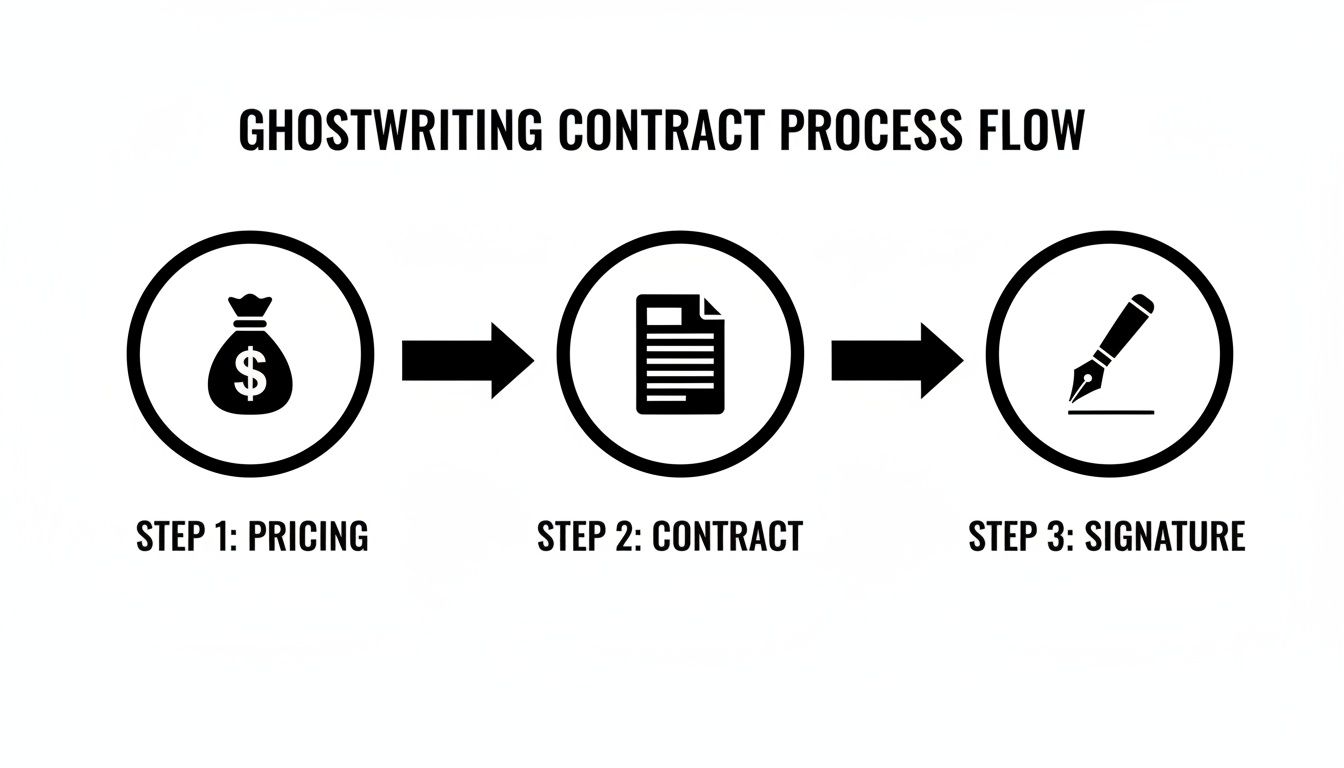
As you can see, a solid project starts with clear financial and legal agreements before the first word is ever written.
From First Draft to Final Polish
Once you approve the outline, the writing begins in earnest. Your writer will typically deliver the book in chunks, maybe a few chapters at a time. This makes the process far more manageable and prevents you from feeling overwhelmed by a massive document landing in your inbox.
Now, your role shifts to providing feedback. This can feel a little strange at first, but it’s absolutely crucial. The goal isn’t to nitpick grammar (that comes later). It's to make sure the voice and the story feel authentically yours.
Giving feedback is a skill. Try to be specific. Instead of saying "I don't like this," try "This anecdote doesn't quite capture how funny my grandfather actually was. Can we add the story about the runaway lawnmower?" This gives your writer exactly what they need to fix it.
Remember, the first draft is never the final draft. It’s supposed to be messy. It’s the clay on the potter's wheel, ready to be shaped. When you hire a ghostwriter, you're hiring a partner who thrives on this iterative process. They aren't precious about their words. They are dedicated to perfecting yours. Through a few rounds of revisions, you'll see the manuscript transform from a rough draft into a polished, powerful book you’ll be proud to put your name on.
Sample Book Project Milestone Checklist
To help you visualize the journey, here’s a simplified checklist of what a typical ghostwriting project looks like. Think of it as a roadmap from your initial idea to a finished manuscript.
| Phase | Key Activities & Deliverables | Your Main Role |
|---|---|---|
| Phase 1: Discovery & Planning | Kickoff call, initial interviews, review of source materials, detailed outline creation. | Share your vision, stories, and materials. Provide detailed feedback on the outline. |
| Phase 2: First Draft Writing | Ghostwriter drafts the manuscript, usually delivering 2-3 chapters at a time for review. | Review each chapter chunk for voice, tone, and accuracy. Provide specific feedback. |
| Phase 3: Revisions & Edits | Ghostwriter incorporates your feedback, revising the full manuscript. This may take 1-2 rounds. | Provide consolidated feedback on the complete draft. Sign off on the final manuscript. |
| Phase 4: Final Polish | Professional copyediting and proofreading to catch any errors in grammar, spelling, or punctuation. | Give the final approval before the manuscript is considered complete. |
This checklist isn't set in stone, of course, but it gives you a clear sense of the rhythm and flow. Every step is a collaboration designed to ensure the final book is a true reflection of you.
Common Questions About Hiring a Ghostwriter
It's totally normal to have a few questions still bouncing around. Deciding to hire a ghostwriter is a big step, a really exciting one, and you absolutely should feel confident about the entire process before you dive in.
Let’s get into some of the most frequent (and sometimes deeply personal) questions that pop up. I’ll give you straight, honest answers to help you move forward on your book-writing journey.
Is It Still My Book If Someone Else Writes It?
This is the big one, isn't it? The question that can keep you up at night. Let me be perfectly clear: Yes, it is 100% your book.
I like to use the architect analogy. An architect has the vision for a house. They create the blueprints and know exactly how every room should feel and function. But do they go out and pour the concrete, frame the walls, and install the plumbing themselves? Rarely. They hire a team of skilled builders to bring their vision to life.
You are the architect of your book. It's built from your ideas, your memories, your hard-won lessons, and your unique point of view. The ghostwriter is the master builder who uses words to construct it. They are your partner, your collaborator, your tool. But the soul of the book? That comes from you.
How Much of My Time Will This Actually Take?
This is such an important question because it gets right to the heart of a common misconception. Hiring a ghostwriter isn't a "set it and forget it" kind of thing where a finished book just lands on your doorstep one day. It’s a partnership, and your input is the most crucial ingredient.
You'll be most involved right at the beginning. Plan on spending several hours in interviews and deep-dive conversations with your writer. This "brain dump" is where they soak up your voice, your stories, and your perspective. It’s absolutely essential.
After that initial phase, your time commitment will settle into a rhythm:
- Reviewing the Outline: Set aside a few hours to really dig into the book's roadmap.
- Reading Drafts: You'll need dedicated time to read chapters as your writer delivers them.
- Giving Feedback: This can be as simple as adding comments to a document or hopping on a few quick calls.
A good ghostwriter is a pro at managing this process and will always respect your schedule. While it definitely requires your time, it’s a tiny fraction of the hundreds of hours you’d spend writing a book from scratch. It's the difference between being the project manager and being the entire construction crew.
What Happens If I Don't Love the First Draft?
First off, don't panic. It's completely normal. In fact, it’s expected that you won't love every single word of the first draft. A first draft is just that: a first attempt. Think of it as a block of marble before the sculptor starts chipping away to reveal the masterpiece inside.
A professional ghostwriter will never be defensive about your feedback. Honestly, they need it. Your notes are the tools they use to sharpen the language, capture your voice perfectly, and get the story exactly right. Any solid contract will have rounds of revisions built in for this very purpose.
The real magic doesn't happen in the first draft. It happens in the revisions. That collaborative back-and-forth is where the writer truly masters your voice and the manuscript becomes a book that sounds and feels like it came directly from you.
Bringing a book into the world, a physical legacy that will be around long after we are, is a profound act. Partnering with a professional doesn't take away from your role in that journey. It honors your story by making sure it's told with the skill, care, and polish it deserves.
At My Book Written, we believe every person with a story deserves the tools to tell it. We provide calm, thoughtful resources to help you organize your ideas and navigate the path to a finished manuscript. Whether you're just starting or feeling stuck, we can help you build the architecture for your book with confidence. Explore our guides at https://mybookwritten.com.