
So, you want to talk numbers. It’s the practical question that has to come first, right? The cost to hire a ghostwriter for a good, solid nonfiction book generally falls somewhere between $6,500 and $42,000. The final price tag really hinges on your book's length, how complex the topic is, and the ghostwriter's experience level, but this range gives you a solid financial snapshot to start with.
Your Book Is a Priceless Legacy—Let's Talk About the Investment
You have a story that needs to be told. I mean, you feel it in your bones, don't you? It might be the tale of your family's journey, the hard-earned lessons from a lifetime in business, or simply wisdom you feel compelled to share with the world. This isn't just an idea; it's a piece of your legacy, something tangible that will echo long after you're gone. It's an honor to create something that will last forever.
But let's get real for a second. The journey from that brilliant idea to a finished, polished book can feel like staring up at a mountain. The blank page is daunting enough, never mind structuring chapters, weaving together a narrative, and wrangling thousands of words into something coherent. It's completely normal to feel a bit stuck. A little like you're trying to assemble a 10,000-piece puzzle without the picture on the box.
This is where a professional ghostwriter steps in, and honestly, it’s a game changer. Hiring a ghost isn't about handing over your voice; it's about partnering with a skilled storyteller who can take the immense weight of the writing process off your shoulders. They handle the mechanics, the writing, the structuring, the flow, so you can focus purely on the message. It makes the whole experience not just easier, but more fun. It’s still your vision brought to reality, just without all the hair pulling and late-night coffee binges.
Getting a Clear Financial Picture
So, what does this kind of partnership actually cost? Think of it like building a custom home. The final price depends on the square footage, the complexity of the design, and the reputation of the builder. The cost to hire a ghostwriter works on a similar spectrum.
This chart gives you a quick visual of the typical investment for a nonfiction book.
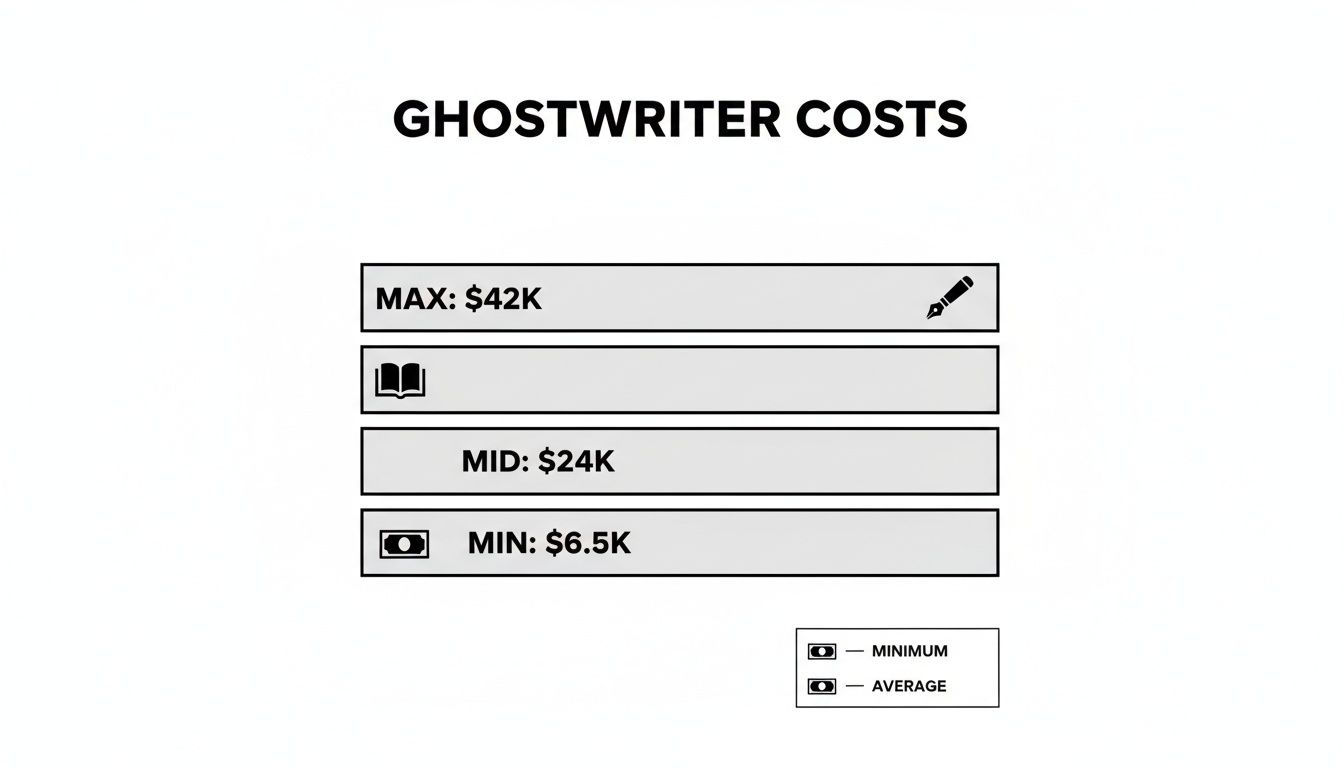
As you can see, the investment can vary quite a bit. This reflects the unique demands of each project and the writer's specific skill set.
Bringing a book to life is a deeply personal and significant undertaking. It’s an investment not just in a product, but in the preservation of your story for generations to come.
Based on real project data, a professional ghostwriter for a nonfiction book will typically cost between $6,500 and $42,000. More personal, research-heavy projects like biographies and memoirs often lean toward the higher end of that scale, from $12,000 to $42,000. This is because they require hours of intensive interviews and deep research to truly capture the essence of a person's life. You can always discover more insights about these costs on Reedsy.com to dig deeper.
This range isn't meant to be intimidating. It's here to give you clarity. Knowing the numbers upfront helps you plan realistically and find the perfect writing partner to do your story justice. Because that's what this is all about: doing justice to the book that's waiting inside you.
Decoding Ghostwriter Pricing Models
Ghostwriters don't just pull numbers out of a hat. I promise, there's a method to the madness! The cost to hire a ghostwriter is almost always based on one of a few standard pricing models, and understanding them is the key to finding a fair, transparent partner.
Think of it like buying a car. You can lease it, finance it, or pay cash upfront. Each option has its own pros and cons, and one is probably a much better fit for your situation than the others. It's the same with ghostwriting fees.

Let's break down the three main ways ghostwriters structure their fees so you can compare quotes like a pro.
The Predictable Per-Project Flat Fee
This is, by far, the most common model for a full book project, and for good reason. A per-project fee is exactly what it sounds like: the writer gives you one single, all-inclusive price for the entire manuscript, from the first outline to the final polished draft.
Imagine you're hiring a contractor to build your dream kitchen. They give you one number for the whole job. That’s it. You know exactly what you’re paying from day one, which is a fantastic feeling. There's no ticking clock or surprise invoices, which allows both you and the writer to focus on what really matters, telling your story. It’s so much easier and more fun when you’re not worried about the budget ballooning.
This model is a perfect fit for:
- Full-length books like memoirs, business guides, or novels.
- Authors who need and want total budget predictability.
- Projects where the scope and final outcome are clearly defined.
The Flexible Per-Word Rate
A per-word rate can seem beautifully simple at first. If a writer charges $0.50 per word and your target is a 50,000-word book, the math is easy. This approach is popular for shorter-form content like articles, blog posts, or even book proposals.
But for a full-length book? It can get a little messy. What happens when your family history project blossoms from 50,000 to 70,000 words as you uncover more incredible stories? Your budget just jumped significantly. While it offers a certain kind of clarity, it often lacks the cost certainty of a flat fee for larger, more personal projects. It can leave you wordy and worried.
The Strategic Per-Hour Rate
Charging per-hour is ideal for specific, limited tasks where the scope isn't easy to pin down. Think of it as bringing in a consultant. You might pay an hourly rate for brainstorming sessions, author coaching calls, or developmental editing on a manuscript you’ve already written.
It’s much less common for writing an entire book from scratch, mainly because it can feel like a running meter. Nobody wants to feel like they’re "on the clock" while sharing the deeply personal details of their life story. That’s a surefire way to kill the creative magic! Let's save the clock-watching for billable hours in a courtroom, not the creation of your life's work.
A transparent pricing model is the foundation of a great author-ghostwriter relationship. It’s not just about the numbers; it’s about building trust so you can focus on the heart of your project.
So, what do these models look like in the real world? Ghostwriting rates can span from $0.10 to over $2.00 per word, $35 to $140 per hour, or $1,500 to well over $42,000 per project.
A writer’s experience is the single biggest factor driving these numbers. A junior writer might be a great fit for a shorter novel, coming in around $3,500-$16,000. On the other hand, a seasoned expert writing a complex nonfiction book that requires deep research might command $40,000 or more. For another perspective, you can find out more about how ghostwriting services are priced on Fiverr.com.
Ultimately, the right pricing model comes down to your project's specific needs and your own comfort level. But for that big, important book you’re dreaming of, the predictability of a flat fee often provides the most peace of mind for the incredible journey ahead.
So, What Actually Goes Into the Final Price?
Ever looked at a couple of ghostwriting quotes and felt a bit of sticker shock? One writer quotes you $15,000, and another comes back with $50,000 for the exact same book. It can feel like they're just pulling numbers out of thin air, but I promise you, there's a method to the madness.
Think of it less like a fixed price tag and more like a custom-built car. The final cost depends entirely on what's under the hood. Getting a handle on these key "ingredients" is your secret weapon. It helps you understand the value you're getting for the price and lets you invest in your project with total confidence.
Let's break down exactly what shapes that final number.
The Writer's Experience and Street Cred
This is, without a doubt, the single biggest factor. When you hire a ghostwriter, you're not just buying words. You're investing in their years of experience, their insider knowledge of the publishing world, and the sheer confidence that comes from working with someone who’s done this dozens of times before.
-
The Rising Star: Newer writers who have a few great projects to their name are often a fantastic value. They're hungry, eager to build their reputation, and will pour an incredible amount of energy and passion into your book. Think of them as the indie band that’s about to blow up; you get to work with them before they’re selling out stadiums.
-
The Seasoned Pro: A ghostwriter with ten or fifteen years in the game has seen it all. They know how to untangle a messy timeline, how to pull a compelling story out of hours of interviews, and how to keep the project on track no matter what. Their rates are higher because they bring a level of skill and reliability that can only be earned through experience. They've been around the block, and they know where all the potholes are.
-
The A-List Author: Then you have the ghostwriters who have penned New York Times bestsellers. These writers are in a league of their own. They don't just write well; they understand the market inside and out and know what it takes to create a commercial hit. Hiring them is a major investment, often well into the six figures.
It's a bit like hiring a guide to climb a mountain. The new guide might be fantastic and get you to the summit. But the one who's climbed Everest a dozen times? They know every hidden path and can smell a storm coming from a mile away. You're paying for that assurance.
The Scope and Complexity of Your Project
Naturally, not all books demand the same amount of work. The ghostwriter has to estimate the total time, research, and creative energy your specific project will require, and that has a huge impact on the price.
For example, a simple 25,000-word business book based on a series of blog posts you've already written is a much lighter lift than a sprawling 90,000-word memoir that involves interviewing ten family members and digging through historical archives. One is a pleasant afternoon hike; the other is a full-on expedition.
The more organized you are from the start, the more you set your writer, and your budget, up for success. Think of your prep work as a direct investment in your own book.
Here are a few things that can move the needle on cost:
- How much research is needed? Does your writer need to become a subject matter expert on cryptocurrency or the history of Italian ceramics? Deep-dive research takes time, and that time gets factored into the cost.
- How many interviews are required? A memoir might need 20 to 40 hours of recorded conversations just to get the raw material. A leadership book based on your existing talks might only need a few hours to fill in the gaps.
- What shape is your material in? If you show up with a clear outline and neatly organized notes, you've already done a big chunk of the foundational work. But if you hand over a chaotic jumble of thoughts and a shoebox full of old letters, the writer first has to play detective and strategist, which adds a lot of hours to the project.
When it comes down to it, the more clarity and structure you can provide upfront, the more you free up your writer to focus on what they're truly great at: writing a book that people won't be able to put down. It’s so much easier, and more fun, to let a pro handle the heavy lifting.
Budgeting for More Than Just Writing
Alright, let’s talk about something most people don’t think about until they’re already deep in the process. You’ve crunched the numbers on hiring a ghostwriter and you feel set. But that writer’s fee? It’s a huge piece of the puzzle, but it’s still just one piece. A truly polished, professional book is a team sport.
Think of it like building your dream house. The ghostwriter is your architect and master builder, they create the structure, frame the rooms, and make sure it’s solid. But you still need the interior designer, the painter, and the landscaper to make it a place you’re proud to call home. Looking at these “extra” costs now will save you a world of financial headaches down the road.

This isn’t about scaring you off with hidden fees. It’s about doing right by your story and giving it the professional treatment it deserves. No surprises, just a clear-eyed look at what it takes to create a book you’ll be proud of for years to come.
The Unsung Heroes of Book Creation
Your ghostwriter will hand you a fantastic manuscript, but it’s important to remember that it’s still a first draft. To get it to that final, publish-ready state, you’ll need a few more experts in your corner. These services are almost never included in a standard ghostwriting agreement, so it's smart to plan for them from day one.
Here are the key players you'll need to make room for in your budget:
- Developmental Editor: This is your book's strategist. They look at the big-picture stuff, the overall structure, the flow of your arguments, and the narrative arc. They make sure your book is cohesive and delivers the punch you want it to.
- Copy Editor: This pro gets into the weeds of your writing. They polish every sentence, correcting grammar, tweaking word choice, and ensuring consistency. They make your prose shine. They're the ones who save you from grammatical gaffes.
- Proofreader: This is your final quality check. The proofreader is the last line of defense against sneaky typos, stray commas, and weird formatting glitches before your book goes public.
These three roles are non-negotiable if you want a professional-grade book. Skipping them is like building a beautiful car and forgetting the paint job. It just won’t look or feel finished.
Other Potential Project Costs
Beyond the editing team, a few other expenses might crop up, depending on the specifics of your project. It’s always a good idea to have a little cushion in your budget for these kinds of things.
For example, will your ghostwriter need to travel to interview you or other key people? You'll want to budget for that. If you have hours of recorded interviews, you may need to pay for transcription services. And if your book is heavy on research, there could be costs for accessing academic journals, archives, or other specialized materials.
Your budget is more than a spreadsheet; it’s a statement of commitment to your story's potential. Planning for the whole journey, not just the first leg, is how you ensure a beautiful arrival.
When you hire a ghostwriter, their fee also has to cover their own business expenses. A small to mid-sized agency can easily have monthly overhead costs topping $21,000, with most of that going to staff salaries. This is a big part of why quality work comes with a real price tag.
To get a handle on your project's total financial picture, it's incredibly helpful to learn about comprehensive project budgeting. Thinking through all these elements now puts you in the driver's seat. You can build a realistic, all-in budget that makes the path to a finished book smooth, predictable, and free of any nasty financial surprises.
Finding a Ghostwriter Without Breaking the Bank
Alright, you’ve crunched the numbers, figured out your budget, and you're ready to go. Now for the exciting part: finding the right person to bring your story into the world. It’s a lot like casting the lead in a movie, you need the right skills, of course, but the chemistry has to be there, too.
This search isn't about scrolling endlessly to find the absolute cheapest option. The real win is finding the best value. The hire a ghostwriter cost is a serious investment, and the goal is to land in that sweet spot where exceptional talent meets a price you feel good about. It's about finding a creative partner who not only gets your vision but is genuinely excited to help you realize it.

Let's face it, the thought of writing a whole book by yourself can be completely overwhelming. You have a job, a family, a life! Instead of letting that manuscript idea collect dust for years, pairing up with the right expert turns a monumental task into an energizing collaboration. It makes it easier, more fun, and you actually get a finished book at the end. It's still your vision, brought to reality.
Where to Find Your Writing Soulmate
You wouldn’t look for a heart surgeon on Craigslist, and finding a top-tier ghostwriter means looking in the right places. The internet is a big place, but a handful of trusted platforms are specifically designed to connect authors with vetted professionals. This helps you skip the amateurs and go straight to the pros, saving you a ton of time and potential headaches.
Here are the best places to kick off your search:
- Professional Marketplaces: Websites like Reedsy are the gold standard. They screen their writers, feature detailed portfolios, and offer a secure platform for payments and communication. It’s a curated community where you know you’re dealing with serious professionals.
- Literary Agencies: Some literary agencies have ghostwriting divisions or can connect you with trusted writers they’ve worked with on past projects. This is an excellent route if you're already thinking about traditional publishing down the line.
- Your Own Network: Never underestimate the power of a personal recommendation. Ask colleagues, friends, or mentors if they’ve ever worked with a ghostwriter. A referral is often the best lead you can get.
How to Vet Potential Ghostwriters
Once you have a shortlist, it’s time to do a little digging. Think of this as the interview stage, where you get to see who really connects with you and your story. A great portfolio is one thing, but a real connection is everything.
You’re looking for more than just a good writer; you’re looking for a great listener, a strategic partner, and a true collaborator. Don’t be afraid to ask tough questions, a real professional will welcome them and have clear, confident answers ready.
Here are a few key things to zero in on:
- Review Their Portfolio Carefully: Do the writing samples sound different from each other? A skilled ghost is a chameleon; their work should reflect the client's unique voice, not their own. If every sample has the same tone and style, they’re writing in their voice, not yours.
- Ask About Their Process: A pro will have a system. They should be able to walk you through their steps for interviewing, outlining, drafting, and handling revisions. Their process should sound structured, clear, and collaborative.
- Check for Chemistry on a Call: This is non-negotiable. You’re going to spend a lot of time with this person, often sharing deeply personal stories. If the conversation feels awkward or forced, they aren’t the one, no matter how impressive their résumé is.
A ghostwriter’s most important skill isn’t writing; it’s listening. They need to hear the story behind your words to truly capture your voice and the heart of your message.
Remember, bringing a book to life is a massive project. If you find yourself stuck between a half-finished draft and a looming sense of dread, a service like Opus Eternal might be the perfect fit. They provide expert, premium-quality ghostwriting that is remarkably fast and efficient, often at a price that can be less than half the cost of traditional routes, without ever compromising on quality. It's a fantastic way to get your book across the finish line with your sanity beautifully intact.
Why Your Story Is a Priceless Investment
We’ve spent a lot of time breaking down numbers, and I get it, it can all feel a bit transactional. So let's bring this back to where we started: your story. Because that’s what this is all about. Writing a book isn't just another project to check off a list; it's about creating a legacy. It's you, capturing your hard-won wisdom and unique experiences to make a permanent mark on the world. This is the beautiful, honorable part of the journey.
Think about the stories your grandparents told you. Those memories are priceless, right? Your book is no different. It's a vessel for your life, your ideas, your journey, something that can be passed down and shared for generations. When you see it that way, you realize this is an investment in something that will outlive you.
Partnering to Honor Your Legacy
Hiring a ghostwriter can feel like a huge leap of faith. The cost to hire a ghostwriter is a real consideration, but so is the burnout that comes from trying to do it all yourself. This isn't about handing over control. It’s about finding a dedicated partner.
It’s about bringing in a skilled professional who can lift the immense weight of writing, structuring, and polishing, freeing you up to focus purely on the heart of your message. It's so much easier, and the result is still your vision brought to life.
Think of it like building your dream home. You could try to do it all yourself, but a master builder ensures the foundation is solid and the structure will stand for a century. A great ghostwriter is your story's master builder, making sure it’s not only beautiful but built to last.
Your story deserves to be told with skill, heart, and dedication. Investing in the right help is an act of honoring that story and everyone who will one day read it.
Your words have the power to connect, to heal, and to inspire people you may never even meet. You’ve earned the right to see your name on a cover and feel the weight of that finished book in your hands.
Getting that polished manuscript is a huge step. For many authors, finding representation is the next crucial phase. To get ready for what's next, it's worth learning how to find a literary agent for your book.
The goal has always been simple: get that incredible idea out of your head and into the hands of readers. Let’s make sure it’s done right.
A Few More Questions About Ghostwriter Costs
Got a few last questions on your mind? I get it. This is a big deal, and it's smart to have all your ducks in a row before you dive in. You're not just hiring someone; you're trusting them with your story, your ideas, and your reputation.
Let's tackle some of the most common questions that pop up when people are figuring out the budget for a ghostwriter.
Do I Have to Pay for the Whole Thing Upfront?
Absolutely not. If a writer ever asks for the full project fee before a single word has been written, you should run for the hills. Seriously. The industry standard is a milestone-based payment plan, and it's there to protect both you and the writer.
A typical payment schedule looks something like this:
- An initial deposit to secure their time and get the project on their calendar. This is usually 25% of the total fee.
- A second payment once you've approved a detailed outline.
- Additional payments as they deliver sections or chapters for your review.
- A final payment once the completed manuscript is delivered to you.
This approach keeps everything transparent. You see real, tangible progress before releasing funds, and the writer gets paid for their work as they go. It's a system built on trust and forward momentum.
Can I Negotiate the Ghostwriter's Fee?
Yes, but there's a right way and a wrong way to go about it. Simply asking for a discount often falls flat, you're basically asking a professional to devalue their own expertise.
A much better approach is to negotiate the scope of the project. Try saying something like, "My budget is firmly set at X. Is there anything we can adjust in the project plan to make that number work?"
This opens the door to a creative, collaborative conversation. Maybe you can provide more organized source material, which cuts down on their research hours. Or perhaps you can agree to a slightly shorter word count or fewer interview sessions. Most professional writers are willing to explore options to find a win-win that respects your budget and their work.
Does the Ghostwriter Get a Cut of My Book Royalties?
Typically, no. The very nature of ghostwriting is a work-for-hire arrangement. The writer is paid a flat fee for their service, and in exchange, they waive all rights to credit and future earnings. Your contract should spell this out in no uncertain terms.
You, the author, keep 100% of the ownership, copyright, and royalties. It's your name on the cover, your intellectual property, and your profits. While you might hear stories of A-list ghostwriters for major celebrities negotiating a percentage, that is very much the exception, not the rule. So don't worry, you won't be splitting the check.
What Happens If I Don’t Like the Writing?
This is a fantastic and crucial question. Any professional ghostwriting project should have built-in safeguards to prevent this from becoming a crisis. You should never see the full manuscript for the first time on delivery day.
The process is designed with checkpoints. You'll approve an outline and then sample chapters early on. This is where you iron out any issues with tone, voice, and style. Your contract is your ultimate safety net, though. It should clearly define the revision process (e.g., how many rounds of edits are included) and have a "kill fee" or termination clause. This clause outlines a fair way to part ways if things just aren't working out, clarifying what payments are non-refundable and who owns the work completed up to that point.
At My Book Written, we believe your story deserves to be told beautifully. Our resources are here to guide you, from organizing your first thoughts to finding the perfect partner to bring your vision to life. Learn more at My Book Written and start your journey today.