
So, you're thinking about hiring a ghostwriter to help tell your life story. That's a fantastic decision, and a brave one, too. It's about finding a professional who can truly capture your unique voice and weave your memories into a story that grips the reader. The process is a partnership, it involves getting your memories ready, finding the right writer, and working together to create a book that feels authentically you.
Your Story Is Worthy of Being Told Well

Let’s be real for a moment. The idea of writing your life story can feel monumental, can't it? It’s a bit like trying to put together a massive jigsaw puzzle where the pieces are scattered across decades of memories. It’s a beautiful, honorable, and frankly, huge undertaking.
This is exactly where so many incredible legacy projects hit a wall. The sheer weight of a lifetime, the vulnerability of putting it all on paper, and the fear of not doing it justice can be paralyzing. All of a sudden, that box of old photos in the attic seems a lot more intimidating than inspiring.
Why Your Story Deserves a Pro
Getting help isn't a sign of weakness; it’s a sign that you respect your story enough to want it told well. Think of a ghostwriter not as a substitute for your voice, but as a skilled orchestra conductor. You provide the beautiful music, the memories, emotions, and hard won lessons, and they arrange it into a breathtaking symphony. They bring the structure, pacing, and professional polish that makes your story sing. It's your vision, just easier and a lot more fun.
This kind of partnership is becoming more and more common. The global ghostwriting services market was valued at a staggering $5 billion in 2023 and is on track to hit $8 billion by 2030. This isn't just a fleeting trend; it's a growing recognition that creating a timeless book is often a team sport.
Your life is an epic novel waiting to be written. Don't let the fear of a blank page leave it unpublished. Hiring a professional is about honoring your journey with the craftsmanship it deserves.
The Art of Turning Memories into a Masterpiece
A great ghostwriter does so much more than just type out your anecdotes. They are masters at finding the golden thread that connects your childhood adventures to your career triumphs and personal heartbreaks. They help you see the narrative arc of your own life, something that’s incredibly difficult to spot when you're the one who lived it.
Understanding the principles of what is storytelling is key to appreciating the impact a professionally written life story can have. It’s about transforming a simple "this happened, then that happened" timeline into an engaging tale of growth, resilience, and humanity. It’s about making sure your legacy becomes a true page turner.
Writing Your Story Yourself vs Hiring a Pro
Deciding whether to write your own story or bring in a professional is a big first step. Here's a quick look at the time, skill, and emotional energy required for both paths to help you figure out the best way to bring your life story to life.
| Aspect | DIY Approach | Hiring a Professional |
|---|---|---|
| Time Commitment | Hundreds of hours. Writing, editing, and formatting can easily become a part time job for a year or more. | Significantly less. You focus on sharing memories during interviews; the writer handles the rest. |
| Skill Required | Expert level. Requires strong writing, structuring, editing, and storytelling abilities. | Relies on the writer's expertise. You provide the raw material; they provide the professional polish. |
| Objectivity | Challenging. It's tough to see the narrative arc of your own life and decide what to include or cut. | A key benefit. A ghostwriter offers a fresh perspective to identify the most compelling themes. |
| Emotional Energy | Very high. Reliving difficult memories alone can be draining and can cause writer's block. | Managed process. A good ghostwriter guides you through memories with empathy, making it therapeutic. |
| Final Product | Varies widely. Quality depends entirely on your writing skill and perseverance. | Professional and polished. You get a high quality, readable book ready for publication. |
Ultimately, both paths can lead to a finished book. The real question is what kind of journey you want to take to get there and what quality of result you're aiming for.
Getting Your Memories Ready for a Ghostwriter

Before you even start looking for the right ghostwriter, there's a bit of prep work to do. But don't worry, this is the fun part, think of it less like homework and more like a treasure hunt through your own past. You don't have to write a single word of the book yourself; that’s what the pro is for!
This stage is all about gathering the raw materials. A little bit of organization now will make the entire collaboration smoother and, honestly, more enjoyable. When you hire a ghostwriter for my life story, you’re essentially handing them the keys to your world. Giving them a map, even a rough one, makes the journey so much more rewarding for everyone involved.
Build Your "Story Bible"
The first thing I always recommend is creating what I call a "story bible." It sounds official, but it’s really just a central place for all your key moments, people, and memories. Think of it as the clay your writer will help you sculpt into a finished piece.
Going through this process is often surprisingly therapeutic. You'll start to see patterns and connections in your own life that you never noticed before. It’s like being a detective solving the mystery of you.
Here’s how to get started:
- Sketch a Timeline: Grab a notebook or open a new document and just list the big life events. Births, moves, graduations, first jobs, marriages, major turning points. No need for fancy sentences, just get the basic skeleton down on paper.
- List the "Greatest Hits": Jot down a few bullet points for those go to stories you always share at family dinners. The time you met your spouse, the moment you knew you had to change careers, that hilarious travel mishap.
- Create a Cast of Characters: Who are the main players? List the most important people in your life and add a single, simple description. Something like, "Uncle Jim, my dad's brother who taught me how to fish." This is a huge help for your writer.
Dig for Narrative Gold
Now, let the treasure hunt begin. It's time to gather the artifacts of your life. Every old photo, letter, and dusty journal holds a piece of your story. These items aren't just clutter; they are powerful prompts filled with emotion and detail.
I once had a client bring in an old shoebox filled with ticket stubs. A single ticket from a Grateful Dead concert in 1978 sparked a two hour conversation that became the most vivid and exciting chapter in his entire book. Your "junk" is where the real gold is hidden.
Don't filter yourself. That half finished poem from college or that slightly embarrassing diary entry might hold the exact emotional truth your book needs. The mess is where the magic lives.
Gather anything and everything that speaks to you:
- Old journals and diaries
- Letters and saved emails
- Photos and family albums
- Awards, certificates, or trophies
- Newspaper clippings
Find Your Core Message
Finally, take a quiet moment to think about the big picture. If a reader could only take away one single idea from your life story, what would you want it to be? Is your story about resilience? About finding love against all odds? Or maybe it's about building a legacy from scratch?
You don’t need a perfectly polished thesis statement. A gut feeling is enough. This core message will become the North Star for the whole project, making sure your book is more than just a list of events, it's a story with a beating heart.
By doing this prep work, you aren't just making the ghostwriter's job easier; you're actively shaping the soul of your book before a single chapter is written. For more great ideas on getting organized, check out our guide on writing your life story.
Finding the Right Ghostwriter for Your Story
Alright, let’s talk about the search. Trying to find the right ghostwriter for your life story can feel a little like online dating for your soul. You're scrolling through profiles, reading bios, and trying to figure out who you can actually trust with your most personal memories. It’s a huge decision, and it’s completely normal to feel a bit overwhelmed.
But here’s the good news. Finding the right partner for this journey isn’t about luck; it’s about having a smart, simple process. Your story is far too important to leave to chance. This is about finding someone who not only has the writing chops but also the heart to handle your legacy with the care it deserves.
Where the Best Ghostwriters Are Hiding
You won't find the best ghostwriters on a park bench with a sign that reads, "Will write for emotional depth." It takes a little more digging, but I promise you, they are out there waiting for a story just like yours. Knowing where to look is half the battle.
Here are a few of the most reliable places to start your search:
- Professional Directories: Websites like the Association of Ghostwriters are fantastic resources. They’re filled with vetted professionals who take their craft seriously.
- Reputable Agencies: Ghostwriting agencies essentially act as matchmakers. They keep a roster of writers and can help you find one who specializes in memoirs and life stories, saving you a ton of legwork.
- LinkedIn Searches: It might sound simple, but a quick search for "memoir ghostwriter" or "life story writer" on LinkedIn can uncover a host of experienced professionals with detailed portfolios and real world recommendations.
Vetting Your Candidates Like a Pro
Once you have a handful of potential candidates, it's time to put on your detective hat. This isn't about being cynical, it's about being diligent. You’re looking for a very specific blend of skill, empathy, and professional integrity. A brilliant writer for a business book might be a terrible fit for your personal memoir.
A writer's portfolio is your first clue. As you read their samples, ask yourself: does their writing have heart? Can they capture different voices, or does everything sound the same? Don't just look for perfect grammar; look for emotion and a style that genuinely resonates with you.
Testimonials are another key piece of the puzzle. Look for quotes that mention the writer's listening skills, their patience, and their ability to capture the author's true voice. A review that says, "They made the process feel safe and therapeutic," is worth its weight in gold.
A discovery call is non negotiable. You can learn more about a person in a 20 minute conversation than you can from hours of reading their website. Trust your gut. If the connection feels forced or they seem distracted, they aren’t the one for you.
Asking the Right Questions
Your interview with a potential ghostwriter should go way beyond the basics like "How much do you charge?" and "How long will this take?" You are trying to gauge their character and their genuine interest in your story.
Here are some powerful questions to get you started:
- "What part of my story summary intrigued you the most and why?" This shows if they were truly paying attention and if your story sparked their creative interest.
- "How do you handle sensitive or difficult memories during interviews?" Their answer reveals their level of empathy and the process they use to create a safe, supportive space.
- "Can you describe your ideal author partnership?" This is a great way to understand their communication style and see if their expectations for collaboration align with yours.
This process can be a lot of work, and that's okay. However, for those who want a faster, high quality solution without the endless search, services like Opus Eternal offer premium ghostwriting at a surprisingly accessible price. They provide a fantastic alternative for busy professionals who want to get straight to the creative partnership without the headache of a lengthy vetting process.
Ultimately, this is about finding a creative partner, not just a hired pen. You want to find someone you genuinely enjoy talking to, someone you feel you can be vulnerable with. For a deeper dive, you might be interested in our article on what to look for in a ghostwriter for your memoir.
The self publishing world has absolutely exploded. Amazon KDP alone now sees over 1.4 million new titles hit the virtual shelves every year. In such a crowded market, a professionally polished book is what makes a story stand out from the noise. In fact, professionally ghostwritten books often achieve 25-50% higher sales in their first three months because they are crafted to connect deeply with readers from the very first page. You can learn more about how aspiring authors are benefitting from ghostwriting.
Navigating Ghostwriting Costs and Contracts
Alright, let’s talk money and legal documents. These are the two things that can make anyone a little nervous, but getting them right is one of the most empowering steps you can take. It’s where your project gets real.
Think of it this way: a clear contract isn't about mistrust. It's about building a solid foundation for a creative partnership. It’s the sturdy bridge that takes you and your writer from a great idea to a finished book, without any of the nasty "he said, she said" drama along the way. That peace of mind is priceless.
Decoding the Price Tag
So, what’s the real cost of bringing your life story to life? The honest answer is… it depends. But that's not very helpful, is it? Let's break down how most ghostwriters structure their fees so you know what to expect.
You’ll typically see pricing in one of three ways:
- Per Project Fee: This is the industry standard for book length projects. You agree on a flat fee for the entire manuscript, from the first interview to the final draft. It’s clean, simple, and you know the total cost from day one. No surprises.
- Per Word Rate: Some writers charge by the word. This can get tricky for a life story because the final word count is often a moving target until you're deep in the weeds of storytelling.
- Hourly Rate: This is pretty rare for a full book but might be used for smaller consulting gigs or developmental editing. It's generally not a great fit for a memoir, as the hours can stack up much faster than you’d imagine.
For a full length book, you should be prepared for a significant investment. The truth is, ghostwriting fees for book projects typically cluster around the $50,000 mark. Most seasoned professionals charge somewhere between $30,000 and $95,000, and it's not uncommon for high profile projects to hit six figures.
If you want a deeper dive into the market, the 2025 ghostwriting industry report offers some fantastic insights.
The Contract Essentials Your Story Can't Live Without
Now for the main event: the contract. A good contract is your best friend in this process. It protects you, it protects the writer, and it makes sure everyone is marching to the same beat.
I once heard a nightmare story about someone who hired a writer on a handshake deal. Halfway through, the writer claimed he owned 50% of the book’s rights because he "helped create it." Don't let that be you. Your contract needs to be rock solid.
A contract is like a GPS for your creative journey. It sets the destination, maps out the best route, and ensures you both know exactly where the rest stops are. Don't start the engine without it.
It doesn’t need to be written in dense legalese, but it absolutely must include these key elements:
- Ownership of Rights: This is the big one. The contract must state, in no uncertain terms, that you own 100% of the rights to the work, including the copyright. The writer is providing a service for hire. Their name should only appear on the cover if that's a separate agreement you both want.
- Confidentiality Clause: Your life story is deeply personal. A strong non disclosure agreement (NDA) is non negotiable. It ensures everything you share stays private and that the writer cannot discuss your project with anyone.
- Clear Scope of Work: What, exactly, is being delivered? The contract should spell this out. Include the estimated word count, the number of interview hours included, and how many rounds of revisions you get for each chapter or section.
- Payment Schedule: Let's avoid awkward money conversations. A clear schedule, often tied to project milestones, keeps everything professional. For example, a payment upon signing, another after the first few chapters are approved, and a final payment upon delivery.
- Termination Clause: What happens if things just aren’t working out? A termination clause, or "exit ramp", outlines how either of you can end the agreement and what happens to the work and payments already made.
Wading through these details might feel tedious, but getting your agreement right is the bedrock of a successful project. For a great starting point, check out our guide on what to include in a ghostwriter contract template.
Nailing this down allows you to finally relax and focus on what truly matters: sharing your incredible story.
The Creative Partnership with Your Ghostwriter
You’ve signed the contract, dotted the i's, and crossed the t's. Now the real adventure begins. This is where the magic happens, the moment your memories start their incredible journey from your heart to the printed page.
Think of this part of the process as a series of deep, meaningful conversations. It’s less like a formal business transaction and more like catching up with an old friend who just happens to be a master storyteller. Your ghostwriter’s first job is simply to listen, creating a safe and comfortable space for you to share your life’s biggest moments and smallest details.
This initial phase is where we build the foundation of your book, one story at a time. It’s a bit like a literary excavation, digging for the gold hidden in your past. A great writer will ask questions you've never thought to ask yourself, helping you see the beautiful, intricate patterns of your own life.
The Rhythm of Collaboration
Once the interviews are underway, your writer will begin the delicate work of weaving your words into a narrative. Don't be surprised if the first chapter feels a little strange to read. Seeing your life on a page, shaped by another hand, is a unique experience.
The goal here isn't perfection; it's about checking one crucial thing: Did we capture your voice?
This is a partnership, not a one way street. Your feedback is the compass that guides the entire project. Honesty and clarity are your best friends during this phase.
- Don't be shy. If a sentence doesn't sound like you, say so. A good writer will never be offended; they’ll be grateful for the direction.
- Focus on the feeling. Does the chapter feel right? Does it capture the emotion of that moment in your life? That's more important than fussing over a comma.
- Trust their expertise. Your writer might suggest moving a story or changing the structure. They're trained to see the narrative arc, so lean on their skill to shape the story for maximum impact.
The ghostwriting process isn't about handing over your story and disappearing. It's a joyful, back and forth collaboration. You are the heart and soul of the book; the writer is simply the skilled artisan who helps bring it to life.
In this creative partnership, your ghostwriter often serves as more than just a writer; they also act as your dedicated writing accountability partner, helping you maintain momentum and deliver your story's elements. They keep the project moving forward, even when life gets busy.
Avoiding the Pitfalls of Partnership
Like any great dance, a few missteps can happen. The key is knowing what they are so you can gracefully sidestep them.
The biggest potential pitfall? Micromanagement. It's tempting to want to control every single word, but hiring a professional means trusting them to do their job. Constantly tweaking sentences or dictating phrasing can stifle creativity and slow the project to a crawl. You’ve hired a chef; let them cook.
Another common issue is holding back. Your story’s power lies in its authenticity, and that includes the messy, vulnerable, and difficult parts. A professional ghostwriter is bound by a confidentiality agreement. They are a safe vault for your memories, not a judge. The more you share, the richer and more resonant your book will be.
Here’s a quick visual that breaks down the foundational elements of the deal itself.
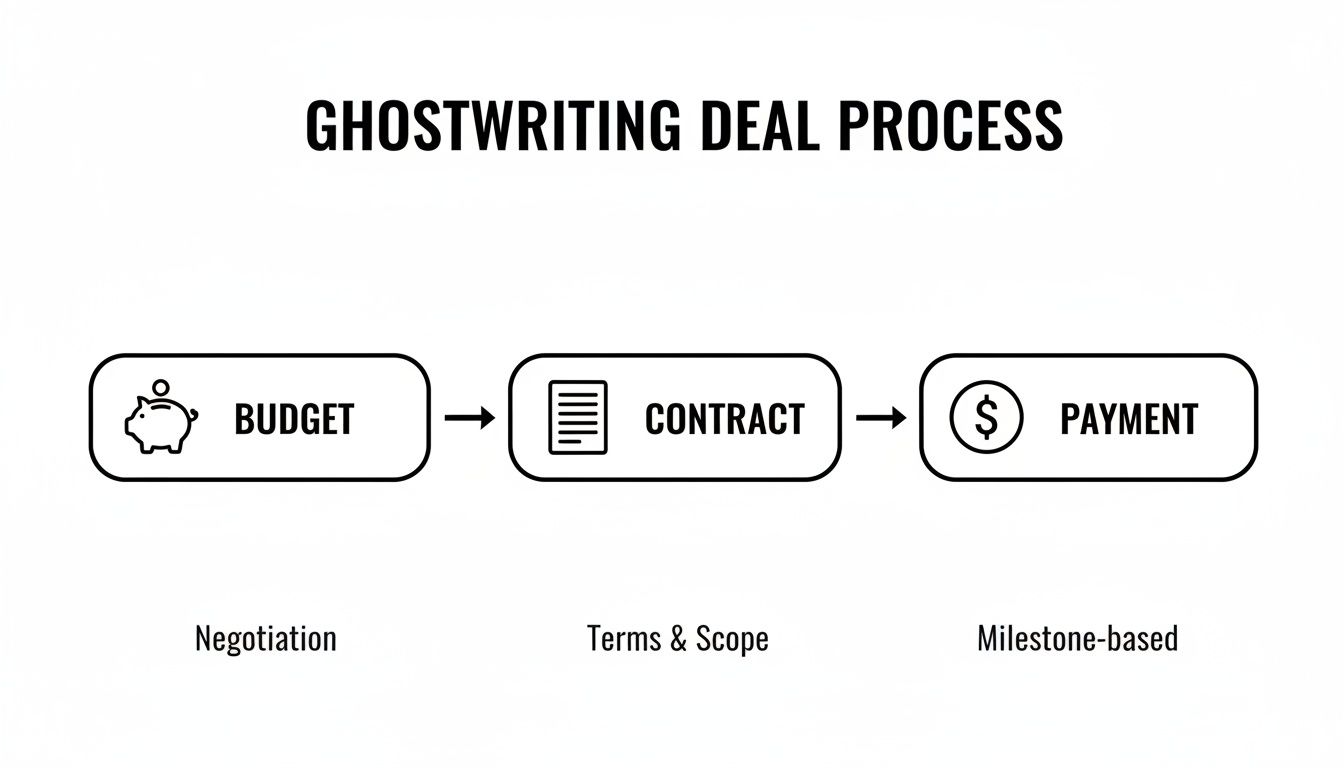
This simple flow, budget, contract, payment, is the bedrock of a professional relationship. It allows the creative collaboration to flourish without any financial stress or ambiguity getting in the way.
Ultimately, this partnership is built on mutual respect and a shared vision. Your writer’s job is to make you sound like the absolute best version of yourself, to polish your stories until they shine, and to deliver a manuscript that makes you swell with pride. It’s an honor to be trusted with a life story, and the right writer will treat it with the reverence it deserves. Embrace the process, trust your partner, and get ready to watch your legacy take shape.
Turning Your Manuscript into a Published Book
Congratulations, you’ve done it. The interviews are over, the drafts are polished, and your beautiful, messy, wonderful life is now a manuscript. Seriously, take a moment and let that sink in. You’ve created something that will last forever.
But the journey isn't quite over. Think of it this way: your ghostwriter has prepared an incredible meal. Now it's time to set the table and present it to the world.
The Finishing Touches That Make a Book Shine
Your manuscript is the heart of the project, but a few more steps will transform it into a professional book you’ll be proud to share. This is another one of those areas where a DIY approach can lead to frustration. Trust me, it’s much more fun to let the pros handle the final details.
- Professional Editing: Even the best writers on the planet have an editor. A final proofread catches any sneaky typos or grammatical gremlins, making sure your story reads flawlessly from the first page to the last.
- A Captivating Cover: We all say "don't judge a book by its cover," but let’s be honest, everyone does. A professional designer can create a cover that truly captures the soul of your story and makes people genuinely curious to open it.
- Interior Formatting: This is the unsung hero of book production. It’s the art of laying out the text, chapters, and pages so the book is an absolute joy to read. Good formatting is invisible; bad formatting is a reader's worst nightmare.
This is the moment your story becomes a tangible legacy. It’s no longer just a collection of memories; it's a physical book you can hold, share, and pass down through generations.
Choosing Your Publishing Path
Finally, you’ll need to decide how to get your book out into the world. There are really two main roads you can take here. Neither is right or wrong, they just lead to very different destinations.
Traditional Publishing means finding a literary agent who then tries to sell your book to a publishing house. It can offer prestige and wider distribution, but it's also a notoriously long and difficult process with absolutely no guarantee of success.
Self Publishing, on the other hand, puts you in the driver's seat. Using platforms like Amazon KDP, you publish your book directly. This gives you complete creative control and you keep a much higher percentage of the royalties. For a life story meant for family, friends, and a specific community, this is almost always the fastest and most rewarding path. It ensures your book gets made on your terms, and on your timeline.
A Few Common Questions You're Probably Asking
Alright, let's get into a few of the big questions that are likely bouncing around in your head. It’s completely normal to have these concerns, pretty much everyone does before they hire a ghostwriter for the first time.
Is It Really My Book if Someone Else Writes It?
Yes, without a single doubt. This is the number one worry I hear from people, and it’s a valid one. Think of it this way: your ghostwriter is the skilled artisan, but you are providing the marble. Every memory, every feeling, every hard won lesson comes directly from you.
A professional ghostwriter’s entire job is to capture your voice, not impose their own. They study how you speak, the phrases you use, and the way you see the world. The finished book should sound so much like you that your closest friends and family can hear you speaking as they read.
So, Who Gets Credit on the Cover?
You do. Period. Any reputable ghostwriter will have a contract that clearly states you own 100% of the rights and the copyright. There's almost always a confidentiality clause, too.
The ghostwriter is a professional service you've hired. Their name only appears if that's something you specifically want and agree to, which is incredibly rare for a personal life story. This is your book, through and through.
This is your legacy. Your name, your story, your book. The ghostwriter is the silent partner who helps you build it, then gracefully steps away so you can take your well deserved bow.
Ready to finally turn those cherished memories into a masterpiece you can hold in your hands? The team at My Book Written has fantastic resources to help you organize your thoughts and get ready for the journey. Take the first step and start exploring their guides at MyBookWritten.com.