
So, you want to know how much it costs to hire a ghostwriter? Let's get right to it. For a whole book, you're looking at a range from $5,000 for a fresh-faced writer to well over $100,000 for a seasoned pro who has seen it all. The final number really boils down to your book's length, how twisty the topic is, and the writer's street cred.
Your Book Deserves to Be Written

You have a story rattling around inside you. An idea that just won't be quiet. That story deserves to become a real, honest-to-goodness book. One you can hold in your hands and feel the weight of. It’s an incredible, beautiful goal. But the second you think about getting help, a giant, scary question mark pops up: "What does hiring a ghostwriter really cost?"
It can feel like a big secret, like trying to get into a fancy club with a secret handshake. We're here to pull back the curtain. No jargon, no funny business, just straight talk from one human to another. Try to think of it less as a cost and more as an investment in your legacy. You are literally creating something that could last forever. How cool is that?
The Real Value of a Writing Partner
Hiring a ghostwriter isn't just about paying someone to clack away on a keyboard. Let’s be real, you could do that yourself, but you have a business to run, a family to love, or just a life to live! A professional ghostwriter is your creative partner in crime, your strategic guide, and your project manager, all rolled into one friendly package.
They are the person who helps you untangle that brilliant, beautiful mess of ideas in your head and weave it into a clear, compelling story that makes people lean in. It’s a partnership built on trust and a shared dream. It's about finding someone who not only gets your story but is genuinely thrilled to help you tell it.
You’re still the author. Always. It's your story, your voice, and your vision. A ghostwriter is the skilled artisan who helps you build the ship to carry it out into the world.
Demystifying the Numbers
Okay, let's get down to brass tacks. In 2025, hiring a professional ghostwriter for a full-length book typically falls somewhere between $5,000 and $100,000 or more. I know, that's a huge range. It’s because the price is so tied to the writer’s experience, how complex your project is, and how fast you need it done.
You can dive deeper into what goes into professional ghostwriter costs to see how all these pieces fit together.
Ultimately, bringing a pro on board is often the difference between a half-finished draft collecting digital dust on your computer and a polished book you’re bursting with pride to put your name on. It's about honoring your idea enough to give it the professional touch it deserves.
How Ghostwriters Charge for Their Magic
So, how do ghostwriters actually figure out what to charge? It’s not some mystical formula they cook up in a cauldron, I promise. Think of it like hiring a contractor to build your dream house. You wouldn't expect a single price for "a house," would you? The cost depends on the blueprints, the materials, and the sheer scope of the project.
It’s the exact same deal when you hire a ghostwriter. The good news is that this variety gives you options, so you can find a pricing model that feels comfortable for you and your book. Let’s break down the four main ways these literary wizards structure their fees. This way you'll know what to expect when proposals start landing in your inbox.
Per-Word Pricing: The Straightforward Meter
The per-word model is as simple as it sounds. You agree on a rate, let's say $0.50 per word, and the final cost is just that rate multiplied by the final word count. A 50,000-word book? That’s a clean $25,000. It’s transparent, easy to understand, and fantastic for budgeting.
This approach is great for shorter projects or when you have a very specific word count in mind. The only real downside? It can sometimes feel like the meter is always running. That might discourage you from exploring that amazing side story that just popped into your head. It's a bit like paying for gas by the gallon. You know exactly what you’re getting for your money, but you might think twice before taking a scenic detour.
Per-Hour Pricing: The Trust-Based Collaboration
Charging per hour is pretty common for projects where the scope is a little fuzzy at the start. Maybe you need help sifting through a lifetime of journals, conducting dozens of interviews, or doing a ton of research before a single word is written. This model gives you incredible flexibility to get that foundational work done right.
The catch, however, is that it requires a huge amount of trust. You’re paying for the writer's time, and without clear communication, the costs can float up like a hot air balloon. It’s like having a consultant on retainer. Their expertise is priceless, but you need to feel confident they’re using their time wisely to bring your vision forward. This model is best when you've already built a solid, trusting relationship with your writer.
Per-Project Pricing: The All-Inclusive Package
This is the most popular kid on the block, and for good reason. With a per-project fee, you and the writer agree on a single, flat price for the entire book, from the first interview to the final, polished manuscript. For instance, you might agree on a flat fee of $40,000 for your 60,000-word memoir.
The beauty of a flat fee is certainty. You know your total investment right from the start. That lets you budget properly without any last minute surprises. It gets everyone on the same page, focused on one thing: creating the best possible book.
This approach gives the creative process room to breathe. If a brilliant new idea for a chapter pops up halfway through, you and your writer can get excited about making the book better instead of worrying about how many words it adds to the total. It’s like buying an all-inclusive vacation. You can just relax and enjoy the journey, knowing everything is taken care of.
Royalty and Hybrid Deals: The Rare Unicorn
Finally, there’s the royalty share or hybrid model. This is where a writer agrees to a much lower upfront fee in exchange for a percentage of the book's future sales. Honestly, this is the unicorn of ghostwriting deals. It's incredibly rare and often misunderstood.
Why don't you see this more often? A few key reasons:
- High Risk for the Writer: The hard truth is that most books don't become runaway bestsellers. A writer could pour hundreds of hours into a project and see very little money in return. It's a huge gamble for them.
- Complex Contracts: These agreements can get legally sticky and require an immense amount of faith from both you and the writer.
- The Author's Platform is Everything: This kind of deal is almost exclusively for authors who already have a massive, proven audience that pretty much guarantees huge book sales. Think celebrities or mega-influencers.
Unless you're already a household name, you’ll likely be working with one of the first three models. And that’s a good thing. It keeps the business relationship clean, professional, and laser-focused on creating a powerful book you can be proud of.
What Really Influences the Final Price Tag?
So, why does one writer quote $15,000 for your book idea while another comes back with a $60,000 proposal? I promise it's not a random number they pulled out of a hat.
Think of it like buying a car. A brand new luxury sedan with all the bells and whistles has a very different price tag than a reliable, used compact car. Both get you from point A to point B, but the experience, performance, and craftsmanship are worlds apart. It’s the same with ghostwriters.
Several key factors will dramatically shift the cost. Getting a handle on these is your secret weapon. It helps you understand why the prices vary so much and empowers you to find a writer and a project scope that perfectly fit your budget and your dream. Let’s pop the hood and see what’s driving the price.
The Writer's Experience and Track Record
This is the big one. Without a doubt, a ghostwriter’s background is the single biggest factor in their fee. You're not just paying for words on a page. You're investing in their years of expertise, a proven process, and the peace of mind that comes from working with a true pro.
-
The Emerging Talent: These are writers who are hungry and building their portfolios. They might be incredible storytellers who just have fewer big projects under their belt. They often charge less to gain that crucial experience. Partnering with them can be a fantastic value, but you might need to be a bit more hands on.
-
The Established Professional: This writer has a shelf full of successfully completed projects. They know the publishing ropes. They can manage a long term project, solve tricky story problems, and deliver a polished manuscript on time. Their higher fee reflects a reliable, tested process that simply makes your life easier.
-
The Bestselling Expert: These are the A-listers, often with New York Times bestsellers to their name. Hiring them is a major investment because they bring more than just amazing writing. They bring deep industry knowledge and a reputation that can open doors with agents and publishers.
Project Complexity and Research Needs
Not all books are created equal. The complexity of your idea plays a huge role in the final cost. It’s the difference between assembling a simple bookshelf from a kit and having a master carpenter build custom cabinetry for your entire kitchen.
A straightforward memoir based on your detailed journals is a relatively simple lift. The raw materials are mostly there. But a business book that requires interviewing twenty industry experts, digging through market data, and building a unique framework from scratch? That's a much heavier lift for the writer.
More research and more brain-busting work will always mean a higher price.
The more work you do upfront to organize your thoughts, notes, and materials, the more you can potentially lower the final cost. A well organized author is a ghostwriter's dream come true!
Your Timeline and Collaboration Style
Finally, we have to talk about time. Because, as they say, time is money.
Need a finished manuscript in three months for a big product launch? You should expect to pay a premium for that. A rush job means your writer has to clear their schedule, push other projects aside, and focus only on you. That's a "book it" charge, you could say.
Statistically, the average cost of a ghostwritten book in 2025 falls between $15,000 and $45,000. Newer ghostwriters might charge at the lower end ($10,000 to $15,000), while established pros often command $30,000 to $60,000 or more for a standard book. You can dive into more details about the latest ghostwriting rates to see how these numbers break down even further.
How you like to work matters, too. If you prefer weekly in-person meetings or need a lot of hand holding, that extra time will be factored into the proposal. A more streamlined process built on clear communication and trust allows the writer to work more efficiently, which can absolutely be reflected in the price.
When you understand these variables, you're no longer just looking at a number on a proposal. You're seeing the value, the expertise, and the partnership behind it.
Budgeting for Different Types of Books
Alright, we've talked theory. But what does hiring a ghostwriter actually cost for a real book project? Let's get out of the clouds and onto the ground with some practical examples.
Seeing real numbers attached to a story you can picture makes everything click. It’s like the difference between reading a recipe and actually smelling the garlic hitting a hot pan. So, let’s walk through a few scenarios to give you a feel for how these project fees come together in the real world.
Case Study 1: The Personal Memoir
Meet Sarah. She’s a grandmother with an incredible life story. She has boxes of journals, photo albums, and a mind full of vivid memories. Her goal is a 50,000-word memoir, a true legacy project to pass down to her grandchildren. She's not trying to get on Oprah, she just wants to capture her history for her family.
Sarah needs a writer who is patient, empathetic, and a fantastic listener. The project will involve around 20-30 hours of conversations and a lot of time organizing decades of material. She hires an established professional ghostwriter who specializes in memoirs.
Here’s a possible budget breakdown:
- Interviews & Research: $10,000
- Outlining & Structuring: $5,000
- Drafting the Manuscript (50,000 words): $20,000
- Revisions & Polishing: $5,000
- Total Project Fee: $40,000
This fee reflects a writer who can not only write beautifully but also act as a compassionate historian for Sarah’s family, making sure her unique voice shines through on every single page.
Case Study 2: The CEO's Thought Leadership Book
Now, let’s look at Mark. He's the CEO of a fast-growing tech company and wants to publish a book on his innovative leadership framework. His goal is to build his personal brand and land more speaking gigs. This isn't just a book; it's a strategic business move.
The book needs to be sharp, insightful, and packed with data. It requires interviewing five other industry leaders and translating complex ideas into accessible advice. The target length is 60,000 words, and he needs it done in six months. Mark hires a top tier expert with a background in business journalism.
Here's how his budget might look:
- Strategy & Concept Development: $15,000
- Interviews & In-Depth Research: $20,000
- Drafting the Manuscript (60,000 words): $40,000
- Revisions & Industry Fact-Checking: $10,000
- Total Project Fee: $85,000
The higher cost here reflects the strategic complexity and the writer's deep expertise in a specialized field. For Mark, this is a direct investment in his company's future. It's a book with a serious job to do.
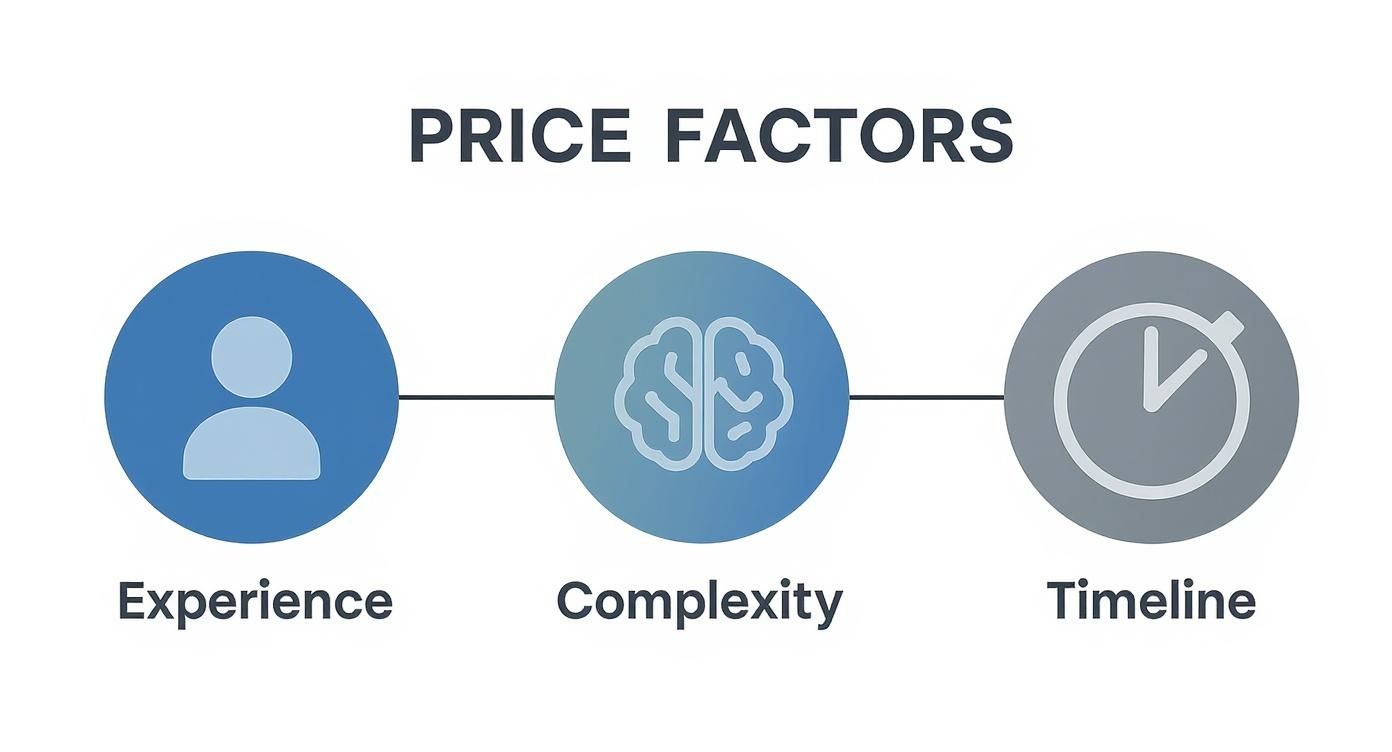
As you can see, a writer's experience, the book's complexity, and your timeline are the three main levers that shape the final project fee.
Case Study 3: The Entrepreneur’s Ebook
Finally, there’s Maria. She’s a small business owner who wants to create a 15,000-word ebook to use as a lead magnet. It’s a short, punchy guide to her area of expertise. She already has the core content in a series of blog posts. She just needs someone to weave it all into a polished book.
She hires an emerging but talented writer who is great at structuring content. The project is straightforward and requires minimal new research.
A budget could look like this:
- Content Consolidation & Outlining: $1,500
- Drafting & Editing (15,000 words): $4,500
- Revisions: $1,000
- Total Project Fee: $7,000
This is a perfect example of how a smaller scope and clear source material can lead to a very manageable budget. Even at this level, Maria gets a professional product that serves her business goals without breaking the bank.
Across all these nonfiction projects, the spectrum is wide. Recent figures show that standard nonfiction ghostwriting rates can range from $10,000 to over $100,000 for a full book. Low-end freelancers might charge $10,000 to $20,000, while top-tier professionals can command anywhere from $75,000 to $150,000 or more depending on the project. You can get a fuller picture by reading more about nonfiction ghostwriting services and their costs.
Hopefully, seeing these numbers helps you start to dream a little more clearly about your own masterpiece. Your book has its own unique needs, and there's a writer and a budget out there that's just right for it.
Finding Your Perfect Writing Partner
Alright, you’ve gotten a handle on the costs. Now for the really exciting part: finding the person you’ll trust with your story.
This isn’t like hiring a plumber to fix a leaky faucet. It's a deeply personal, creative partnership. You’re looking for a collaborator, a confidant, and a skilled writer all in one. The mission isn’t just to find a ghostwriter; it’s to find your ghostwriter. After all, you wouldn't want just any old spirit haunting your manuscript.
Where to Look for Literary Gold
So, where do all these talented wordsmiths hang out? You probably won't find your perfect match in a Craigslist ad. You need to look in places where quality and professionalism are the main attraction.
Here are a few great places to start your search:
- Curated Marketplaces: Sites like Reedsy are fantastic because they do the initial vetting for you. Think of it as a matchmaking service connecting authors with proven, experienced ghostwriters.
- Professional Organizations: Groups like the Editorial Freelancers Association (EFA) have directories brimming with skilled professionals. These are serious writers who invest in their craft.
- Direct Referrals: Never underestimate the power of your network. Ask other authors, business coaches, or anyone you know in publishing. A warm referral from someone you trust is often the best way to find a true gem.
Think about it like this: you wouldn't hire someone to build your dream home without seeing their past work and talking to previous clients. The same logic applies here.
Vetting Your Potential Partner
Once you have a shortlist of candidates, it's time to do a little digging. This is where you separate the true professionals from the rest. It's less of an interrogation and more of a conversation to see if you genuinely click.
Your goal is twofold: find someone whose writing style resonates with you and whose personality you actually enjoy. You're going to spend a lot of time with this person. If there’s no chemistry, the entire process will feel like a chore. Life's too short for that.
Remember, you are the author. Your ghostwriter is your skilled partner. Finding the right fit is about making sure your voice is translated perfectly, not replaced. It's a collaboration that honors your story.
Your Vetting Checklist
As you start having conversations, it helps to have a game plan. Here are the non-negotiables to cover with every potential writer:
- Review Their Portfolio: Don't just skim their work, really read it. Does their writing make you feel something? Can they adapt to different voices? If their public samples are all corporate ebooks and you're writing a personal memoir, ask if they have other, more relevant work they can share privately.
- Ask Smart Questions: Go deeper than, "What's your rate?" Ask about their process. How do they prefer to collaborate? How do they handle feedback? What do they love most about ghostwriting? Their answers will reveal how they work, not just what they deliver.
- Check Their References: This is a big one. Any true pro will be happy to connect you with a past client or two. When you speak to them, ask about the real experience. Was the writer responsive? Did they meet deadlines? Most importantly, would they hire them again?
This isn't about being difficult; it's about being diligent. You’re making a major investment in your book. Taking the time to find the right person is the single most important step in this journey. Trust your gut and get ready to meet your creative soulmate.
The Ghostwriting Contract Checklist

You did it. You found your writer, you feel that spark, and you’ve agreed on a price. High five! Now comes the slightly less thrilling but monumentally important part: the contract.
I know, I know. The word "contract" can make you want to take a nap. But please, lean in for this. This document is the single most important piece of the puzzle. It isn’t about mistrust. It’s about creating a crystal clear roadmap so you can both relax and focus on the magic of making your book.
A true professional will always insist on a contract. It protects them, and more importantly, it protects you and your story. Think of it as the foundation of your creative partnership. Get this right, and you can let go of the business worries and just enjoy the ride.
What Your Agreement Must Include
This isn't about dense legal jargon. A great ghostwriting contract is simple, clear, and covers all the essentials so there are no awkward misunderstandings later. It’s the difference between a smooth journey and a bumpy one.
Here’s a quick checklist of what to look for before you sign anything:
-
A Clear Scope of Work: The contract should spell out exactly what the ghostwriter will deliver. Is it a 50,000-word manuscript? Does it include an outline? How many rounds of revisions are included? Be specific!
-
A Detailed Payment Schedule: No one should ever ask you to pay the full hiring a ghostwriter cost upfront. Look for a milestone based schedule, like 25% to start, 25% after the outline, 25% after the first draft, and the final 25% upon completion.
-
Copyright and Ownership: This is a big one. The contract must state, in no uncertain terms, that you own 100% of the rights to the finished work. The writer is work-for-hire, and their name will not appear on the cover unless you have a separate agreement for that.
-
Confidentiality Clause: Your story is yours. A standard confidentiality clause, or NDA, ensures your ideas, interviews, and manuscript are kept completely private.
Your contract is more than a legal document; it's a promise. It’s both of you agreeing, “We’re in this together, and we’re going to see it through with respect and clarity.” It’s the bedrock of trust that lets creativity flourish.
Got Questions About Ghostwriter Costs? Let's Clear Things Up.
Thinking about hiring a ghostwriter is a big step, and it's totally normal for your head to be swimming with questions. In fact, asking a lot of questions is a great sign! It shows you’re serious about your project, and that’s exactly the kind of energy that creates an amazing book.
Let’s tackle some of the most common things people wonder about when it comes to the price tag.
Do I Have to Pay for Everything Upfront?
Goodness, no. If a writer ever demands the full fee before a single word is on the page, you should see that as a giant red flag and politely run for the hills. That's simply not how professionals in this field operate.
Instead, almost every seasoned ghostwriter uses a milestone based payment schedule. This setup is designed to protect both of you. It keeps the project moving forward and ensures you’re only paying for work as it gets done. A typical payment plan might look something like this:
- 25% Deposit: This gets your project officially on their calendar and covers the initial work.
- 25% on Outline Approval: You pay this once you've reviewed and approved the book's "blueprint."
- 25% on First Draft Delivery: Paid when the complete first draft of the manuscript lands in your inbox.
- 25% on Final Manuscript Delivery: The last payment is made when the book is polished and complete.
Breaking it down this way turns a potentially scary number into a series of manageable, predictable payments tied to actual progress.
Are There Any Hidden Costs I Should Watch Out For?
A solid contract is your best protection against surprises. Any ghostwriter worth their salt will provide a transparent agreement that spells out exactly what’s included. They aren't trying to pull a fast one on you. Their job is to tell your story, not to tell you a story about the bill.
That said, you should always clarify what the project fee covers. Some things that might be considered "add-ons," and should be discussed and agreed to in writing beforehand, could include:
- Significant Travel: If you need your writer to fly out for a series of in person interviews.
- Transcription Services: If you have dozens of hours of recorded conversations that need to be transcribed.
- Major Scope Changes: If the project suddenly balloons in length or complexity far beyond what you originally planned.
Your project fee should be an all inclusive price for the work outlined in your contract. Clear communication from the very beginning is the absolute best way to make sure there are no unexpected bills later on.
Is It Really Worth Paying More for an Experienced Ghostwriter?
In my experience, the answer is almost always yes. A newer writer with a lot of enthusiasm can be a great, budget friendly choice for a simple project. But when you hire a veteran ghostwriter, you're getting so much more than just a wordsmith.
You're paying for their proven process, their expert project management, and their deep understanding of how to navigate the creative and emotional journey of bringing a book to life. They know where the potential pitfalls are because they've seen them before. They know how to keep you motivated when you feel stuck.
Think of it this way: their higher fee is often an investment in your own peace of mind. It buys you a smoother, more efficient, and often more fun path to a powerful and polished book that truly does your story justice. And that’s priceless.
At My Book Written, we believe your story deserves to be told with clarity and confidence. If you're ready to take the next step, explore our resources to help you organize your vision and find the perfect partner to bring it to life at https://mybookwritten.com.