
Bringing your book to life with a ghostwriter means finding a partner to capture your voice and vision. The process starts with you pinpointing your idea, then moves to finding qualified writers, carefully checking out their work, and finally, signing a solid contract that lays out all the details on ownership and payment.
Think of it as a fun collaboration where a skilled writer does the heavy lifting to turn your unique story into a real, hold-it-in-your-hands book.
Your Book Idea Deserves to Be More Than Just an Idea

Let's be real. You have a book inside you. It might be a life-changing memoir, a groundbreaking business philosophy, or a family history you need to preserve for future generations. It’s that idea that bubbles up at the most random times, the one that deserves a life beyond the back of your mind.
But the gap between a fantastic idea and a finished book can feel like the Grand Canyon. It’s overwhelming. The time, the storytelling know how, the sheer emotional effort of putting your ideas on the page. It’s enough to make anyone want to go take a nap instead.
Trust me, you're not alone. Countless incredible stories go untold because the journey just seems too hard.
This Is a Partnership, Not a Shortcut
Consider this guide your roadmap. We’re here to show you that your dream is completely within reach, and hiring a ghostwriter isn't cheating. It's a smart collaboration that makes the process easier and way more fun.
Think of it this way: you wouldn't build your dream house without an architect, right? You bring the vision, the memories, the passion. The ghostwriter brings the blueprint and the professional tools to construct something sturdy, beautiful, and true to your original concept.
This kind of partnership really hinges on a few key things:
- Your Vision Is Everything: A good ghostwriter's primary job is to capture your voice, not to stamp their own all over it. It's your story, through and through.
- Expertise Lifts the Burden: They understand narrative structure, what hooks a reader, and how to sidestep the rookie mistakes that can sink a book. They handle the tough stuff so you can focus on the story.
- It's About Honoring Your Story: Writing a book gives your idea the respect it deserves. Working with a pro ensures it gets the high quality treatment it warrants.
For many, a book is a powerful tool for building a personal or professional brand. If that's part of your goal, you might want to explore effective strategies for building brand awareness to see how your book fits into the bigger picture.
In the end, a ghostwriter doesn't diminish your role as the author; they enable it. You're the one with the story. They're the ones with the specialized skills to get it on the page, letting you hold a finished book that is profoundly and authentically yours.
Laying the Groundwork: What to Do Before You Hire a Ghostwriter
Before you even start looking for a ghostwriter, you need a clear map of where you're going. Think of it this way: you wouldn't hire an architect to build your dream house without first knowing how many bedrooms you want or if you prefer a modern or rustic style.
This initial prep work is all about sharpening your vision so a writer can step in and bring it to life, word by word.
I once had a client approach me with a fantastic idea, but all he could say was, "I want a business book about leadership." Another came to our first meeting with a one page outline, a list of key stories, and a crystal clear picture of their ideal reader. Can you guess which project ran smoother, stayed on budget, and nailed the author’s voice right out of the gate?
A little effort upfront is the best insurance you can get. It saves you a ton of time, avoids expensive rewrites, and makes sure the final book sounds authentically, unmistakably you.
Get to the Heart of Your Message
First things first: what is this book really about? I’m not talking about the plot or the chapter titles. I mean the one big, central idea you want your reader to remember long after they’ve put the book down.
Try to boil it down into a single, punchy sentence. This becomes your North Star for the entire project.
For example:
- Memoir: "My story proves resilience isn't about avoiding failure, but about how you get back up."
- Business Book: "The only way to truly scale a business is to build a culture so strong it practically runs itself."
- Legacy Project: "My grandfather's journey from a tiny village to a new country is a testament to the enduring power of family and hope."
When this core message is locked in, it gives your ghostwriter a powerful lens to see everything through. It keeps the project focused and ensures every chapter serves the main goal.
Picture Your Ideal Reader
Who are you writing this for? And please, don't say "everyone." You need to get specific. Try to imagine the one person who needs to read this book more than anyone else in the world.
A book written for everyone is a book read by no one. The more clearly you can picture your ideal reader, the better your ghostwriter can tailor the tone, language, and stories to connect with them on a personal level.
Is it a young entrepreneur feeling totally lost? A parent trying to navigate a difficult diagnosis? Or maybe a CEO looking for a fresh take on innovation? When you know exactly who you're talking to, your voice becomes much clearer, and your ghostwriter can write directly to that person.
Gather Your Raw Materials
Okay, now it’s time to go on a treasure hunt. Your ghostwriter needs the raw materials, the building blocks of your story. Don't worry about polishing anything or making it sound good. This is all about collecting the substance of your book.
Your "materials" might look like:
- Messy notes scribbled on napkins
- Audio recordings of you just talking and telling stories
- Transcripts from interviews with important people in your life
- Old journal entries or blog posts
- A very rough outline of potential chapters
- Even a half finished draft that you abandoned ages ago
The more you can pull together, the richer and more detailed the final manuscript will be. Remember, you’re not just hiring someone to write; you're bringing on a partner to help make sense of your world.
This collaborative approach is becoming the go to method for leaders and experts to share their knowledge. In fact, the global ghostwriting services market is currently valued at $1.5 billion and is projected to nearly double to $2.9 billion by 2033. This explosion highlights a major shift in how experts are bringing their ideas to the world. You can read more about this growing industry and see what it means for authors like you.
Finding and Vetting Your Ideal Writing Partner
Alright, this is where the magic happens. Think of this process less like hiring a contractor and more like casting the lead role in your life's story. You’re not just looking for someone who can write clean sentences; you're searching for a creative partner who can truly understand your vision and give it a voice. It’s a huge deal, and it should feel exciting.
So, where do you actually find these talented wordsmiths? They aren’t always easy to spot, but once you know where to look, you can avoid getting lost in a sea of overwhelming options.
Where to Find Your Ghostwriter
The hunt for the perfect ghostwriter usually leads down one of three main paths. Each has its own vibe, and the best one for you really depends on your budget, timeline, and how hands on you want to be.
Let's break them down:
- Freelance Platforms: Sites like Upwork and Fiverr are massive marketplaces with writers at every price point. The big plus is the sheer volume of choice. The downside? It can feel like searching for a needle in a haystack, and you'll need to do some serious sifting to separate the seasoned pros from the newcomers.
- Specialized Ghostwriting Agencies: These are basically matchmaking services for authors and writers. They have a pre vetted roster of talent and usually handle all the project management, which can be a huge relief. You’ll pay a premium for this white glove service, but it can save you a ton of time and add a layer of security.
- Personal Referrals: This is the gold standard. A recommendation from a trusted colleague or friend who has already gone through this process is invaluable. Don't be shy about asking your network. You might be surprised who has a connection.
Before you jump into the search, it helps to get your own thoughts organized. This simple flow keeps you focused on what really matters.
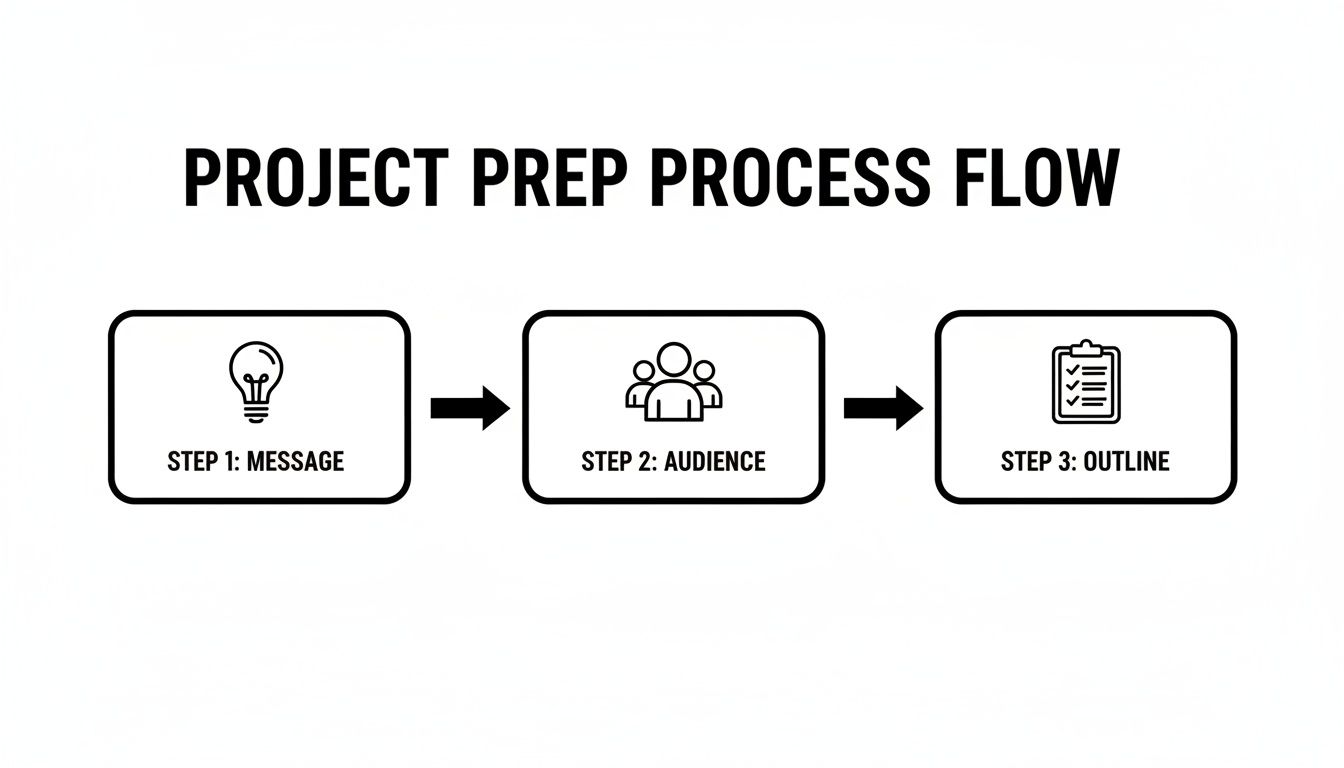
Having your core message, audience, and a basic outline ready makes it infinitely easier to find the right writer and explain your vision clearly from day one.
Vetting Portfolios and Asking the Right Questions
Once you’ve shortlisted a few candidates, it's time to put on your detective hat. You’re looking for more than just good grammar; you’re searching for that spark of connection.
Start by digging into their portfolios. Don't just skim their work, really read it. Ask yourself, "Could this person capture my voice?" A great ghostwriter is a chameleon. Their samples should showcase a range of styles and tones, proving they can adapt to different authors.
If a particular sample resonates with you, point it out! Saying something like, "I loved the conversational yet authoritative tone you used in that CEO's memoir," gives them a concrete example of what you're aiming for.
Another topic worth bringing up is technology. The industry is definitely shifting. A recent survey found that 68% of ghostwriters now use AI to some extent. However, book ghostwriters are far more cautious; only 11% consider themselves advanced AI users. Why? Because clients and publishers are increasingly demanding human only writing to ensure authenticity and originality.
The market is splitting into two camps: a premium tier focused on human creativity and a lower cost tier that relies heavily on AI. Don't be afraid to ask a potential writer about their process and specify that you want a human first approach. You can discover more about these industry trends to feel even more confident in these conversations.
The goal of the interview isn't to grill them on their resume. It's to find out if you can build a trusting, creative partnership. You’re going to be spending a lot of time with this person, sharing deeply personal or professional stories. You need to feel comfortable.
Interview Questions That Reveal What Matters
Forget the generic interview questions. To truly understand if someone is the right fit, you need to go deeper. Here are a few questions designed to reveal a writer’s collaborative spirit, problem solving skills, and genuine passion for storytelling.
I’ve put together this quick cheat sheet to help guide your interviews. These questions are designed to move beyond the portfolio and help you understand a ghostwriter's process, personality, and how they approach collaboration.
Ghostwriter Interview Questions Cheat Sheet
| Question Category | Sample Question to Ask |
|---|---|
| Problem Solving | "Tell me about a time a project went off the rails. What happened, and how did you get it back on track?" |
| Voice & Style | "How do you approach capturing someone else’s voice without letting your own style take over?" |
| Collaboration | "What does your ideal author-writer collaboration look like? Are you looking for a hands-off client, or do you thrive on weekly calls?" |
| Motivation | "Looking at my project brief, what part of this story excites you the most?" |
These questions peel back the layers and show you how a writer thinks, communicates under pressure, and whether they’ll be a true partner in the process.
Finding the right person is the most important step in how to hire a ghostwriter for a book. Take your time, trust your gut, and remember you’re choosing someone to help build something that will last forever. It’s an incredible journey, and the right partner makes it so much more rewarding.
Understanding Ghostwriting Costs and Contracts
Alright, let's talk about the two things that can make anyone's palms sweat: money and contracts. It’s the part of the journey where things get real, but I promise it doesn’t have to be scary or complicated.
Think of this step as laying the foundation for a great partnership, one where everyone feels safe, respected, and genuinely excited to create something amazing. Getting this right from the start prevents a world of headaches later on.
A clear contract is your best friend. It’s not about mistrust; it’s about creating total clarity so you and your writer can focus on the fun part: bringing your book to life.
Breaking Down the Price Tag
When you start looking, you'll notice ghostwriter fees are all over the map. This isn’t like buying a cup of coffee where there’s a standard price. The cost really boils down to the writer's experience, how complex your book is, and the amount of research involved.
You'll generally see a few common pricing models:
- Per Project: This is the most common for books. You agree on a flat fee for the entire manuscript, which is great because you know the total cost upfront. No surprises.
- Per Word: More common for shorter pieces like articles, but some book writers use it. It's straightforward but can get tricky if the project's scope changes mid stream.
- Hourly: This is rare for a full book project but might be used for initial consulting or developmental work. It offers flexibility but can be a nightmare to budget for.
For a full length book, a per project fee is almost always the way to go. It keeps everyone focused on the final product, not just on counting words or tracking hours.
So, What Is a Fair Price Anyway?
Understanding what ghostwriters charge is key, because the costs vary dramatically. Project based pricing for a full length book can range from $5,000 to over $50,000. To put that in perspective, the U.S. Bureau of Labor Statistics puts the median author pay around $67,120 per year, which shows the real value of professional writing.
Premium agencies often start in the five figure range, driven by factors like manuscript length, genre complexity, and the writer's track record. The market is also changing, with a clear premium for pure, human created writing versus lower cost, AI assisted services. For authors looking for a smarter path, alternatives like Opus Eternal provide expert, premium quality ghostwriting that is remarkably efficient, often at less than half the cost of traditional high end agencies. You can also discover more insights about writing industry salaries to get a better handle on the numbers.
A price that seems too good to be true probably is. A super low fee often means you're working with someone inexperienced or who is juggling so many projects they can't give your book the attention it deserves. Your story is worth the right investment.
Translating the Contract Legalese
Now for the paperwork. A solid contract protects both you and your writer. It’s the written handshake that makes sure you’re on the same page about everything. Don’t just skim it, read it, understand it, and feel good about it.
When finalizing terms, it's crucial to know how to write a contract that protects your interests and clearly outlines the scope of work and ownership. Your agreement should be in plain English, not a bunch of jargon that requires a decoder ring.
Here are the must have clauses to look for:
- Copyright Ownership: This one is non negotiable. The contract must state, in no uncertain terms, that you are the sole author and own 100% of the copyright. The ghostwriter is a "work for hire."
- Confidentiality (NDA): Your stories, ideas, and materials are yours alone. A confidentiality clause ensures your writer will keep everything you share completely private, forever.
- Payment Schedule: This breaks down how and when the writer gets paid. It’s usually tied to milestones, like an upfront deposit, a payment upon outline approval, and further payments as sections are completed.
- Revision Rounds: The contract should specify how many rounds of edits are included in the fee. This prevents endless tweaking and keeps the project moving forward. Two or three rounds per chapter is a common standard.
- Termination Clause: What happens if things just don't work out? A termination clause outlines how either party can end the agreement professionally, including what happens to the work completed and payments made.
Signing that contract is a real moment of commitment. It’s the point where your dream officially starts its journey to becoming a physical book you can hold in your hands. It’s a powerful step, and with the right agreement, it’s one you can take with total confidence.
A Playbook for a Seamless Ghostwriting Partnership
You did it. You found your writer, signed the contract, and you’re ready to go. Take a moment to give yourself a high five, because that was the hardest part. Now, how do you make sure this creative partnership is not just productive but actually… fun?
Success from here on out is all about collaboration. This isn’t a transaction where you hand over your ideas and wait for a finished book to magically appear. It's a dance. And this playbook will help you learn the steps for a smooth and rewarding process.
Think of your ghostwriter as the first true reader of your story. They're your champion, your confidant, and your partner in creating something that will last forever. A strong relationship built on trust and clear communication is the secret ingredient that turns a good book into a great one.
Finding Your Rhythm Together
The first few weeks are all about finding your groove. Just like any new relationship, you need to establish how you’ll communicate and what to expect from each other. Don’t leave this to chance; talk about it openly.
A good rhythm prevents missteps and keeps the creative energy flowing. There’s nothing worse than that awkward silence of not knowing when you’ll hear from your writer or what they need from you next.
Here are a few simple ways I’ve found to establish a solid communication beat:
- Weekly Check in Calls: A scheduled 30 minute video call each week can work wonders. It’s a dedicated time to discuss progress, brainstorm ideas, and ask questions without a dozen emails flying back and forth.
- Shared Documents: Use tools like Google Docs for everything. The ability to leave comments, suggest edits, and see changes in real time is a game changer for collaboration. It keeps all feedback organized and in one place.
- A "Parking Lot" Doc: Create a separate, shared document for random thoughts, memories, or ideas that pop into your head. This lets you capture inspiration without derailing the current chapter’s focus.
This structure isn't meant to be rigid. It's designed to create a predictable and safe space for creativity to flourish, ensuring you both feel connected and aligned as you move forward.
The Art of Giving Feedback That Actually Helps
This is probably the most important skill you'll develop during this process. Learning how to give feedback that helps instead of hinders is critical. Vague or harsh criticism can stall a project, while thoughtful, specific notes can unlock a writer’s best work.
Trust me, your writer wants your feedback. They need it. They aren’t mind readers, and their goal is to get your voice right.
The best feedback is a conversation starter, not a final judgment. It opens the door for your writer to better understand your vision and refine the manuscript until it perfectly reflects your story and your voice.
Instead of saying, "I just don't like this part," try being more specific. Frame your feedback as a collaborative problem to solve. For example:
- Instead of: "This chapter feels boring."
- Try: "I love the facts in this chapter, but can we inject more of my personal story here to make it feel less like a lecture?"
- Instead of: "This doesn't sound like me."
- Try: "The tone here is a bit too formal. Can we make it more conversational, like how I told you that story about my first business failure?"
This approach respects the writer’s effort and gives them clear, actionable direction. It turns you from a critic into a co creator, which is exactly what this partnership is all about. This process shouldn’t feel like another job. It should feel like you're finally, with the help of a trusted guide, bringing your incredible story home.
Answering Your Lingering Questions About Hiring a Ghostwriter
We've walked through the entire process, but I'm willing to bet you still have a few questions bouncing around. That's completely normal. Making the decision to hire a ghostwriter is a big deal, and it’s smart to get all your concerns addressed before you dive in.
Let's clear up some of the most common questions I hear from people who are ready to get their book out of their head and onto the page.
Will I Still Be Considered the Author?
Yes. Absolutely. 100%. This is, without a doubt, the number one concern people have, and the answer couldn't be clearer. You are hiring a professional for a service, to take your ideas, your voice, and your story and shape them into a manuscript. It’s your vision, their keyboard.
Any legitimate ghostwriting agreement will explicitly state that you are the sole author. You own the copyright, you keep all the royalties, and your name is the only one on the cover (unless you negotiate a different arrangement).
I like to compare it to hiring an architect to design your dream home. You provide the vision, the needs, the "feel" of the space. They draw the blueprints. But at the end of the day, it's your house. This is your book.
How Much of My Time Will This Actually Take?
A ghostwriter handles the heavy lifting, but your input is the magic ingredient that makes the book yours. The time you'll need to invest can vary, but a good rule of thumb is to set aside time for a series of in depth interviews at the beginning. This "brain dump" phase often totals 10 to 20 hours, usually spread out over a few weeks.
Once the writing starts, you can expect to spend about 1 to 3 hours a week reviewing drafts, offering feedback, and answering follow up questions. The more prepared you are with your notes and stories, the smoother it goes. It’s a real commitment, but it’s a tiny fraction of the hundreds of hours it takes to write a book yourself. And a lot more fun, too.
What if I Don’t Like What They Write?
This is a perfectly valid fear, but a good process is designed to prevent this from ever becoming a major issue. This is where your upfront work pays off. By carefully vetting portfolios, you're already choosing a writer whose style resonates with you.
Beyond that, no professional ghostwriter just disappears for three months and comes back with a finished manuscript. They'll start with a detailed outline and a sample chapter. This is a critical checkpoint to make sure you’re aligned on the voice, tone, and direction before the real work begins.
Your contract will also specify revision rounds. Honest, clear feedback is part of the deal. A real pro wants your notes; their job isn't done until you're happy.
Can I Hire a Ghostwriter if I Only Have a Rough Idea?
You bet. In fact, many fantastic books start this way. A skilled ghostwriter often doubles as a book coach or developmental editor. They're experts at teasing out a core concept, brainstorming chapter ideas, and structuring a compelling narrative from just a few starting thoughts.
Some writers offer this "book development" as a standalone first step. It's a fantastic way to transform that spark of an idea into a solid, actionable plan for a book. When you’re interviewing candidates, just ask if they have experience helping clients develop ideas from the ground up. It can be the most valuable part of the entire process.
Ready to take the next step in your book-writing journey? The resources at My Book Written are designed to give you the clarity and confidence you need to move forward. Explore our guides on structuring your ideas and finding the perfect writing partner. Visit us at https://mybookwritten.com.