
So, what exactly is a professional book writer? Most of the time, we’re talking about a ghostwriter. This is an expert you hire to take your unique ideas, your voice, and your vision and transform them into a polished, complete manuscript.
Think of it as the ultimate creative partnership. You’re the source of the story, the keeper of the memories, the expert with the big idea. They’re the expert in the craft of writing. It’s your book, just without the solo struggle.
Your Story Deserves a Professional Touch
Let’s be real for a moment. That book idea you’ve been carrying around, the one that pops into your head in the shower or during your morning coffee? It’s a big deal. It might be your life’s work, a tribute to a loved one, or a story you feel a deep, undeniable need to share with the world. It’s part of your legacy.
But let's also be honest about the gap between having a brilliant idea and holding a finished book in your hands. It can feel like a canyon. Life, in its infinite wisdom, loves to get in the way. Your brilliant thoughts can feel like a jumble of sticky notes, and the sheer thought of writing 50,000 or 60,000 words is just plain terrifying. I’ve seen far too many incredible book ideas get stuck right here, turning from a source of excitement into a nagging frustration. It’s like having a beautiful song in your head but not knowing how to write the sheet music.
From Frustration to a Finished Book
This is precisely where a professional book writer can change the entire game. Hiring a writer isn't "cheating." Not even close. It’s more like hiring a skilled architect to build your dream home. You wouldn't be expected to pour the concrete and frame the walls yourself, right? You bring the vision; they bring the specialized tools and the blueprint. It’s still your house.
A great ghostwriter does the exact same thing for your book. They provide the structure, the polish, and the professional experience to turn your vision into something real and powerful. They are masters at taking scattered notes, long conversations, and jumbled memories and weaving them into a compelling story that sounds exactly like you wrote it. They basically write it with you, not for you.
Your story is still yours. Your name is on the cover. Your wisdom fills the pages. The writer is simply the skilled collaborator who helps you lay the bricks, ensuring the final creation is something you’re immensely proud of.
Look at it this way: you're not just paying someone to type words. You're bringing a partner on board who can help you:
- Organize the chaos and shape your ideas into a logical, engaging chapter outline.
- Capture your unique voice, tone, and personality so the book is authentically you.
- Keep the project moving forward and hold you accountable, especially when life gets busy.
- Navigate the entire writing process with an experienced guide who knows the path.
Ultimately, choosing to work with a writer is an act of honoring your story. It gives your idea the absolute best shot at becoming the incredible book it's meant to be. It makes the journey from a simple idea to a published book not just manageable, but genuinely enjoyable. It’s your story, finally told.
Finding Your Ghostwriting Partner in Crime
Okay, you’re ready to team up. You’ve decided that your story is too important to stay stuck in your head, and you're looking for a professional writer to help you get it on paper. But where do you actually find these talented wordsmiths? It can feel like searching for a secret society, but I promise, it's easier than you think.
Your mission is to find someone who doesn't just write well but truly gets you. Think of yourself as a casting director. You're not just looking for a technically proficient actor; you’re looking for the perfect co-star to bring your story to life with heart and soul.
A great writer can take you from a brilliant idea, guide you through the messy but necessary middle, and land you at a finished book.
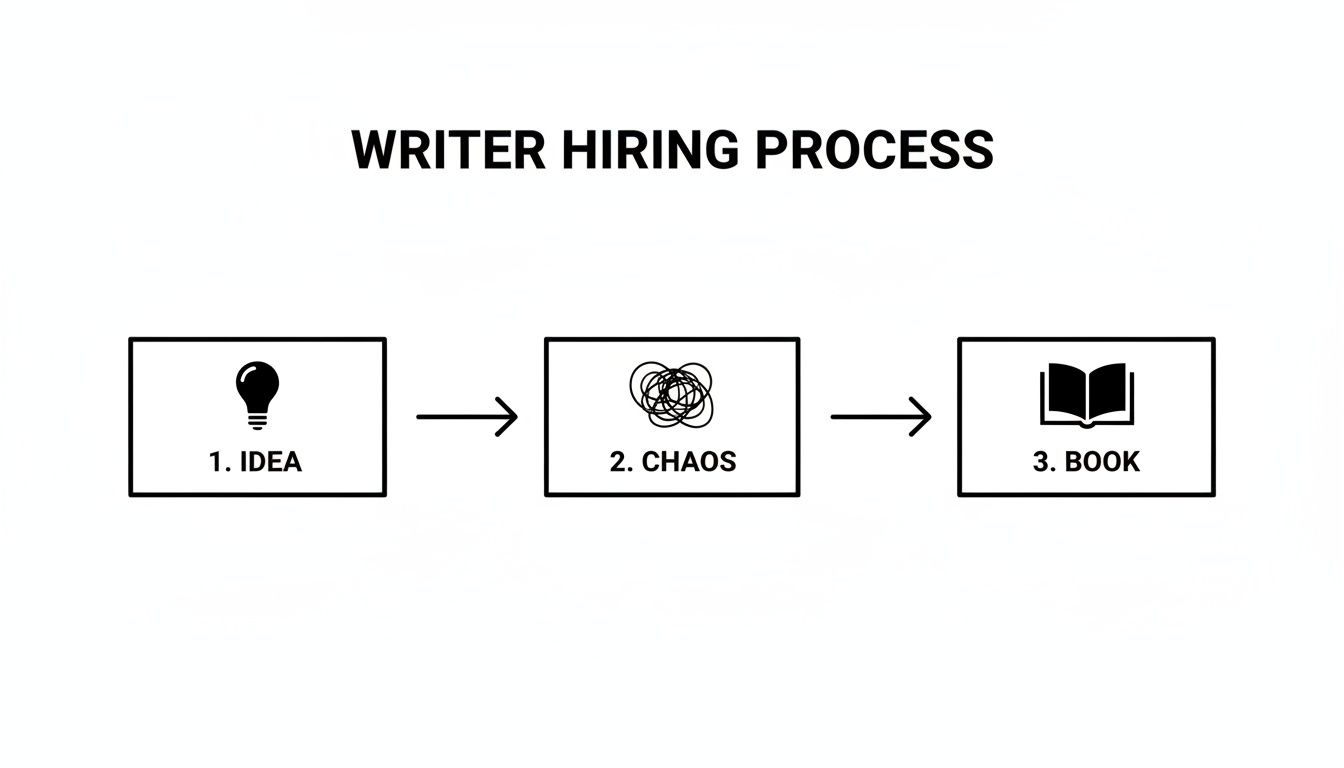
This visual perfectly captures that journey from a bright idea, through the inevitable chaos of creation, to a beautiful final book, all with a professional writer's help.
Your Treasure Map to Top Talent
So where are the best hunting grounds? Forget wandering aimlessly through the internet wilds. There are specific places where seasoned professionals gather, and knowing where to look is half the battle.
Let's get right to it.
Curated Freelance Platforms
Think of sites like Reedsy as a specialized matchmaking service for authors. They vet their professionals, so you know you’re browsing a list of experienced writers, not just anyone with a keyboard and a dream. Their portfolios are right there, making it easy to find a style that sings to you.
Broad Freelance Marketplaces
Then you have the titans, like Upwork. The talent pool is massive, which is both a blessing and a bit of a curse. The key here is to get specific. Use search terms like "memoir ghostwriter" or "business book author" to cut through the noise and find experts in your niche.
Professional Networking Sites
Don't sleep on LinkedIn! It's a goldmine for finding established professionals who might not be active on freelance sites. A quick search for "ghostwriter" or "book writer" can connect you with people who have serious credentials and a long history of successful projects.
Finding the right writer is like dating. You might have to meet a few people before you find "the one," but when you click, you'll know. It's about finding that perfect blend of skill, personality, and genuine passion for your story.
Start by building a list of five to seven potential candidates from these sources. Read their profiles, dive into their portfolios, and see whose work makes you feel something. This isn't just a transaction; it's the start of a deeply personal and creative partnership.
Take your time and trust your gut. Your perfect writing partner is out there, ready to help you create something that will last forever.
How to Vet a Writer Without an Awkward Interrogation
Alright, you've got your shortlist of potential professional book writers for hire. Now for the part where the real magic happens. Vetting a writer isn’t about putting them under a spotlight and grilling them like a suspect in a crime drama. It’s about figuring out if you can trust them with your story, which is a pretty big deal.
Think of it less like a formal job interview and more like a creative first date. You're looking for that spark, that feeling that they just get it.
Look Beyond the Perfect Grammar
Your first stop is their portfolio. I can't stress this enough: read at least two or three full samples of their work. Don’t just skim for typos; everyone makes those. Instead, you're on a mission to uncover their true talent.
So, what should you really be looking for?
- Voice Chameleons: Do all their samples sound exactly the same? Or can they adapt their tone and style to match the subject? A great ghostwriter can write a heartfelt memoir one month and a sharp business book the next, all while sounding authentic to the original author.
- Narrative Flow: Do their stories actually pull you in? Even if it's a topic you know nothing about, a skilled writer can structure a narrative that makes you want to keep turning the pages. You're looking for someone who builds a world, not just a wall of words.
This deep dive into their past work is your best clue as to whether they have the chops to handle your project. It's about seeing if their storytelling instincts align with yours.
Vetting a writer is like being a detective of voice. You’re searching for clues that they can capture the essence of someone else’s perspective and make it sing on the page.
The Elephant in the Room: AI
We have to talk about it. Artificial intelligence is everywhere, and while it's a neat tool for drafting an email, it has no business writing your legacy. Your book needs a human heart, with all its quirks, emotions, and unique insights. An AI just can’t replicate that.
In fact, the ghostwriting industry is already starting to split. Publishers and savvy clients are demanding human only content to avoid the risks of robotic, plagiarized, or just plain weird text. Alarmingly, 91% of writers are worried about AI making things up, and 79% fear it will replace human talent. If you want to dig deeper, the Association of Ghostwriters has some insightful predictions on these industry shifts.
When you're vetting, ask writers flat out about their policy on using AI. You want someone who is committed to 100% human creativity. Your story is deeply personal; it deserves to be told by a person who can laugh at your anecdotes, feel the weight of your struggles, and honor the journey you’ve lived. Don’t settle for anything less. It’s your book, your voice, your soul on the page.
The Interview Questions That Reveal Everything
This is where the magic happens. Or doesn't. The interview is your chance to see if you actually click with a writer. It's about moving beyond their carefully curated portfolio and getting a real sense of their personality, their process, and whether they genuinely get excited about your idea.
Think of it less like a formal interrogation and more like a conversation to see if you can build something amazing together.
Forget the tired, generic questions like "What are your greatest strengths?" Those won't tell you a thing about how they'll handle your project when the going gets tough. You need questions that peel back the layers and show you how they think, solve problems, and collaborate.
You’re not just hiring a typist; you’re looking for a creative partner. You want to see them lean in when you describe your vision, ask smart follow up questions, and get that little spark in their eye. That kind of genuine curiosity is the secret sauce to a great book.
Questions That Uncover Process and Passion
Your time is precious, so let's cut right to the chase. The following questions are designed to dig into a writer's problem solving skills, their collaborative spirit, and, most importantly, their ability to capture a voice that isn't their own.
To help you structure the conversation, here are some of the most revealing questions I've found useful over the years. They’re broken down by category to help you understand what you're really looking for in their answers.
Key Interview Questions for Your Potential Ghostwriter
Use these questions to understand a writer's process, experience, and collaborative style.
| Question Category | Sample Question to Ask |
|---|---|
| Problem-Solving & Resilience | "Tell me about a time a project went completely sideways. What happened, and how did you get it back on track?" |
| Voice & Authenticity | "How do you immerse yourself in someone else's voice to make the writing sound authentic? What's your process?" |
| Passion & Engagement | "What part of my book idea excites you the most, and why?" |
| Collaboration & Feedback | "How do you prefer to receive feedback? Can you share an example of how you handled significant edits from a client?" |
| Process & Logistics | "Walk me through your typical book-writing process, from our first call to the final manuscript." |
These questions push past the surface level answers and give you a window into how this person actually works. While you're preparing, it can also be helpful to review more general advice on interview questions for hiring specialists, as many of the core principles of finding great talent apply here, too.
Remember, you're not just listening to what they say, but how they say it.
The best interviews feel like a great first coffee date. There’s a natural back-and-forth, you lose track of time, and you leave feeling energized and understood. Trust that feeling.
Spotting the Subtle Red Flags
Just as important as asking the right questions is listening for the wrong answers. A few subtle red flags can save you a world of headaches later on.
Be on high alert for a writer who:
- Talks more than they listen. A great ghostwriter is insatiably curious. They should be asking you a ton of questions, not just talking about themselves.
- Gives vague, cookie cutter answers. If they can’t provide specific examples from past projects, it could mean they lack the depth of experience you need.
- Seems lukewarm about your vision. You want a partner who is genuinely fired up to tell your story. Anything less is a disservice to your project.
Choosing from a pool of professional book writers for hire is a huge decision. Take your time with the interviews, trust your gut, and don't settle until you find the person you can truly trust with your big idea. This partnership is the foundation of your book, make sure it's a strong one.
Making Sense of Ghostwriting Costs and Contracts
Alright, let's get into the two topics that can make even the most confident person a little nervous: money and contracts. I get it. It feels like the least creative part of a very creative process, but trust me on this, getting this right is the foundation for a smooth, successful, and genuinely enjoyable partnership.
Think of it less as a hurdle and more as a roadmap. A clear agreement ensures everyone is on the same page, feeling respected, protected, and ready to do their best work.

Talking about the fee shouldn't feel awkward. It's a straightforward reflection of the immense skill, time, and dedication a professional writer pours into bringing your vision to life. You're not just buying words on a page; you're investing in a partner who will live and breathe your story for months.
Decoding the Investment
So, what should you expect to invest? The vast majority of professional book writers for hire work on a flat project fee, which is fantastic because it means you won't get hit with surprise invoices down the road.
For a standard memoir or business book, think somewhere in the 40,000–60,000 word range, you'll typically see fees from $15,000 to $50,000, and sometimes higher. That price tag reflects the tremendous value busy founders, executives, and retirees place on having their voice captured perfectly in a polished, powerful narrative.
A word of caution: a low price isn't always a good deal. When it comes to your life's story or professional legacy, bargain hunting can lead to major headaches and a result you're not proud of.
A good contract is like good writing: it’s clear, it anticipates questions, and it leaves no room for confusion. It's not about mistrust; it's about building a foundation of professional respect.
The Contract Essentials Your Book Can't Live Without
Now, let's talk about the legal side. And please, I can't stress this enough: never, ever start a project of this scale on a handshake and a smile. A well drafted contract is your absolute best friend in this process. Before you sign anything, it’s wise to understand the essential elements of a contract to make sure your agreement is built on solid ground.
Your ghostwriting agreement should be crystal clear. Here are the non-negotiables it must include:
- Detailed Scope of Work: This needs to spell out exactly what the writer will deliver. Get specific with the target word count, the number of interviews, and who is responsible for research. Ambiguity is the enemy here.
- Clear Payment Schedule: Payments are almost always tied to project milestones. A common structure is a payment upon signing, another after the outline is approved, one after the first half is delivered, and a final payment upon completion. This keeps the project moving and everyone motivated.
- Revision Rounds: How many rounds of feedback are included? Two or three rounds of revisions per major section is a pretty standard industry practice. Defining this upfront prevents the dreaded "endless edits" loop.
- Confidentiality Clause: This is a big one. The contract must state, in no uncertain terms, that the writer will keep all your materials, conversations, and stories completely confidential.
- Ownership and Rights: Pay close attention to this clause, it's the most important one of all. The contract must explicitly state that you, the author, retain 100% of the rights, the copyright, and all royalties. The writer is being paid for a service, and their claim to the work ends there. It's your story, your book, and your name on the cover. Period.
Got Questions About Hiring a Ghostwriter? You're Not Alone.
Alright, let's get into the nitty gritty. Deciding to hire a writer can bring up a ton of questions, and that’s a good thing. It means you’re taking this seriously. It’s a huge step, and feeling a little apprehensive is totally normal.
I’ve had these same conversations with hundreds of authors to be. Let’s tackle some of the most common worries right now so you can move forward with confidence.
How Much of My Time Will This Actually Take?
This is usually the first question people ask, and for good reason. You’re likely hiring a writer because you don’t have time to write a book yourself.
Here’s the best way to think about it: You're the visionary, the expert. The ghostwriter is the dedicated craftsman. You bring the ideas, the stories, and the unique perspective; they do the heavy lifting of turning it all into a polished manuscript.
Your biggest time commitment is right at the start. We call this the "brain dump" phase, and it's basically a series of in depth interviews where you talk and the writer listens, asks questions, and gets to the heart of your message. After those initial sessions, your role shifts to reviewing chapter drafts and giving feedback. A seasoned pro knows how to make this process incredibly efficient and respectful of your schedule.
Will It Really Sound Like Me?
Yes. A thousand times, yes. This is the hallmark of a truly skilled ghostwriter. Their job isn't to show off their own fancy prose; it’s to become a vocal chameleon and capture your voice.
Think about it: all the raw material, the opinions, the anecdotes, the expertise, comes directly from you. The writer’s talent lies in arranging those elements into a narrative that flows naturally, using the same cadence, humor, and worldview that makes you unique. The goal is for someone who knows you to read the book and say, "I can hear you saying this."
A piece of feedback an editor once gave a writer I know was, "You have the humor in spades. It’s the heart that you need more of." That's the kind of insight a great collaborator brings. They don't change your voice; they help you find the parts of it that will connect most deeply with readers.
What if I Hate the First Draft?
First, don't panic. This is an expected, and necessary, part of the journey. I’ve never seen a perfect first draft, and you shouldn’t expect one.
Consider the first draft the raw clay on the potter's wheel. It has the right shape and all the material is there, but it’s not a finished piece of art yet. This is precisely why any professional ghostwriting contract will specify a number of revision rounds. Your honest, direct feedback is not just welcome; it's essential. A professional doesn't get their feelings hurt; they crave your input to make the manuscript better. This is how a good book becomes your book.
Who Owns the Book and the Royalties?
You do. Full stop. This is a non negotiable part of any legitimate ghostwriting agreement.
When you hire a ghostwriter, you are paying for a professional service. The contract should state in no uncertain terms that you retain 100% of the copyright, all royalties, and all subsidiary rights (like film or audiobook deals). The writer is compensated with their fee, and that’s it. They have no claim to the book's future success. It’s your name on the cover and your intellectual property. Period.
At My Book Written, we know that clarity and confidence are the foundations of a successful book project. If you're ready to organize your ideas and connect with the right professional to bring your vision to life, check out the resources we've built for authors at https://mybookwritten.com.