
Ever wonder how so many busy leaders, celebrities, and experts find the time to write a book? They often have a secret weapon. A ghostwriter. It's not spooky, I promise.
A ghostwriter is a professional writer you hire to bring your book, article, or speech to life, with your name proudly on the cover. It’s a powerful creative partnership. They take your ideas, your story, and your voice and shape them with their writing expertise, while you remain the sole author and owner of the work.
Your Brilliant Idea Needs a Creative Partner

Let's be real. You have a book inside you. It might be your incredible life story, the hard-won lessons you learned building a business, or a powerful message you feel compelled to share with the world. But getting from that initial spark of an idea to a finished, physical book can feel like trying to climb Everest in flip flops. It's just plain overwhelming.
That blinking cursor on a blank page can feel like it's mocking you, a constant, soul-crushing reminder of the hundreds of hours you simply don't have. It's a frustrating place to be, and it’s a feeling I see all the time with leaders, founders, and visionaries. You have the vision, but not the time or the specific writing skills to turn it into 60,000 polished words.
This is exactly where a ghostwriter steps in. They become your creative partner, your guide up the mountain.
More Than Just a Writer
Think of a ghostwriter less as a simple "writer" and more like the master architect for your story. You're the one with the blueprint, the vision, and the soul of the project. They show up with the professional tools, the deep knowledge of structure and storytelling, and the dedicated time to build your book, brick by brick, until it stands as a beautiful, lasting monument to your message. It's your home, they just handle the construction.
A truly great ghostwriter wears many hats. They aren't just putting words on a page; they're your:
- Interviewer: They're masters at asking the right questions to pull out your best stories, your sharpest insights, and your unique perspective. It’s like therapy, but you get a book at the end.
- Organizer: They can take a mountain of scattered notes, interview transcripts, and random thoughts and weave them into a clear, compelling narrative that flows. Chaos wrangler is an unofficial job title.
- Voice Matcher: Here’s where the real magic happens. They can capture your unique tone, personality, and way of speaking so the book sounds exactly like you, not them. It’s a bit of literary alchemy.
- Project Manager: They keep the entire project on schedule, managing deadlines and guiding the book from a simple concept all the way to a finished manuscript.
The collaboration is built on a foundation of sacred trust. You are entrusting someone with your legacy, and their job is to honor that by crafting a book that is an authentic reflection of you. It's your story, simply told with their skill.
The journey of a book idea can look very different depending on the path you choose. Here’s a quick comparison.
Your Idea vs Your Idea With a Ghostwriter
| Milestone | Doing It All Yourself | Partnering With a Ghostwriter |
|---|---|---|
| Initial Concept | Hours of brainstorming, outlining, and staring at a blank page. | Focused interviews and strategy sessions to create a solid book map. |
| First Draft | Months (or years) of writing in your spare time; motivation wanes. | Consistent progress with a pro handling the heavy lifting of writing. |
| Revision | Feeling "too close" to the material, making it hard to edit effectively. | Professional editing and polishing to ensure the highest quality. |
| Final Product | A project that might never get finished or doesn't meet its full potential. | A polished, professionally written book ready for publication. |
Ultimately, partnering with a ghostwriter is about turning a daunting solo mission into a supported, collaborative, and dare I say, fun journey.
Busting the Biggest Myth
Let’s get one thing straight right away: using a ghostwriter is not cheating. Not even close.
Do you think it's cheating when a president works with a speechwriter? Or when a famous musician brings in a lyricist to help polish a song? Of course not. It's about collaboration and bringing in an expert to handle a specific part of the process.
Hiring a ghostwriter is a smart, strategic decision. It’s about acknowledging that your time is best spent leading your company or sharing your message, while a professional writer’s time is best spent, well, writing. You are still the author. The ideas, experiences, and wisdom in the book are 100% yours.
This profession is booming for a reason. The global ghostwriting market is expanding at an annual rate of about 6.8%, showing just how many people are recognizing its value. This growth is directly linked to the self publishing revolution, with platforms like Amazon KDP seeing over 1.4 million new books each year. If you want to dive deeper, you can explore more insights on how authors are tapping into this trend. It’s a testament to how many incredible stories are finally getting told.
Your book isn’t just another project; it’s a permanent piece of your legacy. Partnering with a professional ensures it’s built with the quality, care, and heart it deserves.
The Secret Menu of Ghostwriting Services

When you hire a ghostwriter, you’re not just paying someone to type fast. You're bringing on a partner to manage the entire book creation process. They’re part interviewer, part researcher, part architect, and part project manager, all rolled into one. Why do it all yourself when you can have a pro handle the hard parts?
Think of it like ordering at a great restaurant with a secret menu. Sure, the main menu says "writing," but the real value is in the special services that aren't always listed. Let’s pull back the curtain on what you’re really investing in.
It all starts with you. The process kicks off with a series of deep, thoughtful interviews where the writer’s only job is to listen. They’re digging for the gold in your stories, the nuances in your voice, and the core message you want to get across. It's a bit like therapy, only the outcome is a book.
Building the Book's Blueprint
Before a single chapter gets written, a great ghostwriter builds the foundation. This isn’t just a loose collection of ideas; it’s a detailed architectural blueprint for your entire book. Honestly, this is probably the most important stage of the whole project.
This crucial outlining phase is where the magic really begins. Your ghostwriter will:
- Structure Your Narrative: They’ll take your scattered thoughts, anecdotes, and key points and organize them into a logical flow that keeps readers hooked from the first page to the last.
- Develop Chapter Maps: Every chapter is mapped out with its own purpose, key takeaways, and supporting stories. This ensures the book builds momentum without getting repetitive.
- Confirm Your Vision: You get to approve this outline before any major writing starts. This one step prevents massive, painful rewrites later and guarantees the final book is exactly what you had in mind.
This blueprint is your assurance that the house being built is the one you dreamed of. No surprises, just a solid, thoughtful plan.
From there, the writer gets to work on the first draft. They take all that raw material from your interviews and the structure from the outline and start weaving it all together. They aren't just transcribing; they’re finding the narrative threads, shaping sentences, and making sure every word sounds like it came directly from you.
A professional ghostwriter knows their job isn't just to write a book; it's to write your book. They step into your shoes, adopt your perspective, and write with your unique voice, ensuring the final manuscript is an authentic extension of you.
This drafting process is a massive weight off your shoulders. Instead of wrestling with a blank page, you get to see your ideas take shape in professionally written chapters, delivered right to your inbox for review. See? Much more fun.
The Art of Revision and Polishing
Once the first draft is done, the process moves into the revision stage. This is where your collaboration really shines. The ghostwriter sends you chapters, and your only job is to read and react.
Does a story need more detail? Does a certain phrase not sound quite right? You provide the feedback, and the writer does the heavy lifting of making the changes. It’s a beautifully simple feedback loop designed to make you feel completely in control without having to do the hard work of rewriting.
A ghostwriter’s services often include:
- Manuscript Drafting: The main event, writing the book from start to finish, based on your interviews and the approved outline.
- Thorough Research: They’ll fact check your stories, find supporting data, and add details that give your book credibility and depth.
- Multiple Revision Rounds: Professional agreements almost always include at least two or three rounds of revisions, giving you plenty of chances to get the text just right.
- Final Polish: A final read through to catch any pesky typos or grammatical errors, delivering a clean manuscript ready for the next steps.
Partnering with a professional means you get to enjoy the best parts of creating a book, the dreaming and the storytelling, while they handle the challenging parts that can stall a project for years. It’s your vision, brought to life with their expertise.
Finding the Right Ghost for Your Memoir

So, you’ve decided to take the leap. You're ready to bring in a professional to help shape your legacy. But where on earth do you begin?
Finding the right ghostwriter isn't like hiring any other contractor. It's more like finding the perfect dance partner. You need someone who hears the music in your story, understands your unique rhythm, and knows precisely when to lead and when to follow. This is a deeply personal partnership, so you want someone who is just as excited about bringing your book to life as you are.
Let's get you ready for the audition.
Preparing for Your Search
Before you even think about posting a job or calling an agency, take some time to get your own thoughts in order. A ghostwriter can work their magic best when you’ve already done a little soul searching. You don't need all the answers, but a bit of clarity goes a long, long way.
Try to sketch out your thoughts on these points:
- Your "Why": Why this book? Why now? Getting to the heart of your motivation is the first step in helping a writer connect with your story.
- Your Audience: Who are you really writing this for? Your kids and grandkids? Your industry peers? Knowing who's on the other side of the page completely shapes the book's tone and style.
- Your Voice: How do you want to come across? Are you irreverent and funny, or more thoughtful and serious? It helps to have a few examples of books whose style you admire.
- Your Timeline: Is there a key date you're aiming for, like a company anniversary or a personal milestone?
Having this information handy makes those first conversations so much more productive. It signals to a potential partner that you’re serious and have already invested thought into your legacy.
Asking the Right Questions
Once you start interviewing potential ghostwriters, your goal is to get past the resume. You’re looking for genuine chemistry and a shared vision. Your book is a piece of you, and you need to feel confident that it's in the right hands.
Here are the questions I always recommend asking to get a real feel for their process and their passion:
- Can you describe your process for capturing a client's voice? This is everything. A great ghostwriter will talk about in-depth interviews, immersing themselves in your past writing, and providing samples early on to make sure they've absolutely nailed your tone.
- How do you handle disagreements on creative direction? Their answer here reveals their entire collaboration style. You want a partner, not a pushover or a dictator. Look for someone who respects your vision but isn't afraid to offer their professional guidance when needed.
- What does your ideal client relationship look like? This is all about matching working styles. Do they thrive on weekly check ins, or do they prefer a more hands off approach?
- Can I see relevant writing samples? Ask to see work that’s similar in tone or topic to your project. If confidentiality agreements prevent them from sharing exact pieces, they should be able to articulate their experience in a way that still gives you confidence.
The right ghostwriter won't just hear your words; they'll hear the meaning behind them. They are part scribe, part confidant, part strategist. The connection you feel in that first call is often a sign of the creative magic to come.
This vetting process is more critical now than ever. The writing world is splitting into two distinct camps. You have a premium market focused on 100% human-generated content for authors who demand authenticity, and a lower cost market that leans heavily on AI tools. You can get more insights on industry trends to see why having a real human partner for a project as personal as a memoir is non negotiable.
Red Flags to Watch Out For
Just as important as knowing what to look for is knowing what to avoid. Your gut feeling is a powerful guide, but here are a few bright red flags that should make you politely end the conversation.
- They seem disinterested. If they aren't asking you thoughtful questions about your story or seem distracted, they won’t have the passion to do it justice.
- They can't provide relevant samples. Every true professional has a portfolio that demonstrates their skill, even if the samples are anonymized for confidentiality.
- They guarantee a bestseller. Nobody can promise this. A professional focuses on creating a high quality book, not on making pie in the sky marketing claims.
- They have a bad contract or no contract. A solid, clear contract protects both of you. Anyone who is hesitant to put the terms in writing is not someone you want to work with.
Finding your ghostwriter is a journey in itself. Be patient, trust your intuition, and hold out for the partner who feels like they were destined to help you tell your story.
How Much Does a Ghostwriter Cost?
Alright, let's talk about the elephant in the room. It has a trunk, floppy ears, and a price tag. Talking about the cost of hiring a ghostwriter can feel a bit awkward, but I believe in being completely upfront about it. Avoiding the money talk doesn’t help anyone, especially you.
You're not just buying words on a page. When you bring a ghostwriter on board, you're investing in hundreds of hours of focused, creative energy. You’re paying for their skill in interviewing, their patience during deep dive research, their natural talent for storytelling, and their discipline in the editing room.
It’s an investment in getting your legacy right, the first time.
How Ghostwriters Structure Their Fees
So, how does it all work? You'll generally run into a few common ways that ghostwriters set up their fees. There isn't a single "right" way; it often comes down to the writer's preference and the project's scope.
- Per Project Fee: This is the most common model, and frankly, it's often the best for book length projects. The writer gives you a single flat fee for the entire manuscript, which means you have a clear, predictable budget from day one. No surprises.
- Per Word Rate: Some writers charge by the word (e.g., $0.50 to $2.00+). This can work well for shorter pieces like articles or blog posts, but it can get tricky for a full book where the final word count might shift during the creative process.
- Hourly Rate: This is less common for writing an entire book but might pop up for consulting, editing, or putting together a book proposal. It offers flexibility, but it makes the final cost much harder to predict.
For a full length book (think 40,000 to 70,000 words), a professional ghostwriter’s project fee typically ranges from $20,000 to well over $100,000. Where you land on that spectrum depends on the writer's experience, how complex your topic is, and the amount of research needed to do it justice.
Think of it this way: are you building a functional garden shed or a custom designed forever home? Both have their purpose, but the level of craftsmanship, materials, and expertise involved are worlds apart. Your book is your legacy's forever home.
While those numbers might give you pause, it’s important to see them in context. The average annual salary often reported for a ghostwriter is around $38,680, which is pretty modest compared to other professional services. But top tier writers, the ones who deliver exceptional quality, command fees that reflect their deep expertise and the immense value they bring to the table. You can dive deeper into why a great ghostwriter is worth it on woodbridgepublishers.com.
The Danger of a "Good Deal"
I once spoke with a gentleman, a retired surgeon, who had the most incredible life story. He'd pioneered a surgical technique that saved thousands of lives. Wanting to get his story down, he hired a writer he found on a freelance site who charged a rock bottom price, just a few thousand dollars for the whole book.
He was thrilled. What a deal!
Six months later, he came to me with the manuscript. It was a disaster. The "writer" had clearly just transcribed their interview recordings without any sense of story, flow, or voice. The writing was flat, riddled with errors, and completely missed the heart of his journey.
He ended up having to hire a professional ghostwriter (at a professional rate) to start over from scratch, losing both time and money in the process.
His story is a powerful reminder that when it comes to your legacy, you truly get what you pay for. Choosing the cheapest option is often the most expensive mistake you can make. Your story, the one you've lived and breathed, deserves to be told with honor, skill, and genuine care.
How We'll Actually Write Your Book Together
So, you’ve found your ghostwriter, signed the contract, and you're buzzing with excitement. But then a thought probably hits you: "Okay… what happens now?" It's a great question. The answer is a surprisingly structured and collaborative journey that transforms your idea from a simple conversation into a finished book.
This is where the real fun begins. You've already done the hard work of finding the right person. Now, you get to sit back and watch your vision come to life, chapter by chapter, without ever having to stare down a blank page yourself.
Let's walk through what the next few months will look like. While every project has its own unique rhythm, most professional ghostwriting collaborations follow a well worn path designed to be productive, inspiring, and, most importantly, stress free for you.
Kicking Things Off: The Discovery Phase
Everything starts with a conversation. Or, more accurately, a whole series of them. The first phase is all about discovery, where your ghostwriter’s primary job is to just listen. They’ll schedule a string of interviews, usually spread over a few weeks, to go deep into your story, your ideas, and your unique way of seeing the world.
Don't picture a stuffy, formal interview. Think of it as a series of relaxed, open chats where you get to talk about what matters most. It’s the ghostwriter's job to ask the right questions, gently pulling out the golden threads they’ll later weave into your book. Your only homework? Show up, be yourself, and share your story.
This initial stage typically involves:
- Deep Dive Interviews: Expect anywhere from 10 to 20 hours of recorded conversations. This is where the raw material for the book comes from.
- Material Review: They'll also soak up any notes, journals, articles, or previous drafts you might have lying around.
- Capturing Your Voice: A great ghostwriter listens not just to what you say, but how you say it. They’re absorbing your unique cadence, your humor, and your personality.
Building Your Book's Blueprint
After the interviews, your ghostwriter will retreat for a bit. They'll take all that fantastic raw material and start architecting it into a solid book outline. And I don't mean a flimsy list of bullet points. We're talking about a detailed, chapter by chapter map of your entire book, complete with the key stories, arguments, and takeaways for each section.
You’ll review this outline together, and it must have your full approval before any real writing begins. This step is absolutely critical. It ensures you and your writer are perfectly aligned on the book's structure and direction, which prevents a world of headaches down the road. Think of it as approving the architect’s blueprints before the construction crew starts pouring the foundation.
The Rhythm of Writing: Drafts and Feedback
Once you've signed off on the blueprint, the writing starts. This is where the magic really happens. Your ghostwriter will begin crafting the manuscript, usually delivering it to you in chunks, a few chapters at a time is pretty standard.
This phased delivery is done on purpose. It allows you to read the first few chapters and give feedback early. Does it sound like you? Is the tone hitting the right notes? This is your chance to fine tune the voice and style before they write the rest of the book. It’s a simple, effective feedback loop: they write, you review, they revise.
The entire process is built on trust and open communication. A good ghostwriter doesn't just want your approval; they want your honest, heartfelt feedback. Their ego isn't on the line, their only goal is to create a book that you are absolutely in love with.
The Legal Side: Your Best Friend in This Process
Now, let's touch on the least romantic but most important part of this whole thing: the contract. A clear, professional agreement isn't about mistrust; it’s about creating total clarity so the creative work can flow without any confusion.
Your ghostwriting contract should always cover a few key areas to protect both you and the writer.
- Confidentiality: A rock solid non disclosure agreement (NDA) is non negotiable. Your stories, your ideas, and even your identity are completely protected. The "ghost" in ghostwriter is taken very seriously.
- Ownership of Rights: Let's be crystal clear here. You own 100% of the work. The copyright, the royalties, all of it. The ghostwriter is paid a fee for their service, and that’s where their financial interest ends. Their name won't appear anywhere on the book unless that's something you both agree to.
- Scope of Work: The contract will define exactly what’s being delivered, from the estimated word count to the number of revision rounds included in the fee.
- Payment Schedule: Fees are almost always broken into installments, typically tied to major milestones like approving the outline, receiving the first draft, and getting the final manuscript.
This whole journey, from that first exploratory call to holding the final manuscript, is a partnership. By setting clear expectations and trusting the process, you transform what could be a daunting solo task into an inspiring collaborative adventure. You bring the heart and the story; they bring the craft. Together, you create something that will last.
Common Ghostwriting Questions Answered
We’ve covered a lot of ground together, from the soul of a ghostwriting partnership to the nuts and bolts of the cost and process. But I know you probably have a few lingering questions bouncing around in your head. That’s completely normal.
Committing to creating a book, your legacy, is a huge step. You deserve to feel totally confident and clear before you move forward. So, let's tackle some of the most common concerns I hear from aspiring authors just like you.
Is It Unethical to Use a Ghostwriter?
This is the big one, isn't it? The fear that you’re somehow "cheating." Let me put that worry to rest for good. Using a ghostwriter is absolutely not unethical.
Think about it this way: when a visionary CEO hires a brilliant architect to design a new headquarters, does anyone call them a fraud for not laying the bricks themselves? Of course not. The CEO provides the vision, the purpose, and the funding. The architect provides the specialized skill to bring that vision to life.
That’s your relationship with a ghostwriter. The story, the wisdom, the life lessons, the heart and soul of the book, are 100% yours. Your writer is the skilled partner who helps you build it beautifully.
How Much of My Time Will This Take?
Honestly, this is one of the most beautiful parts of the entire process. Writing a book on your own can feel like taking on a second full time job, consuming hundreds, if not thousands, of hours. It’s a marathon that can burn out even the most determined person.
When you partner with a ghostwriter, you get to skip the most grueling parts. Your main time commitment is right at the beginning, during the interview phase. You can expect to spend about 15 to 25 hours in conversation, simply sharing your stories and ideas.
After that, your role shifts. You become the reviewer, the director. You’ll spend a few hours here and there reading chapters and providing your thoughts. It’s an incredibly efficient, respectful use of your valuable time. This is how you get your book done and keep your sanity.
This diagram shows the streamlined path your book will take.
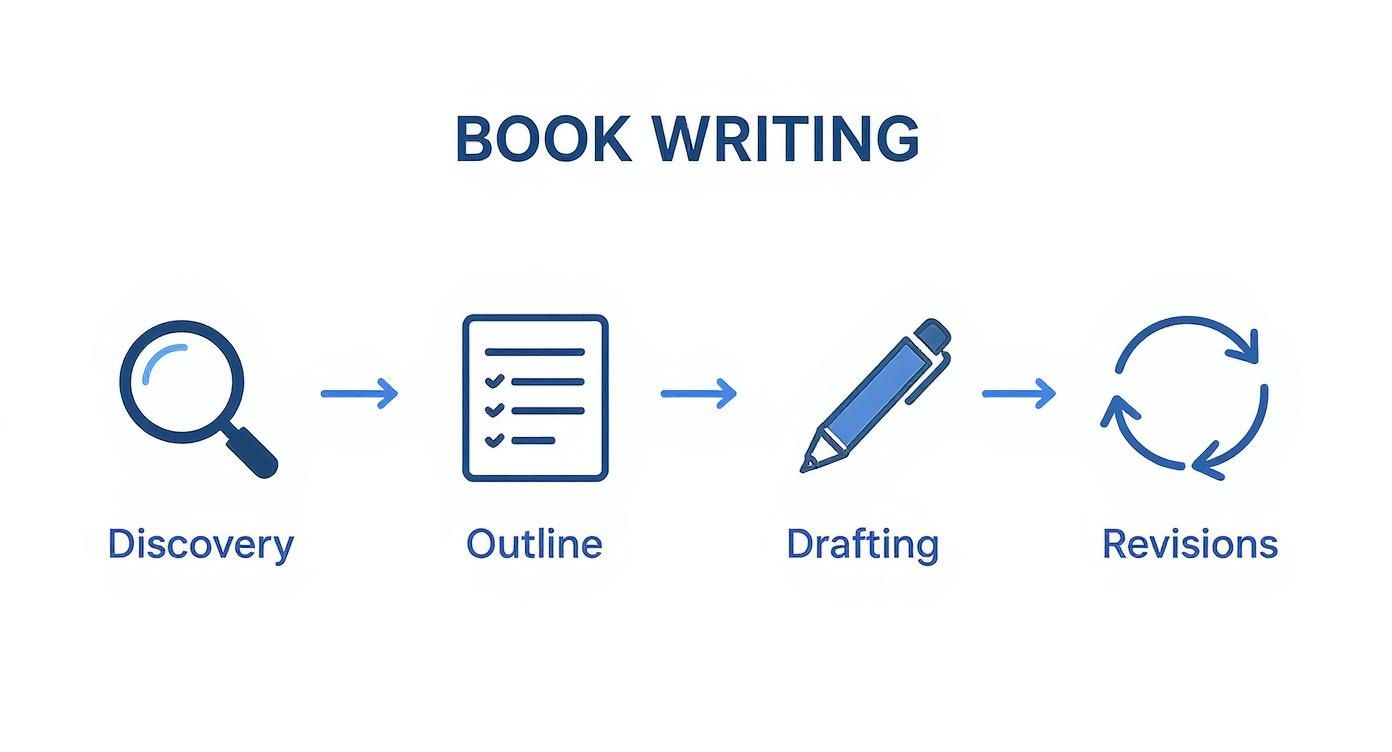
As you can see, the process is designed to be a clear, collaborative journey, moving smoothly from one stage to the next with you as the guide.
Who Owns the Book and Gets Credit?
You do. End of story. One hundred percent.
Any professional ghostwriting agreement will state this in plain, unmistakable language. The contract legally assigns all rights, copyrights, and future royalties directly to you, the author.
Your ghostwriter is a service provider. They are paid a fee for their craft, and that is where their financial and legal connection to the book ends. Their name will not appear on the cover, in the acknowledgments, or anywhere else unless you specifically agree to it.
The contract will also include a powerful confidentiality clause. This means your story, your identity, and the very fact that you worked with a writer are all protected. This book is yours in every sense of the word.
What if I Don’t Like What They Write?
This is such a common and understandable fear. You're handing over something precious, your story, and you worry it will come back sounding like a stranger.
A professional ghostwriting process is built from the ground up to prevent this from ever happening. It isn't a process where the writer disappears for six months and then hands you a finished book with a "take it or leave it" attitude. It's a dance of collaboration.
It works like this:
- Deep Listening: It all starts with those in-depth interviews where the writer absorbs your voice, your personality, and your unique turns of phrase.
- Blueprint Approval: You approve a detailed outline before any major writing begins, ensuring the structure is exactly what you want.
- Chapter by Chapter Review: The manuscript is delivered in smaller chunks, so you can provide feedback early and often.
A great ghostwriter wants your feedback. Their job isn't to write a book they love; their job is to write a book you love. Revisions are a normal and healthy part of the journey to perfection.
Taking the first step toward creating your book is a profound act of courage and generosity. You’re deciding that your story matters, that your wisdom is worth sharing, and that your legacy deserves to be preserved. My Book Written is here to provide the clarity and confidence you need to organize your ideas and prepare for this incredible journey. For more guidance on structuring your thoughts before you even start writing, explore the resources at https://mybookwritten.com.